

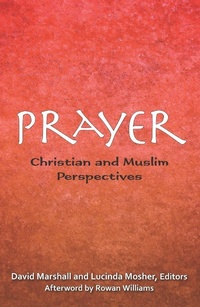
Prayer
Description

Religion / World Religions
"This book is a marvelous look at how both equality and inequality are addressed in various ways by Muslims and Christians. It provides us with not only solid foundations in both religious traditions but also an opportunity to rethink our own views and reshape our own practices in light of that encounter and dialogue."
? Amir Hussain, professor and chair of theological studies, Loyola Marymount University
In this volume of the Building Bridges Seminar, fourteen leading Christian and Muslim scholars respond to the global crisis of inequality by modeling interreligious dialogue. A World of Inequalities takes an intersectional approach, examining aspects of global inequality including gender, race and ethnicity, caste and social class, economic and sociopolitical disparities, and slavery. Essays explore the roots of these realities, as well as how they are treated in Christian and Muslim traditions and texts, and how the two faiths can work together to address inequality.
A World of Inequalities brings readers into this conversation, inviting them to engage in a similar dialogue by offering pairs of essays alongside religious texts for close reading. Scholars, religious leaders, and students of theology and theological ethics will find this book to be a vital resource to address these pressing issues.
Lucinda Mosher is the rapporteur of the Building Bridges Seminar and coeditor of seven previous volumes generated by that dialogue. Concurrently, she is Hartford Seminary's Faculty Associate in Interfaith Studies and an affiliate of its Macdonald Center for the Study of Islam and Christian-Muslim Relations. She holds a doctor of theology degree from the General Theological Seminary (NYC).
Contributors: Ovamir Anjum; Jonathan Brown; Sunil Caleb; C. Rosalee Velloso Ewell; Christopher M. Hays; David Hollenbach, SJ; Leslie J. Hoppe, OFM; Samia Huq; Sherman A. Jackson; François Pazisnewende Kaboré, SJ; Azza Karam; Lucinda Mosher; Elizabeth Phillips; Abdullah Saeed
More details
Other editions
Additional editions
Persons
David Marshall is director of the Anglican Episcopal House of Studies and associate professor of the practice of Christian-Muslim relations, Duke Divinity School and the academic director of the Building Bridges seminar.
Lucinda Mosher is the faculty associate for Interfaith Studies, Hartford Seminary and the assistant academic director of the Building Bridges seminar.
Content
Participants and contributors
Introduction, David Marshall
Preface, Rowan Williams
Part I: Surveys
1. Lived Prayer: Some Examples from the Christian Tradition, Michael Plekon
2. A Qur'anic Theology of Prayer, Reza Shah-Kazemi
3. Muslim Prayer in Practice, M. M. Dheen Mohamed
4. Christian Prayer in Practice, Philip Sheldrake
5. A Muslim Response to Christian Prayer, Caner Dagli
6. A Christian Perspective on Muslim Prayer, Daniel A. Madigan
7. Response, Rowan Williams
Part II: Prayer and Scripture
8. The Lord's Prayer, Susan Eastman
9. Al-Fatiha, Rkia Elraoui Cornell
10. Prayer in the Spirit in Romans 8, Philip Seddon
11. In Reverence of the Almighty: Understanding Prayer and Worship in Qur'an 3:190-94 and 29:45, Asma Afsaruddin
Part III: Learning to Pray
12. Learning to Pray With and In the Christian Tradition: Personal Reflections, Lucy Gardner
13. Learning to Pray as a Muslim: The Foundational Stage, Ibrahim Mogra
14. Growing in Prayer as a Christian, Timothy Wright
15. Growth in Prayer as a Muslim: Reflections and Lessons of a Struggler, Timothy J. Gianotti
16. Conversations in Qatar, Lucinda Mosher
Afterword, Rowan Williams
Personal Reflections on Prayer
Index
