

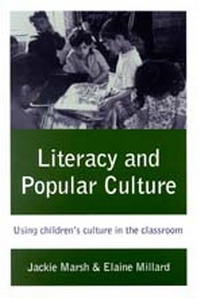
Literacy and Popular Culture
Using Children's Culture in the Classroom
1st Edition
Published on 22. December 2000
224 pages
978-1-84787-657-7 (ISBN)
Description

Most children engage with a range of popular cultural forms outside of school. Their experiences with film, television, computer games and other cultural texts are very motivating, but often find no place within the official curriculum, where children are usually restricted to conventional forms of literacy.
This book demonstrates how to use children's interests in popular culture to develop literacy in the primary classroom. The authors provide a theoretical basis for such work through an exploration of related theory and research, drawing from the fields of education, sociology and cultural studies.
Teachers are often concerned about issues of sexism, racism, violence and commercialism within the discourse of children's media texts. The authors address each of these areas and show how such issues can be explored directly with children. They present classroom examples of the use of popular culture to develop literacy in schools and include interviews with children and teachers regarding this work.
This book is relevant to all teachers and students who want to develop their understanding of the nature and potential role of popular culture within the curriculum. It will also be useful to language co-ordinators, advisers, teacher educators and anyone interested in media education in the 5-12 age-range.
This book demonstrates how to use children's interests in popular culture to develop literacy in the primary classroom. The authors provide a theoretical basis for such work through an exploration of related theory and research, drawing from the fields of education, sociology and cultural studies.
Teachers are often concerned about issues of sexism, racism, violence and commercialism within the discourse of children's media texts. The authors address each of these areas and show how such issues can be explored directly with children. They present classroom examples of the use of popular culture to develop literacy in schools and include interviews with children and teachers regarding this work.
This book is relevant to all teachers and students who want to develop their understanding of the nature and potential role of popular culture within the curriculum. It will also be useful to language co-ordinators, advisers, teacher educators and anyone interested in media education in the 5-12 age-range.
All prices
More details
Edition
First Edition
Language
English
Place of publication
London
United Kingdom
Target group
College/higher education
ISBN-13
978-1-84787-657-7 (9781847876577)
Copyright in bibliographic data and cover images is held by Nielsen Book Services Limited or by the publishers or by their respective licensors: all rights reserved.
Schweitzer Classification
Other editions
Additional editions
Jackie Marsh | Elaine M. Millard
Literacy and Popular Culture
Using Children's Culture in the Classroom
Book
12/2000
1st Edition
SAGE Publications Inc
€113.30
Shipment within 15-20 days
Jackie Marsh | Elaine M. Millard
Literacy and Popular Culture
Using Children's Culture in the Classroom
Book
12/2000
1st Edition
SAGE Publications Inc
€182.70
Shipment within 15-20 days
Persons
Jackie Marsh is Professor of Education at the University of Sheffield, UK, where she conducts research on young children's play and digital literacy practices in homes, communities and early years settings and primary schools. Her most recent publications include Changing Play: Play, Media and Commercial Culture from the 1950s to the Present Day (with Bishop, 2014) and Handbook of Early Childhood Literacy (edited with Larson, 2013). Jackie is an editor of the Journal of Early Childhood Literacy.
Content
Exploring the Concept of Culture
Challenging Racism, Sexism, Violence and Consumerism
Play and Popular Culture
Environmental Print
Encouraging the Reading Habit
Comics
Computer Games
Television and Film
Popular Music and Literacy
Challenging Racism, Sexism, Violence and Consumerism
Play and Popular Culture
Environmental Print
Encouraging the Reading Habit
Comics
Computer Games
Television and Film
Popular Music and Literacy
