

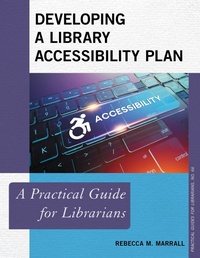
Developing a Library Accessibility Plan
A Practical Guide for Librarians
1st Edition
Published on 5. August 2020
160 pages
979-8-8818-7500-8 (ISBN)
Description

Developing a Library Accessibility Plan: A Practical Guide for Librarians provides library professionals with the knowledge, tools and templates, and practical examples necessary for developing a tailored and comprehensive accessibility plan for their institution.
Part One provides foundational knowledge about disability experiences in libraries, including an overview of existing legislation and a breakdown of the disability community in the United States. This part also names and defines the impact of different accessibility barriers within online, physical, and instructional settings for different populations.
Part Two outlines the initial stages of a developing a comprehensive plan for resolving accessibility issues. These chapters explore how to conduct an environmental scan of existing challenges, strategies for identifying potential partners in the resolution of these problems, and how to prioritize accessibility initiatives and projects.
Part Three provides several practical, real life examples of projects and initiatives drawn from the author's professional experiences. These case studies offer a summary of each accessibility project along the corresponding impact, finished by an analysis of "lessons learned" from the experience. A copy of all tools, templates, and other planning documents are available in the chapter itself.
The book will help readers understand how to inventory, prioritize, plan, implement, and assess a comprehensive improvement plan for electronic, physical, and instructional and/or programming-related accessibility issues within their library.
Part One provides foundational knowledge about disability experiences in libraries, including an overview of existing legislation and a breakdown of the disability community in the United States. This part also names and defines the impact of different accessibility barriers within online, physical, and instructional settings for different populations.
Part Two outlines the initial stages of a developing a comprehensive plan for resolving accessibility issues. These chapters explore how to conduct an environmental scan of existing challenges, strategies for identifying potential partners in the resolution of these problems, and how to prioritize accessibility initiatives and projects.
Part Three provides several practical, real life examples of projects and initiatives drawn from the author's professional experiences. These case studies offer a summary of each accessibility project along the corresponding impact, finished by an analysis of "lessons learned" from the experience. A copy of all tools, templates, and other planning documents are available in the chapter itself.
The book will help readers understand how to inventory, prioritize, plan, implement, and assess a comprehensive improvement plan for electronic, physical, and instructional and/or programming-related accessibility issues within their library.
More details
Other editions
Additional editions
Book
08/2020
Rowman & Littlefield Publishers
€80.20
Shipment within 3-4 weeks
Person
Rebecca M. Marrall is the director of technology and discovery services and an Associate Professor at Western Washington University Libraries. Her research interests are inclusive learning spaces; user experience in libraries; and accessibility practices in library spaces. She co-edited the open access text, The Research Process: Strategies for Undergraduate Students.
Content
Acknowledgements
Preface
Section One: Accessibility in Libraries
Chapter One: Disability Experiences in Libraries: Definitions, Demographics, Theory, and Legislation
Chapter Two: Electronic Accessibility
Chapter Three: Physical Accessibility
Chapter Four:Accessibility for Instruction, Programming, and Outreach
Section Two: Building an Accessibility Plan for Your Library
Chapter Five: Creating an Accessibility Plan
Chapter Six:Where to Start When Developing an Accessibility Plan
Chapter Seven: Building Consensus and Support within the Organization through Employee Professional Development
Chapter Eight: Crafting Community Partnerships for Enhanced Accessibility
Section Three: Case Studies in Accessibility Efforts
Chapter Nine: Deploying a Document Conversion Service for Patrons with Disabilities
Chapter Ten: Conducting an Electronic Accessibility Audit To Improve Library Web Presences
Chapter Eleven: Building Employee Knowledge through Voluntary Product Assessment Template Workshops
Chapter Twelve: Creating an Accessibility Response Plan for Employees
Chapter Thirteen: Raising Library Employee Awareness of Mental Health Issues
Chapter Fourteen: Service Animals in Libraries: Developing a Response Plan
Bibliography
Preface
Section One: Accessibility in Libraries
Chapter One: Disability Experiences in Libraries: Definitions, Demographics, Theory, and Legislation
Chapter Two: Electronic Accessibility
Chapter Three: Physical Accessibility
Chapter Four:Accessibility for Instruction, Programming, and Outreach
Section Two: Building an Accessibility Plan for Your Library
Chapter Five: Creating an Accessibility Plan
Chapter Six:Where to Start When Developing an Accessibility Plan
Chapter Seven: Building Consensus and Support within the Organization through Employee Professional Development
Chapter Eight: Crafting Community Partnerships for Enhanced Accessibility
Section Three: Case Studies in Accessibility Efforts
Chapter Nine: Deploying a Document Conversion Service for Patrons with Disabilities
Chapter Ten: Conducting an Electronic Accessibility Audit To Improve Library Web Presences
Chapter Eleven: Building Employee Knowledge through Voluntary Product Assessment Template Workshops
Chapter Twelve: Creating an Accessibility Response Plan for Employees
Chapter Thirteen: Raising Library Employee Awareness of Mental Health Issues
Chapter Fourteen: Service Animals in Libraries: Developing a Response Plan
Bibliography
