

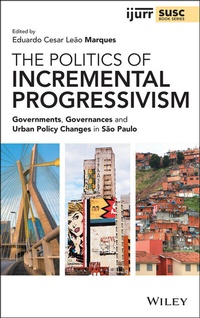
The Politics of Incremental Progressivism
Governments, Governances and Urban Policy Changes in São Paulo
1st Edition
Published on 26. March 2021
304 pages
978-1-119-64790-4 (ISBN)
Description

THE POLITICS OF INCREMENTAL PROGRESSIVISM
'Ungovernable neoliberal post politics assemblage metropolis from the South? No.
This book shows innovative redistributive policies, regulation, and social participation recently in São Paulo, although gradually, slowly, and contentiously, and despite failures and inequalities. This great one-city-many-policies comparison departs from high quality empirically grounded research to show that collective action and public policies are back in town. In São Paulo, they have made a difference.'
Patrick Le Galès, Sciences Po CNRS research Professor, Dean Sciences Po Urban School, France
'For anyone interested in urban governance, The Politics of Incremental Progressivism is a must-read. Nowhere in the world have cities faced greater challenges yet been more innovative in tackling the problems of urban poverty and exclusion than in Brazil. One could not ask for a more incisive, detailed and groundbreaking set of studies on urban transformation and the politics of change.'
Patrick Heller, Lyn Cross Professor of Social Sciences, Brown University, USA
Large metropolises of the Global South are usually portrayed as ungovernable. The Politics of Incremental Progressivism analyzes urban policies in São Paulo - one of the biggest and most complex Southern cities - not only challenging those views, but showing the recent occurrence of progressive change. This book develops the first detailed and systematic account of the policies and politics that construct, maintain and operate a large Southern metropolis. The chapters cover the policies of bus and subway transportation, traffic control, waste collection, development licensing, public housing and large urban projects, additionally to budgeting, electoral results and government formation and dynamics.
This important book contributes to the understanding of how the city is governed, what kinds of policies its governments construct and deliver and, more importantly, under what conditions it produces redistributive change in the direction of policies that reduce its striking social and urban inequalities.
'Ungovernable neoliberal post politics assemblage metropolis from the South? No.
This book shows innovative redistributive policies, regulation, and social participation recently in São Paulo, although gradually, slowly, and contentiously, and despite failures and inequalities. This great one-city-many-policies comparison departs from high quality empirically grounded research to show that collective action and public policies are back in town. In São Paulo, they have made a difference.'
Patrick Le Galès, Sciences Po CNRS research Professor, Dean Sciences Po Urban School, France
'For anyone interested in urban governance, The Politics of Incremental Progressivism is a must-read. Nowhere in the world have cities faced greater challenges yet been more innovative in tackling the problems of urban poverty and exclusion than in Brazil. One could not ask for a more incisive, detailed and groundbreaking set of studies on urban transformation and the politics of change.'
Patrick Heller, Lyn Cross Professor of Social Sciences, Brown University, USA
Large metropolises of the Global South are usually portrayed as ungovernable. The Politics of Incremental Progressivism analyzes urban policies in São Paulo - one of the biggest and most complex Southern cities - not only challenging those views, but showing the recent occurrence of progressive change. This book develops the first detailed and systematic account of the policies and politics that construct, maintain and operate a large Southern metropolis. The chapters cover the policies of bus and subway transportation, traffic control, waste collection, development licensing, public housing and large urban projects, additionally to budgeting, electoral results and government formation and dynamics.
This important book contributes to the understanding of how the city is governed, what kinds of policies its governments construct and deliver and, more importantly, under what conditions it produces redistributive change in the direction of policies that reduce its striking social and urban inequalities.
More details
Other editions
Additional editions
Eduardo Cesar Leao Marques
The Politics of Incremental Progressivism
Governments, Governances and Urban Policy Changes in Sao Paulo
Book
04/2021
1st Edition
Wiley
€88.00
Shipment within 15-20 days
Eduardo Cesar Leao Marques
The Politics of Incremental Progressivism
Governments, Governances and Urban Policy Changes in Sao Paulo
Book
04/2021
1st Edition
Wiley
€33.00
Shipment within 15-20 days
Content
- Cover
- Title Page
- Copyright Page
- Contents
- Notes on Contributors
- List of Abbreviations and Acronyms
- Series Editors' Preface
- Acknowledgments
- Introduction
- Urban Politics and Policies in Urban Studies and Political Science
- City Studies, International Comparisons, and Urban Theories
- Explaining Urban Policy Change and Capacity Building in São Paulo
- Governance and Political Actors Governing São Paulo
- The City and Local Brazilian Institutions
- The Book
- Notes
- References
- Part I Urban Politics and Political Institutions
- Chapter 1 Governments, Mayors and Policies
- Brazilian Institutions and Municipalities in International Perspective
- Electoral Results and the Mayors of São Paulo
- Municipal Administrations
- Notes
- References
- Chapter 2 The Politics of Executive-Legislative Relations
- The Production of Governability
- Mayors, Political Strategies and Executive-Legislative Relations
- What Else Do Councilors Do? Territories, Governability and Policy Implementation9
- Conclusion
- Notes
- References
- Chapter 3 The Politics of Municipal Budgets
- Analytic Dimensions of Public Budget Governance
- Budget Governance in São Paulo Municipality
- Final Considerations and Perspectives for a Research Agenda
- Notes
- References
- Part II Governing Urban Services
- Chapter 4 Struggling to Replace the Car Paradigm: Politics and Mobility Change
- Institutionalization, Insulation, and Capacitation of the Traffic Sector
- The CET: Insulated and Capacitated
- The Car Flow Paradigm
- Attempts to Deconstruct the Paradigm
- Analysis of Changes
- Final Considerations
- Notes
- References
- Chapter 5 Increasingly Governing Bus Services Through Policy Instruments
- The Recent Trajectory of Bus Transportation
- Governing Opacities in the Transportation Data
- Conclusion: Progressive Incrementalism in the Bus Services
- Notes
- References
- Chapter 6 Technocratic Decisions and Financial Arrangements in Subway Services
- Line 1-Blue and the Formation of the São Paulo Subway
- Decisions on Line 3-Red and the Change in the Political Paradigm
- The Funding Crisis and Line 2-Green: Return to the Wealthiest Regions of the City
- Line 4-Yellow and the Entrance of International Actors
- The Expansion of Line 5-Lilac and the Return to the Periphery
- Conclusion
- Notes
- References
- Chapter 7 The Incremental Politics of Waste Management Regulation
- Waste Collection in São Paulo's History
- The Waste Management Model in São Paulo
- Private Companies for Policy Implementation
- Conclusions
- Notes
- References
- Part III Governing Land and Housing
- Chapter 8 Continuities and Changes in the Diversification of Public Housing
- Brazilian Housing Policies Between Local and Federal
- Housing Policy in São Paulo
- Conclusion
- Notes
- References
- Chapter 9 Developers and Politicians in the Institutionalizing of Development Regulation
- Definitions and Analytical Framework
- Real Estate Interests, Bureaucracies, and the Recent Regulation
- Project Trajectories, Bureaucratic Practices, and Regulatory Artifacts
- Conclusion
- Notes
- References
- Chapter 10 Conflicts and Incremental Change in Urban Renewal Instruments
- The Beginning of an Urban Regeneration Policy in São Paulo: The Interlinked Operations
- The Urban Operations Consortia
- Final Considerations
- Notes
- References
- Chapter 11 Circulation of Institutional Formats in Urban Regeneration: From São Paulo to Porto Maravilha
- A Trajectory of Regeneration Projects around Rio's Port
- Topics for Comparison: A Historical-Institutional Approach to the Large Urban Regeneration Projects
- Final Considerations
- Notes
- References
- Conclusion: The Political Production of Incremental Progressivism
- Index
- EULA
