

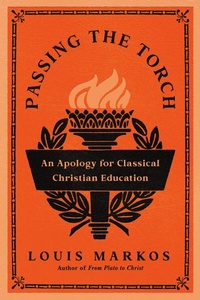
Passing the Torch
Description

What is the purpose and meaning of classical education?
Imagine a world where education isn't just about information transfer but about shaping the soul, where students are nurtured to become virtuous, morally self-regulating citizens. Passing the Torch makes an energetic case for the critical role of classical Christian education in today's world. From the pre-Christian musings of Plato to the modern reflections of C. S. Lewis, Passing the Torch intertwines the wisdom of diverse epochs to argue for an educational renaissance grounded in classical Christian values.
Passing the Torch takes educators and parents on a literary and philosophical pilgrimage that includes:
- Bibliographic Essays: Each essay serves as a gateway to key texts and influential thinkers, making it an invaluable guide for educators and homeschooling parents alike.
- Close Readings: Delve into thoughtful examinations of pivotal figures such as Augustine, Rousseau, and Dorothy Sayers offering an intimate understanding of the moral and educational imperatives they championed.
- Passionate Advocacy: Passing the Torch ignitesa fervor for the value and necessity of classical Christian education that is both infectious and inspiring.
In an era where educational paradigms often prioritize technological proficiency over moral formation, Passing the Torch is a call to return to the roots of classical Christian education.
"Reflecting on the writings of literary and philosophical giants from Plato and Augustine to C.S. Lewis and Dorothy Sayers, Markos makes a strong case for the benefits of classical education over the modern public education system." - Library Journal Review, April 2025
More details
Other editions
Additional editions
Person
Louis Markos (PhD, University of Michigan) is professor of English and scholar in residence at Houston Christian University, where he holds the Robert H. Ray Chair in Humanities. His many books include From Achilles to Christ: Why Christians Should Read the Pagan Classics, From Plato to Christ: How Platonic Thought Shaped the Christian Faith, The Myth Made Fact: Reading Greek and Roman Mythology through Christian Eyes, Apologetics for the 21st Century, Atheism on Trial, From Aristotle to Christ, and On the Shoulders of Hobbits: The Road to Virtue with Tolkien and Lewis.
Content
Preface Introduction: The Nature of Man Part 1: The Nature of Education 1. Liberal Arts Versus Vocational 2. Canonical Versus Ideological 3. Books Versus Textbooks 4. History Versus Social Studies 5. Humanities Versus Social Sciences 6. Goodness, Truth, and Beauty Versus Relativism 7. Virtues Versus Values Part 2: The Nature of the Debate 8. Plato's Republic: The Educational Journey of the Philosopher-King 9. Augustine's De Doctrina Christiana: Learning to Think Rightly 10. Jean-Jacques Rousseau's Emile: The Pedagogical Implications of Denying Original Sin 11. John Dewey's Democracy and Education: The Birth of Progressive-Pragmatic Education 12. C. S. Lewis's The Abolition of Man: Building Students' Chests 13. Dorothy Sayers and Charlotte Mason: How Best to Train the Young 14. Mortimer Adler, E. D. Hirsch, and Neil Postman: Howto Educate Americans Conclusion: From a Philosophy of Life to a Theory of Education Bibliographical Essay Appendix Scripture Index
