


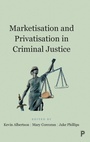
Marketisation and Privatisation in Criminal Justice
Policy Press
1st Edition
Published on 3. July 2020
358 pages
978-1-4473-4617-3 (ISBN)
Description

This collection offers a comprehensive review of the origins, scale and breadth of the privatisation and marketisation revolution across the criminal justice system.
Leading academics and researchers assess the consequences of market-driven criminal justice in a wide range of contexts, from prison and probation to policing, migrant detention, rehabilitation and community programmes. Using economic, sociological and criminological perspectives, illuminated by accessible case studies, they consider the shifting roles and interactions of the public, private and voluntary sectors.
As privatisation, outsourcing and the impact of market cultures spread further across the system, the authors look ahead to future developments and signpost the way to reform in a 'post-market' criminal justice sphere.
Leading academics and researchers assess the consequences of market-driven criminal justice in a wide range of contexts, from prison and probation to policing, migrant detention, rehabilitation and community programmes. Using economic, sociological and criminological perspectives, illuminated by accessible case studies, they consider the shifting roles and interactions of the public, private and voluntary sectors.
As privatisation, outsourcing and the impact of market cultures spread further across the system, the authors look ahead to future developments and signpost the way to reform in a 'post-market' criminal justice sphere.
More details
Edition
First Edition
Language
English
Place of publication
Bristol
United Kingdom
Publishing group
Bristol University Press
Target group
Professional and scholarly
Illustrations
1 s/w Abbildung, 2 s/w Tabellen
2 Tables, black and white; 1 Illustrations, black and white
ISBN-13
978-1-4473-4617-3 (9781447346173)
DOI
https://doi.org/10.51952/9781447346173
Copyright in bibliographic data and cover images is held by Nielsen Book Services Limited or by the publishers or by their respective licensors: all rights reserved.
Schweitzer Classification
Other editions
Additional editions

Book
07/2020
1st Edition
Policy Press
€48.80
Shipment within 15-20 days
Book
07/2020
1st Edition
Policy Press
€110.20
Shipment within 15-20 days

E-Book
07/2020
1st Edition
Policy Press
€51.49
Available for download
Persons
Kevin Albertson is Professor of Economics at Manchester Metropolitan University.
Mary Corcoran is Reader in Criminology at Keele University.
Jake Phillips is Reader in Criminology at Sheffield Hallam University.
Mary Corcoran is Reader in Criminology at Keele University.
Jake Phillips is Reader in Criminology at Sheffield Hallam University.
Content
Introduction: Marketisation and Privatisation in Criminal Justice; an Overview ~ Kevin Albertson, Mary Corcoran and Jake Phillips
Part 1 ~ Introduction and Theoretical Frameworks
Market Society Utopianism in Penal Politics ~ Mary Corcoran
Outcomes-Based Contracts In the UK Public Sector ~ Chris Fox and Kevin Albertson
The Carceral State and the Interpenetration of Interests: Commercial, Governmental, and Civil Society Interests in Criminal Justice ~ James Gacek and Richard Sparks
Understanding the Privatisation of Probation Through the Lens of Bourdieu's Field Theory ~ Jake Phillips
The Progress of Marketisation: The Prison and Probation Experience ~ Kevin Albertson and Chris Fox
Part 2 ~ Experiences of Marketisation in the Public Sector
The 'Soft Power' of Marketisation: The Administrative Assembling of Irish Youth Justice Work ~ Katharina Swirak
Police Outsourcing and Labour Force Vulnerability ~ Roxanna Dehaghani and Adam White
Marketisation or Corporatisation? Making Sense of Private Influence in Public Policing Across Canada and the US ~ Kevin Walby and Randy K. Lippert
Marketisation and Competition in Criminal Legal Aid: Implications for Access to Justice ~ Tom Smith and Ed Johnston
Holding Private Prisons to Account: What Role for Controllers As 'The Eyes and Ears of the State'? ~ Joanna Hargreaves and Amy Ludlow
A Flawed Revolution? Interrogating the Transforming Rehabilitation Changes in England and Wales Through the Prism of a Community Justice Court ~ Jill Annison, Tim Auburn, Daniel Gilling and Gisella Hanley Santos
Part 3 ~ Marketisation and the Voluntary Sector
Constructive Ambiguity, Market Imaginaries and the Penal Voluntary Sector in England and Wales ~ Mary Corcoran, Mike Maguire and Kate Williams
Marketisation of Women's Organisations in the Criminal Justice Sector ~ Vickie Cooper and Maureen Mansfield
Surviving the Revolution? The Voluntary Sector Under Transforming Rehabilitation in England and Wales ~ Kevin Wong and Rob Macmillan
Part 4 ~ Beyond Institutions: Marketisation Beyond the Criminal Justice Institution
Neoliberal Imaginaries and GPS Tracking in England and Wales ~ Mike Nellis
Misery As Business: How Immigration Detention Became a Cash-Cow in Britain's Borders ~ Monish Bhatia and Victoria Canning
Prison Education: A Northern European Wicked Policy Problem? ~ Gerry Czerniawski
Making Local Regulation Better? Marketisation, Privatisation and the Erosion of Social Protection ~ Steve Tombs
The 'Fearsome Frowning Face of the State' and Ex-Prisoners: Promoting Employment or Alienation, Anger and Perpetual Punishment? ~ Del Roy Fletcher
Conclusion: What Has Been Learned ~ Kevin Albertson, Mary Corcoran and Jake Phillips
Part 1 ~ Introduction and Theoretical Frameworks
Market Society Utopianism in Penal Politics ~ Mary Corcoran
Outcomes-Based Contracts In the UK Public Sector ~ Chris Fox and Kevin Albertson
The Carceral State and the Interpenetration of Interests: Commercial, Governmental, and Civil Society Interests in Criminal Justice ~ James Gacek and Richard Sparks
Understanding the Privatisation of Probation Through the Lens of Bourdieu's Field Theory ~ Jake Phillips
The Progress of Marketisation: The Prison and Probation Experience ~ Kevin Albertson and Chris Fox
Part 2 ~ Experiences of Marketisation in the Public Sector
The 'Soft Power' of Marketisation: The Administrative Assembling of Irish Youth Justice Work ~ Katharina Swirak
Police Outsourcing and Labour Force Vulnerability ~ Roxanna Dehaghani and Adam White
Marketisation or Corporatisation? Making Sense of Private Influence in Public Policing Across Canada and the US ~ Kevin Walby and Randy K. Lippert
Marketisation and Competition in Criminal Legal Aid: Implications for Access to Justice ~ Tom Smith and Ed Johnston
Holding Private Prisons to Account: What Role for Controllers As 'The Eyes and Ears of the State'? ~ Joanna Hargreaves and Amy Ludlow
A Flawed Revolution? Interrogating the Transforming Rehabilitation Changes in England and Wales Through the Prism of a Community Justice Court ~ Jill Annison, Tim Auburn, Daniel Gilling and Gisella Hanley Santos
Part 3 ~ Marketisation and the Voluntary Sector
Constructive Ambiguity, Market Imaginaries and the Penal Voluntary Sector in England and Wales ~ Mary Corcoran, Mike Maguire and Kate Williams
Marketisation of Women's Organisations in the Criminal Justice Sector ~ Vickie Cooper and Maureen Mansfield
Surviving the Revolution? The Voluntary Sector Under Transforming Rehabilitation in England and Wales ~ Kevin Wong and Rob Macmillan
Part 4 ~ Beyond Institutions: Marketisation Beyond the Criminal Justice Institution
Neoliberal Imaginaries and GPS Tracking in England and Wales ~ Mike Nellis
Misery As Business: How Immigration Detention Became a Cash-Cow in Britain's Borders ~ Monish Bhatia and Victoria Canning
Prison Education: A Northern European Wicked Policy Problem? ~ Gerry Czerniawski
Making Local Regulation Better? Marketisation, Privatisation and the Erosion of Social Protection ~ Steve Tombs
The 'Fearsome Frowning Face of the State' and Ex-Prisoners: Promoting Employment or Alienation, Anger and Perpetual Punishment? ~ Del Roy Fletcher
Conclusion: What Has Been Learned ~ Kevin Albertson, Mary Corcoran and Jake Phillips
