

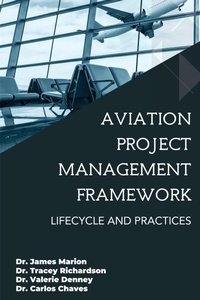
Aviation Project Management Framework
Description

Aviation projects are high-stakes, high-risk, and highly regulated-yet existing project management standards often fall short of addressing their unique demands. As the field of project management evolves toward more conceptual and flexible approaches, aviation professionals are left without the concrete, process-driven guidance they need to succeed.
Aviation Project Management Framework bridges this critical gap with a comprehensive, research-backed framework designed specifically for the aviation industry. Drawing on real-world case studies and academic research, this book outlines a tailored methodology that accounts for aviation's distinct operational constraints, stringent safety standards, and complex regulatory environment.
Whether you're overseeing aircraft design, airport construction, maintenance operations, or regulatory compliance programs, this book equips you with tools and strategies that align with aviation's high-pressure, no-fail culture.
Perfect for project managers, engineers, regulators, and aviation executives alike, this essential guide empowers you to deliver successful outcomes in one of the world's most challenging and dynamic industries.
More details
Other editions
Additional editions
Persons
Content
- Aviation Project Management Framework: Lifecycle and Practices
- Half-Title Page
- Title Page
- Copyright Page
- Contents
- List of Figures
- Who Should Read This Book?
- The Aviation Community
- The Project Management Community
- The Academic Community
- Description
- Introduction
- The Challenging World of the Aviation Project Manager: What Do Aviation Project Managers Tell Us?
- Chapter 1 Why a New Framework?
- Chapter 2 The Aviation Project Management Framework Overview
- The Aviation Project Management (AVPM Lifecycle)
- The Value Chain
- Activities as Practices
- The Aviation Project Management Framework Practices
- Chapter 3 In What Order? Phases of a Project
- The Pre-Project Phase
- Pre-Project Phase Summary
- The Start Phase
- Start Phase Practices Summary
- The Plan Phase
- Plan Phase Summary
- The Execute Phase
- Execute Phase Summary
- The Control Phase
- Control Phase Summary
- The Close Phase
- Close Phase Summary
- Chapter 4 Aviation Plan-Driven Project Case: AirCare
- Pre-Project Activities
- Lifecycle Selection
- Requirements Sources
- Schedule Management
- Stakeholder Landscape
- Risk and Safety
- High-Level ROM Budget Estimate
- Talent Needs Assessment Report
- Supporting Practices in the Pre-Project Environment
- Innovation and Research Technology Needs Checklist
- Supply Chain and Procurement Management
- Aviation Safety Management
- Technology and Engineering Management
- Aviation Quality Management
- Aviation Regulation, Compliance, and Certification
- Environmental and Sustainability Management
- Start Phase Activities
- Lifecycle Management
- Requirement Collection and Statement of Work
- Project Schedule Management
- Stakeholder Identification
- Risk and Safety
- Top-Down Refined Budget Estimate
- Talent Landscape/Source
- Start Phase Supporting Practice Deliverables
- Innovation and Research Commercialization Plan Deliverables and Checklist
- Approved Suppliers Deliverables and Checklist
- Technology and Engineering Commercialization Plan Deliverables and Checklist
- Quality Systems and Assurance Plan Deliverables and Checklist
- Certification Plan Deliverables and Checklist
- Environmental and Sustainability Policy Deliverables and Checklist
- Plan Phase
- Lifecycle Management Plan
- Scope and Baseline
- Schedule Plan and Baseline
- Stakeholder Plan
- Risk and Safety Plan
- Budget Plan and Baseline
- Team Development Plan
- Plan Phase Supporting Practices
- Execute and Control Phases
- Lifecycle Practice in Execution and Control
- Requirements Practice in Execution and Control
- Schedule Management Practice in Execution and Control
- Stakeholder Management Practice in Execution and Control
- Risk and Safety Management Practice in Execution and Control
- Financial Management Practice in Execution and Control
- Human Resource and Team Management Practice in Execution and Control
- Supporting Practices in Execution and Control
- Close Phase
- Chapter 5 Aviation Iterative Project Case
- The Plan Phase
- Product Backlog for Flight Management System (FMS) Software Development and Update
- Analysis of Additional Scope and Schedule Elements
- Sprint Plan for Flight Management System (FMS) Software Development and Update
- Product Backlog for Sprint 1: Assessment and Planning
- Schedule for Sprint 1: Assessment and Planning (Final)
- Schedule for Sprint 2: Core Features Development (Tentative, Pending SP1 Outcome)
- Schedule for Sprint 3: Additional Features Development (Tentative, Pending SP2 Outcome)
- Schedule for Sprint 4: Testing and Certification (Tentative, Pending SP3 Outcome)
- Schedule for Sprint 5: Deployment and Training (Tentative, Pending SP4 Outcome)
- Standup Meeting Minutes
- Sprint Reviews
- Iterative Practice Deliverables
- Conclusions
- Appendix
- Aviation-Specific Terms
- Core Project Management Terms
- Quality and Compliance Terms
- Technical Systems
- Resource and Maintenance Terms
- Practice Guides
- Practice Guides: Primary Practice Example
- Lifecycle Management Practice Guide: AVPMPGLM1.000
- Practice Guides: Supporting Practice Example
- Introduction
- AVPM: Aviation Project Management Framework Document
- Practice Guides: The Iterative Practices
- About the Authors
- Index
- Back Cover
