

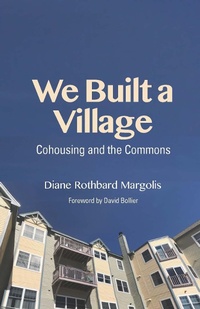
We Built a Village
Cohousing and the Commons
Published on 23. August 2022
277 pages
978-1-61332-180-5 (ISBN)
Description

Describes the development of one of the first cohousing communities in the U.S. offering a social understanding of its commons.
Cohousing, a form of communal living that clusters around shared common space, began about a half century ago in Denmark. We Built a Village describes the process of planning and building of an early cohousing community in Cambridge, Massachusetts, and the way the people involved simultaneously built their homes and their social structure.
As both a memoir and a sociological analysis that probes the differences between commons and markets, it is unique among books about cohousing. When this group of people began in the late 1990s to construct their cohousing community, they set in motion a counterpoint between the physical spaces and the social configurations that would guide their lives together, even up to creative responses to the recent pandemic.
Cohousing, a form of communal living that clusters around shared common space, began about a half century ago in Denmark. We Built a Village describes the process of planning and building of an early cohousing community in Cambridge, Massachusetts, and the way the people involved simultaneously built their homes and their social structure.
As both a memoir and a sociological analysis that probes the differences between commons and markets, it is unique among books about cohousing. When this group of people began in the late 1990s to construct their cohousing community, they set in motion a counterpoint between the physical spaces and the social configurations that would guide their lives together, even up to creative responses to the recent pandemic.
Reviews / Votes
"The Diane Margolis' rendition of cohousing is a very human one, and overdue. Putting togethera custom high-functioning neighborhood is never simple, and this book does not shy away from
the complexities. But getting these communities together is getting easier-the foibles are fewer
because of stories like this-and one day cohousing will be the norm, not the exception."
- Charles Durrett (architect, AIA, and cofounder of cohousing in North America) "With a background as an author and sociologist, Diane Margolis has been an early pioneer and
leader in the cohousing movement in America. She has a deep understanding of the social
process critical to the creative and successful development and evolution of cohousing
communities. I definitely recommend We Built a Village."
- James W Leach (President, Wonderland Hill Development Company) "This book takes us back to the formation of the first cohousing communities in the United
States, when ordinary people (not just architects, developers, and planners) decided they wanted
a different kind of neighborhood where they collaborate with their neighbors on a daily basis.
That Cambridge Cohousing, along with hundreds of other communities, is still thriving shows
that Americans are looking for something the housing market is still not providing-authentic
community. The book illustrates how people without "a leader" or shared spiritual practice can
create strong enduring communities that attract their next generations of residents and stand the
test of time. I am particularly intrigued by Diane's discussions of how Americans struggle with
private property rights vs the commons, conflicting values deeply embedded in most of us."
- Kathryn McCamant (President, CoHousing Solutions; cofounder of cohousing in North America)
More details
Language
English
Place of publication
New York
United States
Target group
Professional and scholarly
Illustrations
42 b/w illustrations
ISBN-13
978-1-61332-180-5 (9781613321805)
Copyright in bibliographic data and cover images is held by Nielsen Book Services Limited or by the publishers or by their respective licensors: all rights reserved.
Schweitzer Classification
Other editions
Additional editions
Book
12/2022
New Village Press
€23.50
Shipment within 3-4 weeks
Persons
Diana Margolis (Author)
Diane Margolis is a founding member of Cambridge Cohousing where she has lived for more than twenty years. She is a former member of the Coho/US Board of Directors and co-founder and Director Emeritus of the Cohousing Research Network. She was a fellow at the Radcliffe Institute for Advanced Study 1980-1981. She has published many research articles, and her books include The Fabric of Self, which won Honorable Mention at the First Annual Book Award of the Eastern Sociological Society. She is Professor Emerita of Sociology at the University of Connecticut.
Diane Margolis is a founding member of Cambridge Cohousing where she has lived for more than twenty years. She is a former member of the Coho/US Board of Directors and co-founder and Director Emeritus of the Cohousing Research Network. She was a fellow at the Radcliffe Institute for Advanced Study 1980-1981. She has published many research articles, and her books include The Fabric of Self, which won Honorable Mention at the First Annual Book Award of the Eastern Sociological Society. She is Professor Emerita of Sociology at the University of Connecticut.
