


Pyropolitics
Description

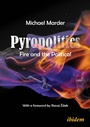
From the books and heretics burnt on the pyres of the Inquisition to self-immolations at protest rallies, from the massive burning of oil on the global scale to inflammatory speech, from the imagery of revolutionary sparks ready to ignite the spirits of the oppressed to car bombings in the Middle East, -fire proves to be an indispensable element of the political. To account for this elemental source of heat and light, Pyropolitics delineates a semantico-discursive field, replete with the literal and metaphorical mentions and uses of fires, flames, sparks, immolations, incinerations, and burning in political theory and practices. Relying on classical political thought, literature, theology, contemporary philosophy, and an analysis of current events, Michael Marder argues that geo-politics, or the politics of the Earth, has always had an unstable, at once shadowy and blinding, underside¿pyropolitics, or the politics of fire. If this obscure double of geopolitics is, increasingly, dictating the rules of the game today, then it is crucial to learn to speak its language, to discern its manifestations, and to project where our world ablaze is heading.
Reviews / Votes
"With this subtle, smart, and well-documented book, Michael Marder authoritatively weighs in on an old discussion about the role that fundamental elements (water, air, earth, fire) play in the construction and destruction of societies. This is a brilliant contribution to political metaphorology, useful for understanding the logic behind the combustible world in which we live." -Daniel Innerarity, Director of Globernance: Institute for Democratic Governance, San Sebastián, SpainMore details
Other editions
Additional editions
Persons
Content
- Intro
- Contents
- Foreword A Hologram of Our Present
- Preface Pyropolitics Reborn
- Kindling The World on Fire
- Chapter 1. The ABC of Pyropolitics, or the 'Elemental Regimes' of Carl Schmitt
- 1.1. The Idea of Elemental Politics
- 1.2. The Elements, Nomos and Anomie
- 1.3. Through Air to Fire
- 1.4. Pyropolitics and Spatial Imaginary
- 1.5. Toward a Pyropolitical Phenomenology
- 1.6. The Risk of Pyropolitics
- Chapter 2. Light without Heat, Heat without Light, and the Problem of Evil
- 2.1. The Cold Light of the Enlightenment
- 2.2. The Two "Powers" of Fire
- 2.3. Dark Heat, or Evil from the Perspective of the Enlightenment
- 2.4. The Substance, of Which Evil Is Made
- 2.5. Absolute Separation and Evil
- 2.6. A New Synthesis of Light and Heat?
- Chapter 3. Pyropolitical Theology I: The Fires of Revolution
- 3.1. Flying Sparks
- 3.2. A Flaming Ideal
- 3.3. The Inflammations of Revolutionary Spirit
- 3.4. Hegel on Fire
- 3.5. Revolutionary Alchemy
- 3.6. Catching Fire, or How Revolutions Spread
- Chapter 4. Pyropolitical Theology II: The Politics of Sacrifice
- 4.1. A Theology of Burnt Offerings
- 4.2. Self-Immolation and Sovereignty
- 4.3. An Interlude: Extremist Politics
- 4.4. On Holocausts, or Burnt Offerings at the Extreme
- 4.5. The Burning Question of the Inquisition
- 4.6. Global Energy Production, or 'What Do They Salvage from the Great Fire of Life?'
- Chapter 5. The End of Heliotropic Utopias: When the Sun Sets on the City upon the Hill
- 5.1. Around the Sun(s)
- 5.2. Heliocentric Unity and Its Discontents
- 5.3. The Solar Fetish of the Empire
- 5.4. A Shining City upon a Hill: The Pyropolitical Sublime
- 5.5. Westernisation, Nihilism, and the Setting Sun
- 5.6. Coda: Politics of Fire and Sexual Difference
- Chapter 6. Around the Hearth: Politics in the Kitchen
- 6.1. The Power of the Hearth, or the Domestication of Politics
- 6.2. The Inner Fire of the 'Kitchen Cabinet'
- 6.3. What's Cooking in the Melting Pot?
- 6.4. In Search of Perfection: The Arts of Cooking and Politics
- 6.5. Revolutionary and Post-Revolutionary Political Kitchens
- 6.6. Consuming Ourselves: Pyropolitical Cannibalism
- Extinguishing The Politics of Ashes
- Appendix
- Fiery Words: Against the Literal / Metaphorical Divide
- A Shadow Sun
- Burning Ourselves to Death
- The Implosion of History
- Kant's Fire
- A New Shape of Pyropolitics
- Notes
