

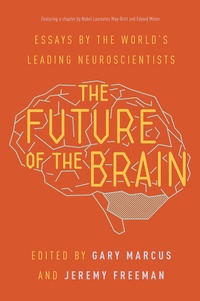
The Future of the Brain
Essays by the World's Leading Neuroscientists
1st Edition
Published on 28. July 2015
304 pages
978-1-4008-5193-5 (ISBN)
Description

The world's top experts take readers to the very frontiers of brain science
Includes a chapter by 2014 Nobel laureates May-Britt Moser and Edvard Moser
An unprecedented look at the quest to unravel the mysteries of the human brain, The Future of the Brain takes readers to the absolute frontiers of science. Original essays by leading researchers such as Christof Koch, George Church, Olaf Sporns, and May-Britt and Edvard Moser describe the spectacular technological advances that will enable us to map the more than eighty-five billion neurons in the brain, as well as the challenges that lie ahead in understanding the anticipated deluge of data and the prospects for building working simulations of the human brain. A must-read for anyone trying to understand ambitious new research programs such as the Obama administration's BRAIN Initiative and the European Union's Human Brain Project, The Future of the Brain sheds light on the breathtaking implications of brain science for medicine, psychiatry, and even human consciousness itself.
Contributors include: Misha Ahrens, Ned Block, Matteo Carandini, George Church, John Donoghue, Chris Eliasmith, Simon Fisher, Mike Hawrylycz, Sean Hill, Christof Koch, Leah Krubitzer, Michel Maharbiz, Kevin Mitchell, Edvard Moser, May-Britt Moser, David Poeppel, Krishna Shenoy, Olaf Sporns, Anthony Zador.
Includes a chapter by 2014 Nobel laureates May-Britt Moser and Edvard Moser
An unprecedented look at the quest to unravel the mysteries of the human brain, The Future of the Brain takes readers to the absolute frontiers of science. Original essays by leading researchers such as Christof Koch, George Church, Olaf Sporns, and May-Britt and Edvard Moser describe the spectacular technological advances that will enable us to map the more than eighty-five billion neurons in the brain, as well as the challenges that lie ahead in understanding the anticipated deluge of data and the prospects for building working simulations of the human brain. A must-read for anyone trying to understand ambitious new research programs such as the Obama administration's BRAIN Initiative and the European Union's Human Brain Project, The Future of the Brain sheds light on the breathtaking implications of brain science for medicine, psychiatry, and even human consciousness itself.
Contributors include: Misha Ahrens, Ned Block, Matteo Carandini, George Church, John Donoghue, Chris Eliasmith, Simon Fisher, Mike Hawrylycz, Sean Hill, Christof Koch, Leah Krubitzer, Michel Maharbiz, Kevin Mitchell, Edvard Moser, May-Britt Moser, David Poeppel, Krishna Shenoy, Olaf Sporns, Anthony Zador.
All prices
More details
Edition
Course Book
Language
English
Place of publication
Princeton, NJ
United States
Publishing group
De Gruyter
Target group
Professional and scholarly
Edition type
Digital original
Product notice
Reflowable
Illustrations
9 color illus. 2 halftones. 18 line illus.
File size
5,18 MB
ISBN-13
978-1-4008-5193-5 (9781400851935)
Schweitzer Classification
Other editions
Additional editions
Book
11/2016
Princeton University Press
€18.56
Article exhausted; check different version
Book
11/2014
Princeton University Press
€24.76
Article exhausted; check different version
Persons
Gary Marcus is professor emeritus of psychology and neural science at New York University. His books include Guitar Zero: The Science of Becoming Musical at Any Age and Kluge: The Haphazard Evolution of the Human Mind. Jeremy Freeman is a neuroscientist at the Howard Hughes Medical Institute's Janelia Farm Research Campus.
Content
List of Contributors ix
Preface Gary Marcus and Jeremy Freeman xi
MAPPING THE BRAIN
Building Atlases of the Brain 3
Mike Hawrylycz with Chinh Dang, Christof Koch, and Hongkui Zeng
Whole Brain Neuroimaging and Virtual Reality 17
Misha B. Ahrens
Project MindScope 25
Christof Koch with Clay Reid, Hongkui Zeng, Stefan Mihalas, Mike Hawrylycz, John Philips, Chinh Dang, and Allan Jones
The Connectome as a DNA Sequencing Problem 40
Anthony Zador
Rosetta Brain 50
George Church with Adam Marblestone and Reza Kalhor
COMPUTATION
Understanding the Cortex through Grid Cells 67
May-Britt Moser and Edvard I. Moser
Recording from Many Neurons Simultaneously: From Measurement to Meaning 78
Krishna V. Shenoy
Network Neuroscience 90
Olaf Sporns
Large-Scale Neuroscience: From Analytics to Insight 100
Jeremy Freeman
SIMULATING THE BRAIN
Whole Brain Simulation 111
Sean Hill
Building a Behaving Brain 125
Chris Eliasmith
LANGUAGE
The Neurobiology of Language 139
David Poeppel
Translating the Genome in Human Neuroscience 149
Simon E. Fisher
Color plates follow p. 160
SKEPTICS
Consciousness, Big Science, and Conceptual Clarity 161
Ned Block
From Circuits to Behavior: A Bridge Too Far? 177
Matteo Carandini
Lessons from Evolution 186
Leah Krubitzer
Lessons from the Genome 194
Arthur Caplan with Nathan Kunzler
The Computational Brain 205
Gary Marcus
IMPLICATIONS
Neurotechnology 219
John Donoghue
The Miswired Brain, Genes, and Mental Illness 234
Kevin J. Mitchell
Neural Dust: An Untethered Approach to Chronic Brain-Machine Interfaces 243
Michel M. Maharbiz with Dongjin Seo, Jose M. Carmena, Jan M. Rabaey, and Elad Alon
AFTERWORD
Neuroscience in 2064: A Look at the Last Century 255
Christof Koch and Gary Marcus
Glossary 271
Index 275
Preface Gary Marcus and Jeremy Freeman xi
MAPPING THE BRAIN
Building Atlases of the Brain 3
Mike Hawrylycz with Chinh Dang, Christof Koch, and Hongkui Zeng
Whole Brain Neuroimaging and Virtual Reality 17
Misha B. Ahrens
Project MindScope 25
Christof Koch with Clay Reid, Hongkui Zeng, Stefan Mihalas, Mike Hawrylycz, John Philips, Chinh Dang, and Allan Jones
The Connectome as a DNA Sequencing Problem 40
Anthony Zador
Rosetta Brain 50
George Church with Adam Marblestone and Reza Kalhor
COMPUTATION
Understanding the Cortex through Grid Cells 67
May-Britt Moser and Edvard I. Moser
Recording from Many Neurons Simultaneously: From Measurement to Meaning 78
Krishna V. Shenoy
Network Neuroscience 90
Olaf Sporns
Large-Scale Neuroscience: From Analytics to Insight 100
Jeremy Freeman
SIMULATING THE BRAIN
Whole Brain Simulation 111
Sean Hill
Building a Behaving Brain 125
Chris Eliasmith
LANGUAGE
The Neurobiology of Language 139
David Poeppel
Translating the Genome in Human Neuroscience 149
Simon E. Fisher
Color plates follow p. 160
SKEPTICS
Consciousness, Big Science, and Conceptual Clarity 161
Ned Block
From Circuits to Behavior: A Bridge Too Far? 177
Matteo Carandini
Lessons from Evolution 186
Leah Krubitzer
Lessons from the Genome 194
Arthur Caplan with Nathan Kunzler
The Computational Brain 205
Gary Marcus
IMPLICATIONS
Neurotechnology 219
John Donoghue
The Miswired Brain, Genes, and Mental Illness 234
Kevin J. Mitchell
Neural Dust: An Untethered Approach to Chronic Brain-Machine Interfaces 243
Michel M. Maharbiz with Dongjin Seo, Jose M. Carmena, Jan M. Rabaey, and Elad Alon
AFTERWORD
Neuroscience in 2064: A Look at the Last Century 255
Christof Koch and Gary Marcus
Glossary 271
Index 275

