

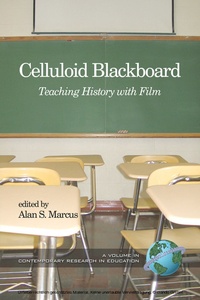
Celluloid Blackboard
Teaching History with Film
1st Edition
Published on 1. October 2006
273 pages
978-1-60752-579-0 (ISBN)
Description

This volume advocates for including feature films in secondary history classrooms through examining the ways in which films can promote students' historical understanding while also addressing the potential drawbacks to using film.
In part one the essays explore three frameworks for the analysis of film by secondary students. Part two fills a void in the scholarship, reporting on four recent studies that explore how the use of film may encourage the development of students' historical understanding. Finally, part three describes the results from two secondary teachers incorporating film into their history classrooms.
All prices
More details
Other editions
Additional editions
Book
10/2006
Information Age Publishing
€122.50
Article not available at the moment
Content
- Cover
- Celluloid Blackboard
- Series Page
- Celluloid Blackboard: Teaching History with Film
- Copyright Page
- Dedication Page
- CONTENTS
- SERIES INTRODUCTION
- ACKNOWLEDGMENTS
- 1: EXPLORING THE PASTWITH FEATURE FILM
- INTRODUCTION
- THE VALUE OF STUDYING HISTORY WITH FILM
- THE CHALLENGES TO STUDYING HISTORY THROUGH FILM
- ORGANIZATION OF THIS VOLUME
- Frameworks for the Analysis of Film
- The Research Base
- From the Classroom
- USING FILM TO REFORM HISTORY EDUCATION
- NOTE
- REFERENCES
- I: FRAMEWORKS FOR THE ANALYSIS OF FILM
- 2: MURROW CONFRONTSMCCARTHY
- INTRODUCTION
- FIRST STAGE OF ANALYSIS
- Content
- Production
- Reception
- SECOND STAGE OF ANALYSIS:FOUR FRAMEWORKS FOR ANALYSIS
- Framework I: Moving-Image Documents as Representations of History
- Framework II: Moving-Image Documents as Evidence for Social and Cultural History
- Framework III: Moving-Image Documents as Evidence for Historical Fact
- Framework IV: Moving-Image Documents as Evidence for the History of Film and Television
- APPENDIX AThe Full Text of Murrow's Closing Comment (March 9, 1954)
- APPENDIX BFull Text of Walter Cronkite's Closing Remarks (February 27, 1968)
- NOTES
- REFERENCES
- 3: "THE WAY OF THE FUTURE"-PROBING THE AVIATORFOR HISTORICALUNDERSTANDING
- INTRODUCTION
- CULTURAL SHIFTS AND THE PURPOSEOF HISTORY EDUCATION
- Film and the Challenge to Historical Understanding
- The Aviator and the Process of Representation
- FILM AS HISTORICAL REPRESENTATIONAND SOCIOCULTURAL ARTIFACT
- NOTES
- REFERENCES
- 4: EVALUATING THEEDUCATIONAL POTENTIALOF HOLLYWOODHISTORY MOVIES
- INTRODUCTION
- WHAT IS A PEDAGOGICAL CONTENT ANALYSIS?
- Content Coverage/Period Representation: Fact and Fiction
- Historical Construction/Social Construction:Constructing the Past and the People in It
- Empathy/Moral Response: Reacting to the Past
- Composition: Visual and Aural Rhetorics
- Using the Pedagogical Content Analysis Framework
- PEDAGOGICAL CONTENT ANALYSIS: THE ALAMO
- Content Coverage/Period Representation
- Historical Construction/Social Construction
- Empathy/Moral Response
- PEDAGOGICAL CONTENT ANALYSIS: THE PATRIOT
- Content Coverage/Period Representation
- Historical Construction/Social Construction
- Empathy/Moral Response
- IMPLICATIONS FOR TEACHING AND LEARNING HISTORY
- CONCLUSION
- NOTES
- REFERENCES
- II: THE RESEARCH BASE
- 5: POPULAR FILMAND YOUNG PEOPLE'SUNDERSTANDING OF THEHISTORY OF NATIVE-WHITERELATIONS1
- INTRODUCTION
- THE FILMS
- THE STUDENTS
- METHOD
- FINDINGS
- DISCUSSION
- NOTE
- REFERENCES
- APPENDIX 1: INTERVIEW QUESTIONS
- APPENDIX 2: FILM SEGMENTS
- 6: STUDENTS MAKING SENSEOF THE PAST
- INTRODUCTION
- MAKING SENSE OF THE PAST
- History, Film, and Historical Understanding
- METHODS2
- Participants
- OVERVIEW OF CLASSROOM PRACTICES
- Data Collection
- Data Analysis
- RESULTS
- Overall Beliefs About Film
- Making Meaning of the Past in Class
- Iron Jawed Angels
- The 60's and Uncle Tom's Cabin
- CONCLUSION AND IMPLICATIONS
- NOTES
- REFERENCES
- APPENDIX ADEMOGRAPHICS OF STUDENT PARTICIPANTS
- APPENDIX BDESCRIPTION OF FILMS USED IN CLASS
- Do the Right Thing (1989)
- Gangs of New York (2002)
- Glory (1989)
- Iron Jawed Angels (2004)
- Spartacus (1960)
- The 60's (1999, made for TV)
- Uncle Tom's Cabin (1987, made for TV)
- Various Vietnam Films (student's choice)
- Wild Boys of the Road (1933)
- APPENDIX CPRE- AND POST-SURVEY INSTRUMENTS AND IN-CLASSFILM ASSESSMENT
- Pre-Survey (instrument condensed for paper)
- Prior viewing of other U.S. History related movies (non-WWII)
- Most Trustworthy
- Least Trustworthy
- Post-Survey (condensed)
- Most Trustworthy
- Least Trustworthy
- In-Class Film Assessment (condensed)
- 7: STRONGER THAN THECLASSROOM
- INTRODUCTION
- STUDENTS
- THE TASK
- RESULTS
- The Essays
- Surveys
- CONCLUSION
- NOTE
- REFERENCES
- APPENDIX A
- The Fort Laramie Treaty
- A Path to War
- APPENDIX B
- "The Significance of the Frontier in American History"
- APPENDIX C
- APPENDIX D
- 8: ATTEMPTING TOUNDERSTAND THE LIVESOF OTHERS
- INTRODUCTION
- CONCEPTIONS OF HISTORICAL EMPATHY
- METHODS
- Case Description
- LEARNING ABOUT TOTALITARIANISM AND THEHOLOCAUST THROUGH FILM
- FILM ACTIVITIES
- The Wave
- In Memory of Millions
- Swing Kids
- America and the Holocaust: Deceit and Indifference
- ESSAYS AND STUDENT UNDERSTANDING
- DISCUSSION OF FILM AS A TOOLFOR HISTORICAL EMPATHY
- NOTES
- REFERENCES
- APPENDIX A: FILM DESCRIPTIONS
- III: FROM THE CLASSROOM
- 9: DOING THE RIGHT THINGBY TEACHING FILM IN THEAMERICAN HISTORYCLASSROOM
- INTRODUCTION
- Mississippi Burning
- CONTEXT OF COURSE
- SPIKE LEE, RACE, AND FILMMAKING
- Do the Right Thing
- STUDENT RESPONSE TO DO THE RIGHT THING
- CONCLUSION
- NOTES
- REFERENCES
- 10: USING POPULAR CINEMATO STUDY THE 1960s AND BEYOND
- INTRODUCTION
- HOW FILMS OF THE 1960s PORTRAYED THE 1960s
- THE SIXTIES DID NOT DIE IN 1969!
- 1971-1983: FOUR KEY FILMS ON THE 1960S
- THE 1960s THROUGH THE EYESOF THE REAGAN REVOLUTION
- THE 1960s IN THE 1990s AND BEYOND
- REFERENCES
- CONTRIBUTORS

