

Genius
Description

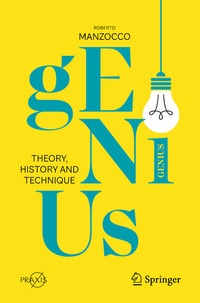
Genius is a fascinating topic. Everyone has an opinion on it, but not a lot of clarity. Much has been written on the subject - biographies, autobiographies, technical books, popular science books, and practical manuals - but genius in all of its dimensions has yet to be addressed. This book seeks to remedy that. What follows is a work of significant breadth that hopes to facilitate a nuanced popular understanding of the definition of genius, examining all of the main theories and approaches regarding the nature and origin of brilliance, the cognitive path that geniuses follow, and the difference that exists between "geniuses" on one side and "normal people" on the other. Pragmatic indications surrounding this issue are also examined, regarding such questions as: is it possible to become a genius or is genius innate? If it is possible, what is the path - no doubt long and difficult - that one must take? Is there a method for becoming a genius that can be taught and learned? This book will appeal to anyone who has ever contemplated great ideas and works and wondered how they came into being.
Reviews / Votes
"From historical and linguistic aspects to artificial intelligence (AI), the book presents centuries of thought and research on genius and related topics, including creativity, neurology, psychology, and environmental factors. . The book is written in a mixed style . . Manzocco provides many references that should help readers who want a deeper dive into any of the topics discussed in the book." (Yishai Feldman, Computing Reviews, October 23, 2023)More details
Other editions
Additional editions
Person
Roberto Manzocco is an Italian science writer, journalist, and historian of science who specializes in the history and philosophy of biology, technological innovation, and technological forecasting. After graduating with a degree in philosophy in 1999, he joined the Master's Program in Science Communication at the International School of Advanced Studies (SISSA) in Trieste, Italy. He worked as a science journalist, publishing more than 2000 articles over the course of five years. In 2008, Manzocco earned his Ph.D. in the History of Science at the University of Pisa. From 2008 to 2010, he was an Adjunct Professor in Philosophy of Science at the University of Udine. He has published four books, three in the field of so-called pop philosophy, and one on transhumanism.
Content
Chapter 1 - Clearing up the Sky. Sages, Heroes, Saints, and Geniuses.- Chapter 2 - Genius and its siblings.- Chapter 3 - Towards a Darwinian theory of genius.- Chapter 4 - Genius and the Enchanted Loom.- Chapter 5 - The contradictory heart of genius.- Chapter 6 - Forcing the skies.- Chapter 7 - How to become who you are.- Chapter 8 - Genius in the Machine.
