

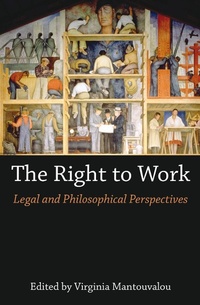
The Right to Work
Legal and Philosophical Perspectives
1st Edition
Published on 22. January 2015
388 pages
978-1-78225-499-7 (ISBN)
Description

The value of work cannot be underestimated in today's world. Work is valuable
because productive labour generates goods needed for survival, such as food and
housing; goods needed for self-development, such as education and culture; and
other material goods that people wish to have in order to live a fulfilling life. A
job also generally inspires a sense of achievement, self-esteem and the esteem of
others. People develop social relations at work, which can be very important for
them. Work brings both material and non-material benefits.
There is no doubt that work is a crucial good. Do we have a human right to this
good? What is the content of the right? Does it impose a duty on governments to
promote full employment? Does it entail an obligation to protect decent work?
There is also a question about the right-holders. Do migrants have a right to work,
for example? At the same time many people would rather not work. What kind of
right is this, if many people do not want to have it? The chapters of this book
address the uncertainty and controversy that surround the right to work both in
theoretical scholarship and in policymaking. They discuss the philosophical
underpinnings of the right to work, and its development in human rights law at
national level (in jurisdictions such as the United Kingdom, Australia, Japan,
France and the United States) and international level (in the context of the United
Nations, the European Social Charter, the International Labour Organization, theEuropean Convention on Human Rights and other legal orders).
because productive labour generates goods needed for survival, such as food and
housing; goods needed for self-development, such as education and culture; and
other material goods that people wish to have in order to live a fulfilling life. A
job also generally inspires a sense of achievement, self-esteem and the esteem of
others. People develop social relations at work, which can be very important for
them. Work brings both material and non-material benefits.
There is no doubt that work is a crucial good. Do we have a human right to this
good? What is the content of the right? Does it impose a duty on governments to
promote full employment? Does it entail an obligation to protect decent work?
There is also a question about the right-holders. Do migrants have a right to work,
for example? At the same time many people would rather not work. What kind of
right is this, if many people do not want to have it? The chapters of this book
address the uncertainty and controversy that surround the right to work both in
theoretical scholarship and in policymaking. They discuss the philosophical
underpinnings of the right to work, and its development in human rights law at
national level (in jurisdictions such as the United Kingdom, Australia, Japan,
France and the United States) and international level (in the context of the United
Nations, the European Social Charter, the International Labour Organization, theEuropean Convention on Human Rights and other legal orders).
More details
Edition
1. Auflage
Language
English
Place of publication
London
United Kingdom
Publishing group
Bloomsbury Publishing PLC
Target group
Professional and scholarly
ISBN-13
978-1-78225-499-7 (9781782254997)
Copyright in bibliographic data and cover images is held by Nielsen Book Services Limited or by the publishers or by their respective licensors: all rights reserved.
Schweitzer Classification
Other editions
Additional editions
Book
01/2017
Hart Publishing
€56.30
Shipment within 15-20 days
Book
01/2015
1st Edition
Hart Publishing
€141.13
Shipment within 15-20 days
Person
Virginia Mantouvalou is a Reader in Human Rights and Labour Law, and Co-Director of the Institute for Human Rights at University College London (UCL).
Content
1. Work, its Moral Meaning or Import
David Wiggins
2. Is there a Human Right to Work?
Hugh Collins
3. The Right to Non-Exploitative Work
Virginia Mantouvalou
4. Universalising the Right to Work of Persons with Disabilities: An Equality and Dignity Based Approach
Einat Albin
5. Aristotle, Arendt and the Gentleman: How the Conception of Remuneration Figures in our Understanding of a Right to Work and Be Paid
JE Penner
6. The Right to Work in International Human Rights Law
Colm O'Cinneide
7. The Right to (Decent) Work in a European Comparative Perspective
Mark Freedland and Nicola Kountouris
8. Giving Up on the Human Right to Work
James W Nickel
9. Only Fools and Horses: Some Sceptical Reflections on the Right to Work
Alan L Bogg
10. The Right to Work and the Duty to Work
Amir Paz-Fuchs
11. The French Approach to the Right to Work: The Potential of a Constitutional Right in Ordinary Courts
Sophie Robin-Olivier
12. The Development of Right to Work Theories of Labour Law in Japan: A Comparative Perspective
Kenji Arita
13. Progress Towards the Right to Work in the United Kingdom
H ugh Collins
14. Why Do So Few Employees Return to their Jobs? In Pursuit of a Right to Work Following Unfair Dismissal
Joanna Howe
15. A Right to Work in the United States: Historical Antecedents and Contemporary Possibilities
Katherine VW Stone
16. Working Out the Right to Work in a Global Labour Market
Guy Mundlak
17. The Right to Work and Labour Market Flexibility: Labour Market Governance Norms in the International Order
Kerry Rittich
David Wiggins
2. Is there a Human Right to Work?
Hugh Collins
3. The Right to Non-Exploitative Work
Virginia Mantouvalou
4. Universalising the Right to Work of Persons with Disabilities: An Equality and Dignity Based Approach
Einat Albin
5. Aristotle, Arendt and the Gentleman: How the Conception of Remuneration Figures in our Understanding of a Right to Work and Be Paid
JE Penner
6. The Right to Work in International Human Rights Law
Colm O'Cinneide
7. The Right to (Decent) Work in a European Comparative Perspective
Mark Freedland and Nicola Kountouris
8. Giving Up on the Human Right to Work
James W Nickel
9. Only Fools and Horses: Some Sceptical Reflections on the Right to Work
Alan L Bogg
10. The Right to Work and the Duty to Work
Amir Paz-Fuchs
11. The French Approach to the Right to Work: The Potential of a Constitutional Right in Ordinary Courts
Sophie Robin-Olivier
12. The Development of Right to Work Theories of Labour Law in Japan: A Comparative Perspective
Kenji Arita
13. Progress Towards the Right to Work in the United Kingdom
H ugh Collins
14. Why Do So Few Employees Return to their Jobs? In Pursuit of a Right to Work Following Unfair Dismissal
Joanna Howe
15. A Right to Work in the United States: Historical Antecedents and Contemporary Possibilities
Katherine VW Stone
16. Working Out the Right to Work in a Global Labour Market
Guy Mundlak
17. The Right to Work and Labour Market Flexibility: Labour Market Governance Norms in the International Order
Kerry Rittich
