

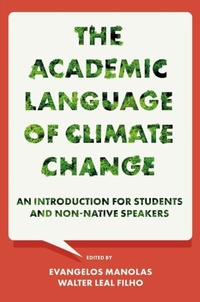
The Academic Language of Climate Change
An Introduction for Students and Non-native Speakers
1st Edition
Published on 16. September 2022
216 pages
978-1-80382-913-5 (ISBN)
Description

Climate change is one of the greatest challenges of our time. For the sake of human civilization and life on earth we must do all we can to keep global warming at the lowest possible level. Addressing climate change is everyone's duty and that includes teachers of English.
In order to support students and non-native English speakers, this important work provides an introduction to climate change via simple chapters addressing different and important dimensions of climate change and helps students acquire basic language skills which will allow them to study similar or more difficult texts. Each chapter offers an introduction on the topic discussed and its relation to climate change, outlines climate change or other related environmental science terms and 6-8 exercises on grammar, syntax and consolidation of terminology. Topics covered include climate change and tourism, gender, worker safety, mental and physical health, food production, deforestation, art, and much more.
Offering an interdisciplinary introduction to climate change and its intersection with numerous industries and facets of life, The Academic Language of Climate Change, provides a necessary and welcome introduction for undergraduate and graduate students, and any non-native English speakers seeking to engage with climate change research.
In order to support students and non-native English speakers, this important work provides an introduction to climate change via simple chapters addressing different and important dimensions of climate change and helps students acquire basic language skills which will allow them to study similar or more difficult texts. Each chapter offers an introduction on the topic discussed and its relation to climate change, outlines climate change or other related environmental science terms and 6-8 exercises on grammar, syntax and consolidation of terminology. Topics covered include climate change and tourism, gender, worker safety, mental and physical health, food production, deforestation, art, and much more.
Offering an interdisciplinary introduction to climate change and its intersection with numerous industries and facets of life, The Academic Language of Climate Change, provides a necessary and welcome introduction for undergraduate and graduate students, and any non-native English speakers seeking to engage with climate change research.
More details
Language
English
Place of publication
Bingley
United Kingdom
Target group
Professional and scholarly
File size
1,30 MB
ISBN-13
978-1-80382-913-5 (9781803829135)
Copyright in bibliographic data and cover images is held by Nielsen Book Services Limited or by the publishers or by their respective licensors: all rights reserved.
Schweitzer Classification
Other editions
Additional editions
Evangelos Manolas | Walter Leal Filho
The Academic Language of Climate Change
An Introduction for Students and Non-native Speakers
Book
09/2022
Emerald Publishing Limited
€109.20
Shipment within 3-4 weeks
Persons
Evangelos Manolas is Professor of Sociology and Environmental-Forest Education, Department of Forestry and Management of the Environment and Natural Resources, School of Agricultural and Forestry Sciences, Democritus University of Thrace, Greece.
Walter Leal Filho holds the Chairs of Climate Change Management at the Hamburg University of Applied Sciences (Germany), and Environment and Technology at Manchester Metropolitan University (UK). He directs the Research and Transfer Centre "Sustainability Development and Climate Change Management". His main research interests are in the fields of sustainable development and climate change, also including aspects of climate change and health.
Walter Leal Filho holds the Chairs of Climate Change Management at the Hamburg University of Applied Sciences (Germany), and Environment and Technology at Manchester Metropolitan University (UK). He directs the Research and Transfer Centre "Sustainability Development and Climate Change Management". His main research interests are in the fields of sustainable development and climate change, also including aspects of climate change and health.
Content
Chapter 1. Climate Change: Causes and Impacts; Walter Leal Filho and Evangelos Manolas
Chapter 2. Climate Change and Agriculture; Chrysovalantou Antonopoulou
Chapter 3. Climate Change and Tourism: Challenges and Prospects; Fotini Bantoudi and Maria Pentaftiki
Chapter 4. Climate Change: Health and Safety of Workers; Panagiota Barbouti-Baloti, Angeliki Kouna, and Constantina Skanavis
Chapter 5. Gender and Climate Change; Efthalia Gerou and Dimitrios Geros
Chapter 6. Adapting to Climate Change: Adaptation Options and Forms; Hacer Goeren
Chapter 7. Climate Change and Human Mobility; Hacer Goeren
Chapter 8. Climate Education Experience at University of Latvia; Indra Karapetjana and Maris Klavins
Chapter 9. Climate Change and Energy; Evangelia Karasmanaki
Chapter 10. Solastalgia: Looking into the Implicit Impacts of Climate Change on Mental Health; Eirene Katsarou
Chapter 11. Health and Climate Change; Margarita-Eleni Manola and George Tribonias
Chapter 12. Climate Change and Food Production; Ioanna Mantzourani
Chapter 13. Climate Change and Deforestation; Diamantis Myrtsidis
Chapter 14. Climate Change and Art; Dimitra Pantiora, Ioannis Theodoulou, and Constantina Skanavis
Chapter 15. Utilizing the Systems Thinking Approach to Assess the Impact of Climate Change on Organizations; Christian Virgil and Kit Fai Pun
Chapter 16. Climate Change and the Agro-food system; Elena Raptou
Chapter 17. Droughts and Climate Change; Manuel Salvador da Conceicao Rebelo
Chapter 18. Climate change and Employment; Paschalina Siskou
Chapter 19. Climate Change and Tourism: Towards a Sustainable Future; Ioanna Vasileiadou
Chapter 20. Climate Change, Land Use and Land Management in Africa: The case of The Gambia; Franziska Wolf
Chapter 21. The impacts of climate change on the forest ecosystems of the Mediterranean; Aikaterini Zerva
Chapter 22. Climate change and health: The case of infectious diseases; Evangelia Tsagaki-Rekleitou, Vasiliki Oikonomou, Archonto-Dimitra Boukouvala, Maria Tsatsou, Theodora Skreka, and Constantina Skanavis
Chapter 23. Climate Change: Five Scenarios for the Future; Evangelos Manolas and Walter Leal Filho
Key to Chapter Exercises
Chapter 2. Climate Change and Agriculture; Chrysovalantou Antonopoulou
Chapter 3. Climate Change and Tourism: Challenges and Prospects; Fotini Bantoudi and Maria Pentaftiki
Chapter 4. Climate Change: Health and Safety of Workers; Panagiota Barbouti-Baloti, Angeliki Kouna, and Constantina Skanavis
Chapter 5. Gender and Climate Change; Efthalia Gerou and Dimitrios Geros
Chapter 6. Adapting to Climate Change: Adaptation Options and Forms; Hacer Goeren
Chapter 7. Climate Change and Human Mobility; Hacer Goeren
Chapter 8. Climate Education Experience at University of Latvia; Indra Karapetjana and Maris Klavins
Chapter 9. Climate Change and Energy; Evangelia Karasmanaki
Chapter 10. Solastalgia: Looking into the Implicit Impacts of Climate Change on Mental Health; Eirene Katsarou
Chapter 11. Health and Climate Change; Margarita-Eleni Manola and George Tribonias
Chapter 12. Climate Change and Food Production; Ioanna Mantzourani
Chapter 13. Climate Change and Deforestation; Diamantis Myrtsidis
Chapter 14. Climate Change and Art; Dimitra Pantiora, Ioannis Theodoulou, and Constantina Skanavis
Chapter 15. Utilizing the Systems Thinking Approach to Assess the Impact of Climate Change on Organizations; Christian Virgil and Kit Fai Pun
Chapter 16. Climate Change and the Agro-food system; Elena Raptou
Chapter 17. Droughts and Climate Change; Manuel Salvador da Conceicao Rebelo
Chapter 18. Climate change and Employment; Paschalina Siskou
Chapter 19. Climate Change and Tourism: Towards a Sustainable Future; Ioanna Vasileiadou
Chapter 20. Climate Change, Land Use and Land Management in Africa: The case of The Gambia; Franziska Wolf
Chapter 21. The impacts of climate change on the forest ecosystems of the Mediterranean; Aikaterini Zerva
Chapter 22. Climate change and health: The case of infectious diseases; Evangelia Tsagaki-Rekleitou, Vasiliki Oikonomou, Archonto-Dimitra Boukouvala, Maria Tsatsou, Theodora Skreka, and Constantina Skanavis
Chapter 23. Climate Change: Five Scenarios for the Future; Evangelos Manolas and Walter Leal Filho
Key to Chapter Exercises
