

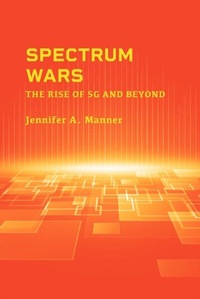
Spectrum Wars
The Rise of 5G and Beyond
1st Edition
Published on 31. December 2021
240 pages
978-1-63081-917-0 (ISBN)
Description

This exciting new book, which builds on the author's previous book, Spectrum Wars: The Policy and Technology Debate, discusses the evolution of spectrum use and management caused by the rise of 5G and beyond in all wireless technologies, from terrestrial wireless, including mobile and fixed, to non-terrestrial including satellite and drone technologies. A survey of these new technologies and use cases are included, allowing the reader to understand the technical, operational, and commercial context of these systems.This book addresses how the traditional methods used in evaluating spectrum management have changed, including the use and need of low, medium, and high band spectrum to meet user demands and the use of tools such as spectrum sharing to make available much needed spectrum for 5G and beyond. The book also examines how governments are making additional spectrum available for all uses, including recent spectrum auctions, clearing, and shared networks. Public policy challenges, such as the digital divide and the impact of the pandemic, are explored in relation to their impact on spectrum management. Finally, the evolution to 6G that is already occurring, and the impact that 6G will likely have on spectrum management in the future, is reviewed. Written by an expert in the field, this book provides a thoughtful approach to the overall spectrum management regime from allocating spectrum to having it released into the market for 5G and beyond.
More details
Other editions
Additional editions
Jennifer A. Manner
Spectrum Wars: The Rise of 5g and Beyond
Book
01/2022
Artech House Publishers
Unfortunately, price unknown
Available (delivery time upon request)
Content
- Spectrum Wars: The Rise of 5G and Beyond
- Contents
- Foreword
- Preface
- 1 Introduction: The Changing World of Spectrum
- 1.1 5G and Beyond Technologies: Their De
- 1.2 The Search for Access for Additional
- 1.2.1 Spectrum Availability Today
- 1.2.2 The Role of Technology
- 1.2.3 The Role of the Spectrum Management and Regulatory Processes
- 1.3 Next Steps
- References
- 2 The Evolving International Spectrum Regulatory Landscape
- 2.1 Overview of the ITU Spectrum Management Responsibilities
- 2.2 Overview of the International Table of Frequency Allocations and the WRC Process
- 2.3 ITU-R Leadership and Participation
- 2.4 The Negotiations
- 2.5 The Role of WRC and the Identification of Spectrum for IMT Enabling 5G
- 2.6 Thoughts for the Future
- References
- 3 The Evolving Domestic Spectrum Regulatory Landscape
- 3.1 Overview
- 3.2 The Structure of Domestic Spectrum Managers
- 3.3 Managing the Domestic Table of Frequency Allocations
- 3.4 Assigning Spectrum for Particular Uses
- 3.5 Domestic Licensing of Radio Services
- 3.6 The Role of Spectrum Harmonization and Its Importance in a 5G and Beyond World
- 3.7 Evolving Trends That Licensing Decisions in a 5G and Beyond World
- 3.7.1 Obtaining Public Policy Goals Through the Licensing Process
- 3.7.2 Limiting Incumbent Use to Enable 5G Use
- 3.7.3 Incentivizing Relocation of Incumbents
- 3.7.4 Relocation of Government Users to Free up Spectrum for 5G
- 3.8 Conclusion
- References
- 4 5G Technology Overview
- 4.1 Terrestrial Mobile Wireless Services
- 4.1.1 Use of Low, Middle, and High Frequency Bands
- 4.1.2 Small Cells
- 4.1.3 Massive MIMO
- 4.2 Terrestrial Fixed Wireless Technologies
- 4.2.1 Wi-Fi
- 4.2.2 Fixed Terrestrial Wireless Services
- 4.3 Nonterrestrial Technologies
- 4.3.1 Satellite Networks
- 4.4 High Altitude Platforms and Similar Technologies
- 4.5 Conclusion
- References
- 5 Drivers of Change, Use Cases Driving 5G, Future Challenges, and the Race to Be First
- 5.1 Overview
- 5.2 Drivers of Change
- 5.3 Use Cases Driving 5G
- 5.3.1 Healthcare
- 5.3.2 Multi-User Experience
- 5.3.3 Hyperconnectivity
- 5.3.4 Business and Industrial Needs
- 5.3.5 Smart Cities and Smart Infrastructure
- 5.3.6 Autonomous Technology
- 5.4 The Main 5G Technology Adoption Challenges
- 5.5 The Race to Be First
- References
- 6 Meeting the Growing Demand for Spectrum
- 6.1 Overview
- 6.2 The Changing World of Spectrum Sharing and Efficiency
- 6.2.1 Licensed Versus Unlicensed Spectrum
- 6.2.2 Dynamic Spectrum Access
- 6.3 Public Versus Private Networks
- 6.4 Hybrid Networks and Challenges
- 6.4.1 MSS with a Terrestrial Component
- 6.4.2 NGSO and Mobile Spectrum
- 6.4.3 True Hybrid Systems
- 6.5 The Need for a Three-Dimensional Spectrum Model
- 6.6 Conclusion
- References
- 7 Enabling the Use of Additional Spectrum for 5G
- 7.1 Introduction
- 7.2 Getting Spectrum Into the Hands of Operators
- 7.2.1 Secondary Markets and Use It or Lose It
- 7.2.2 The FCC's Secondary Markets Approach
- 7.2.3 Use It or Lose It
- 7.2.4 CBRS and Other Approaches
- 7.2.5 Incentive-Based Spectrum Management
- 7.3 Access to the 28 GHz Band for 5G Terrestrial Services
- 7.4 Accessing Higher Frequency Bands (Above 30 GHz)
- 7.5 Set-Asides for Industrial/Private Networks
- 7.6 Local Licensing
- 7.7 Increasing Access to Government Spectrum by Commercial Operators
- 7.8 Regional and Subregional Harmonization and Implementation of 5G Bands
- 7.9 The Challenges of Increased Use by Satellite Systems
- 7.9.1 Blanket Licensing of User Earth Stations
- 7.9.2 Assigning Spectrum to Meet Increased NGSO Demand
- 7.10 Remaining Challenges in Implementing New Spectrum Management/Assignment Regimes to Accommodate 5G and Beyond
- References
- 8 6G and Beyond
- 8.1 Introduction: 6G Status and Challenges
- 8.2 What Does 6G Look Like and What Is the Likely Impact on Spectrum Management?
- 8.3 Regulators and Spectrum Managers Must Begin Planning to Meet 6G Spectrum Needs
- 8.3.1 Technology Neutral Decisions
- 8.3.2 The Need for Use of a Three-Dimensional Spectrum Model
- 8.3.3 Continued Challenges in Sharing and Making the Most Efficient Use of the Spectrum Resource
- 8.3.4 The THz Frequency Band
- 8.3.5 Greater Accountability for Use of Spectrum
- 8.4 Nonspectrum Solutions to Connectivity: Optical and Quantum
- 8.5 Conclusion
- References
- 9 Conclusion: Challenges Ahead
- 9.1 Introduction
- 9.2 Greater Spectrum Use
- 9.3 The Protection of Incumbent Uses
- 9.4 Making Additional Spectrum Available on a Technology Neutral Basis
- 9.5 Reducing Regulatory Burdens and Fees
- 9.6 Achieving Global Harmonization
- 9.7 Competition
- 9.8 Conclusion
- References
- Glossary
- About the Author
- Index
