

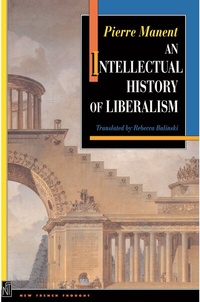
An Intellectual History of Liberalism
1st Edition
Published on 10. February 2020
152 pages
978-0-691-20719-3 (ISBN)
Description

Highlighting the social tensions that confront the liberal tradition, Pierre Manent draws a portrait of what we, citizens of modern liberal democracies, have become. For Manent, a discussion of liberalism encompasses the foundations of modern society, its secularism, its individualism, and its conception of rights. The frequent incapacity of the morally neutral, democratic state to further social causes, he argues, derives from the liberal stance that political life does not serve a higher purpose. Through quick-moving, highly synthetic essays, he explores the development of liberal thinking in terms of a single theme: the decline of theological politics.
The author traces the liberal stance to Machiavelli, who, in seeking to divorce everyday life from the pervasive influence of the Catholic church, separated politics from all notions of a cosmological order. What followed, as Manent demonstrates in his analyses of Locke, Hobbes, Rousseau, Guizot, and Constant, was the evolving concept of an individual with no goals outside the confines of the self and a state with no purpose but to prevent individuals from dominating one another. Weighing both the positive and negative effects of such a political arrangement, Manent raises important questions about the fundamental political issues of the day, among them the possibility of individual rights being reconciled with the necessary demands of political organization, and the desirability of a government system neutral about religion but not about public morals.
The author traces the liberal stance to Machiavelli, who, in seeking to divorce everyday life from the pervasive influence of the Catholic church, separated politics from all notions of a cosmological order. What followed, as Manent demonstrates in his analyses of Locke, Hobbes, Rousseau, Guizot, and Constant, was the evolving concept of an individual with no goals outside the confines of the self and a state with no purpose but to prevent individuals from dominating one another. Weighing both the positive and negative effects of such a political arrangement, Manent raises important questions about the fundamental political issues of the day, among them the possibility of individual rights being reconciled with the necessary demands of political organization, and the desirability of a government system neutral about religion but not about public morals.
More details
Other editions
Additional editions
Book
08/1996
Princeton University Press
€38.20
Article not available at the moment

Pierre Manent
An Intellectual History of Liberalism
Book
10/1994
Princeton University Press
€37.20
Article exhausted; check different version
Persons
Pierre Manent is director of studies at the Ecole des Hautes Etudes en Sciences Sociales in Paris and coeditor of the journal La Pensée politique.
Content
- Cover
- Title
- Copyright
- Contents
- Foreword
- Preface
- CHAPTER I Europe and the Theologico-Political Problem
- CHAPTER II Machiavelli and the Fecundity of Evil
- CHAPTER III Hobbes and the New Political Art
- CHAPTER IV Locke, Labor, and Property
- CHAPTER V Montesquieu and the Separation of Powers
- CHAPTER VI Rousseau, Critic of Liberalism
- CHAPTER VII Liberalism after the French Revolution
- CHAPTER VIII Benjamin Constant and the Liberalism of Opposition
- CHAPTER IX François Guizot: The Liberalism of Government
- CHAPTER X Tocqueville: Liberalism Confronts Democracy
- Conclusion
- Notes
- Index
