

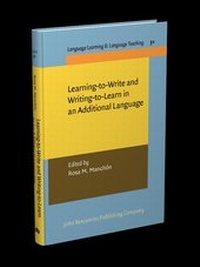
Learning-to-Write and Writing-to-Learn in an Additional Language
1st Edition
Published on 5. October 2011
XII, 263 pages
978-90-272-8483-9 (ISBN)
Description

This book is a pioneer attempt to bridge the gap between the fields of second language acquisition (SLA) and second and foreign language (L2) writing. Its ultimate aim is to advance our understanding of written language learning by compiling a collection of theoretical meta-reflections and empirical studies that shed new light on two crucial dimensions of the theory and research in the field: first, the manner in which L2 users learn to express themselves in writing (the learning-to-write dimension), and, second, the manner in which the engagement in written output practice can contribute to developing competences in an L2 (the writing-to-learn dimension). These two areas of disciplinary inquiry have up until now developed separately: the learning-to-write dimension has been the cornerstone of L2 writing research, whereas the writing-to-learn one has been theorized and researched within SLA studies, hence the relevance of the book for exploring L2 writing-SLA interfaces.
More details
Other editions
Additional editions
Rosa M. Manchon
Learning-to-Write and Writing-to-Learn in an Additional Language
Book
10/2011
John Benjamins Publishing Co
€104.94
Shipment within 10-15 days
Person
Content
- Learning-to-Write and Writing-to-Learn in an Additional Language
- Editorial page
- Title page
- LCC data
- Dedication page
- Table of contents
- Preface
- Introduction
- 1. Situating the learning-to-write and writing-to-learn dimensions of L2 writing
- An overview of the content of the book
- Part I
- Part II
- Conclusion
- References
- Part I. Learning-to-write and writing-to-learn: Mapping the terrain
- 2. Learning to write
- Focusing on writers
- Focusing on texts
- Focusing on readers
- Conclusion
- References
- 3. Writing to learn in content areas
- Introduction
- Theoretical and pedagogical perspectives
- Writing and content learning research
- Conclusion
- References
- 4. Writing to learn the language
- Main strands of research and theoretical frameworks informing them
- Research foci and methodology
- Main research findings
- Conclusions and implications for the future research agenda
- Acknowledgements
- References
- Part II. Learning-to-write and writing-to-learn: Research insights
- 5. Learning to write in a second language
- Introduction
- Method
- Results
- Perceptions of writing generally
- Understandings of specific genres: Essay writing
- Understandings of specific genres: Undergraduate disciplinary writing
- Understandings of specific genres: Graduate disciplinary writing
- Discussion
- Conclusion
- Acknowledgements
- References
- Appendix
- 6. Writing to learn and learning to write by shuttling between languages
- The study
- Findings
- Discussion
- Pedagogical implications
- References
- 7. Beyond writing as language learning or content learning
- Establishing the curricular and macro-instructional context of the writing task
- Implementing a learning-to-write and writing-to-learn pedagogy
- Source text and summary
- Jill's summary
- Revisiting summary writing: Methodological and substantive issues
- The role of language in educative learning: Toward a meaning-based framework for L2 writing
- Implications for FL writing pedagogy and research
- References
- 8. The language learning potential of form-focused feedback on writing
- Introduction
- The role of form-focused feedback in second language acquisition
- Method
- Results and discussion
- Conclusion
- References
- 9. Writing to learn in FL contexts
- Introduction
- Method
- Results and discussion
- Implications and suggestions for further research
- Acknowledgements
- References
- 10. Exploring the learning potential of writing development in heritage language education
- Method
- Results and discussion
- Summary and implications
- References
- Conclusion
- 11. Reflections on the learning-to-write and writing-to-learn dimensions of second language writing
- Introduction
- Different views of L2 writing, different disciplinary attunements
- Locating professional and contextual influences for LW, WLC, and WLL
- Misalignments
- Synergies and interfaces among the three views
- Authenticity and needs
- Complicating the picture: Writerly selves
- Future questions for the study of learning to write and writing to learn
- References
- Contributors' biodata
- Author index
- Thematic index
