

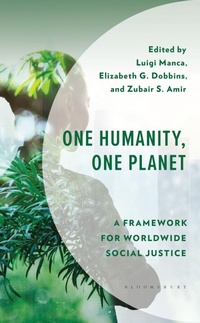
One Humanity, One Planet
A Framework for Worldwide Social Justice
Will be published approx. on 25. June 2026
472 pages
979-8-216-35201-3 (ISBN)
Description

Humanity faces two urgent and interrelated problems that may affect our survival. One is that we are destroying our planet and are unable (or unwilling) to stop; the other is that, globally, human relationships, institutions, and systems continue to rely on and perpetuate social injustice.
One Humanity, One Planet: A Framework for Worldwide Social Justice examines these problems through the lens of the concept of One Humanity and One Planet-a vision of unity that emphasizes the fundamental interconnectedness of humans and their environment. The essays in this collection explore how this idea can help us intervene in the systemic oppression of people and the destruction of the natural world while highlighting the need for humanity to act as a global community.
One Humanity, One Planet: A Framework for Worldwide Social Justice examines these problems through the lens of the concept of One Humanity and One Planet-a vision of unity that emphasizes the fundamental interconnectedness of humans and their environment. The essays in this collection explore how this idea can help us intervene in the systemic oppression of people and the destruction of the natural world while highlighting the need for humanity to act as a global community.
More details
Series
Language
English
Place of publication
United States
Publishing group
Bloomsbury Publishing Plc
Target group
College/higher education
Illustrations
9 b/w
File size
4,67 MB
ISBN-13
979-8-216-35201-3 (9798216352013)
Copyright in bibliographic data and cover images is held by Nielsen Book Services Limited or by the publishers or by their respective licensors: all rights reserved.
Schweitzer Classification
Other editions
Additional editions
Luigi Manca | Elizabeth G. Dobbins | Zubair S. Amir
One Humanity, One Planet
A Framework for Worldwide Social Justice
Book
approx. 07/2026
Bloomsbury Academic
€131.50
Not yet published
Persons
Zubair S. Amir is Professor of English and Chair of the Department of Languages and Literature at Benedictine University.
Luigi Manca is Professor of Communications Art at Benedictine University.
Elizabeth Dobbins is Professor of Biological and Environmental Sciences and Director of the STEM Scholars Program at Samford University.
Luigi Manca is Professor of Communications Art at Benedictine University.
Elizabeth Dobbins is Professor of Biological and Environmental Sciences and Director of the STEM Scholars Program at Samford University.
Content
List of figures
List of tables
Notes on contributors
Acknowledgements
Introduction
"Acts of Kindness and of Love": Envisioning One Humanity and One Planet
by Zubair S. Amir
Section 1
One Humanity-One Planet: Exploring the Theoretical and Philosophical Foundations
Section editor: Luigi Manca
1. On the Idea of a Single Humanity
by Massimo Dell'Utri
2. The Contemporary Relevance of Kenneth Boulding's Spaceship Earth
by Orazio Maria Gnerre
3. The Chrysalis and the Butterfly: The Promise of Martin Buber's I and Thou at 100
by Peter A. Huff
4. Pope Francis on Global Governance
by Martin J. Tracey
5. Global-Dialogic?Satyagraha:?Mahatma Gandhi's Call for a Culture of Care within Difference
by Reshmi Sen
Section 2
Individual and Collective Responses to Environmental Degradation and Injustice
Section editor: Elizabeth G. Dobbins
6. The Land Ethic Revisited
by Elizabeth G. Dobbins
7. Fridays for Future and the Ethics of Responsibility: Chances and Contradictions
by Liann Maria Daher, Anna Maria Leonora, Giorgia Mavica, and Alessandra Scieri
8. "Environmental Health: Generational Injustice vs. Cherishing our Children"
by Jean-Marie Kauth
9. "The Resiliency of Peoplehood: The Tohono O'odham, the Border, and Environmental Degradation"
by Theresa Davidson
10. "Mitakuyeability as a New Vision of the Man-Planet Relationship"
by Lucia Groe
Section 3
Environmental and Demographic Changes as Drivers of Inequity
Section editors: Ignazio Camarda and Antonello Ganau
11. Climate Change and Its Consequences for Ecosystems, Agriculture, and Migration
by Ignazio Camarda
12. Some Notes on the Sustainability of Cattle Farming with Particular Reference to Italy
by Giuseppe Pulina and Sara Sechi
13. Responding to Demographic Challenges in Populations Facing Denatality and Ageing
by Antonello Ganau
14. The Masa and Plants: Food, Medicine, Crafts, and Symbols
by Antonino Melis
15. Reimagining Social Justice as a Cosmo-Ethical Practice: Insights from the Quanti-Qualitative Research Approach Informed by Critical Discourse Analysis
by Augusto Giuseppe Gamuzza
Section 4
Planet Earth and Social Living Realities: Perspectives for the Research Transition at the Anthropocene Age
Section editor: Emanuela Ferreri
16. Humanity and Social Justice
by Isabella Corvino and Fabio D'Andrea
17. A "Sustainable" Paradigm for a More Equal and Just Society, Starting with Its Genes
by Mariella Nocenzi and Antonella Pilozzi
18. Science and Society: The Problem of "Canceling" Race
by Ludovica Lorusso
19. Being of this Earth, Being of this Land, Being Humanity: Anthropocene, Public Culture and Social Justice
by Emanuela Ferreri
20. We and the Others: Social Justice, Group Identity, and Moral Recognition
by Mar Cabezas
21. The Imaginary Perspective of the Multicultural and Intercultural Identity of Azerbaijan
by Dariush Rahiminia
Section 5
One Humanity: Looking for Social Justice
Section editor: Sanjukta Das Gupta
22. Coming Back: Reconciling Sorrow Songs
by John Kloos
23. Solidarity Action or Spontaneous Solidarity: Case Studies in Sicily and the Basque Country
by Davide Nicolosi
24. Translation and Activism: Towards a Global Recognition of Feminism and Human Rights for Teenagers
by Irene Rodríguez Arcos
25. Music Communities: Creating and Connecting in a Social Justice Landscape
by Allen R. Legutki
26. Writing Social Justice: Adivasis in Contemporary Eastern India
by Sanjukta Das Gupta
27. The Power of Network in Personal Rehabilitation: An Experience of Inclusion in Social Farming to Cope with Human Vulnerability
by Maria Lucia Piga and Daniela Pisu
Section 6
Exploring New Trends in Ecoethics and Environmental Politics
Section editor: Javier Romero
28. For a New Ethic: The Role of Feminism in the Era of Transhumanism
by Patrizia Desole, Carla Concas, and Francesca Marras
29. Gilbert White, Thomas Paine, Filippo Buonarroti: The Rise of Ecological and Sociopolitical Consciousness in the Eighteenth and Nineteenth Centuries
by Federico Francioni
30. The Other Voice: Towards a Dialogical Ecoethics for the Biosphere
by Javier Romero
31. One Earth: Humans, Animals, and the Landscape of Community
by Jack Thornburg
Section 7
Individual and Collective Responses to Injustice and Environmental Degradation
Section editor: Julie D. Dockery
32. Toward a More Perfect Union: Prophets of Justice and the Hope for One Humanity
by Julie D. Dockery
33. Musical Profiles in Courage: The Power of Music to Unify and Embolden Societies to Achieve Social Justice and Understanding
by Peter Seely
34. The Smart Community as an Emblem of "One Humanity?": Critical Reflections About the Role of Community
by Ilaria Iannuzzi
35. "Harmony Way": An Indigenous Theological Approach to the Crises of Our Time
by Grant Showalter-Swanson
36. Judicial Framing of Victims: What Establishes Non-Consent in Sexual Assault?
by Mara K. Berkland
List of tables
Notes on contributors
Acknowledgements
Introduction
"Acts of Kindness and of Love": Envisioning One Humanity and One Planet
by Zubair S. Amir
Section 1
One Humanity-One Planet: Exploring the Theoretical and Philosophical Foundations
Section editor: Luigi Manca
1. On the Idea of a Single Humanity
by Massimo Dell'Utri
2. The Contemporary Relevance of Kenneth Boulding's Spaceship Earth
by Orazio Maria Gnerre
3. The Chrysalis and the Butterfly: The Promise of Martin Buber's I and Thou at 100
by Peter A. Huff
4. Pope Francis on Global Governance
by Martin J. Tracey
5. Global-Dialogic?Satyagraha:?Mahatma Gandhi's Call for a Culture of Care within Difference
by Reshmi Sen
Section 2
Individual and Collective Responses to Environmental Degradation and Injustice
Section editor: Elizabeth G. Dobbins
6. The Land Ethic Revisited
by Elizabeth G. Dobbins
7. Fridays for Future and the Ethics of Responsibility: Chances and Contradictions
by Liann Maria Daher, Anna Maria Leonora, Giorgia Mavica, and Alessandra Scieri
8. "Environmental Health: Generational Injustice vs. Cherishing our Children"
by Jean-Marie Kauth
9. "The Resiliency of Peoplehood: The Tohono O'odham, the Border, and Environmental Degradation"
by Theresa Davidson
10. "Mitakuyeability as a New Vision of the Man-Planet Relationship"
by Lucia Groe
Section 3
Environmental and Demographic Changes as Drivers of Inequity
Section editors: Ignazio Camarda and Antonello Ganau
11. Climate Change and Its Consequences for Ecosystems, Agriculture, and Migration
by Ignazio Camarda
12. Some Notes on the Sustainability of Cattle Farming with Particular Reference to Italy
by Giuseppe Pulina and Sara Sechi
13. Responding to Demographic Challenges in Populations Facing Denatality and Ageing
by Antonello Ganau
14. The Masa and Plants: Food, Medicine, Crafts, and Symbols
by Antonino Melis
15. Reimagining Social Justice as a Cosmo-Ethical Practice: Insights from the Quanti-Qualitative Research Approach Informed by Critical Discourse Analysis
by Augusto Giuseppe Gamuzza
Section 4
Planet Earth and Social Living Realities: Perspectives for the Research Transition at the Anthropocene Age
Section editor: Emanuela Ferreri
16. Humanity and Social Justice
by Isabella Corvino and Fabio D'Andrea
17. A "Sustainable" Paradigm for a More Equal and Just Society, Starting with Its Genes
by Mariella Nocenzi and Antonella Pilozzi
18. Science and Society: The Problem of "Canceling" Race
by Ludovica Lorusso
19. Being of this Earth, Being of this Land, Being Humanity: Anthropocene, Public Culture and Social Justice
by Emanuela Ferreri
20. We and the Others: Social Justice, Group Identity, and Moral Recognition
by Mar Cabezas
21. The Imaginary Perspective of the Multicultural and Intercultural Identity of Azerbaijan
by Dariush Rahiminia
Section 5
One Humanity: Looking for Social Justice
Section editor: Sanjukta Das Gupta
22. Coming Back: Reconciling Sorrow Songs
by John Kloos
23. Solidarity Action or Spontaneous Solidarity: Case Studies in Sicily and the Basque Country
by Davide Nicolosi
24. Translation and Activism: Towards a Global Recognition of Feminism and Human Rights for Teenagers
by Irene Rodríguez Arcos
25. Music Communities: Creating and Connecting in a Social Justice Landscape
by Allen R. Legutki
26. Writing Social Justice: Adivasis in Contemporary Eastern India
by Sanjukta Das Gupta
27. The Power of Network in Personal Rehabilitation: An Experience of Inclusion in Social Farming to Cope with Human Vulnerability
by Maria Lucia Piga and Daniela Pisu
Section 6
Exploring New Trends in Ecoethics and Environmental Politics
Section editor: Javier Romero
28. For a New Ethic: The Role of Feminism in the Era of Transhumanism
by Patrizia Desole, Carla Concas, and Francesca Marras
29. Gilbert White, Thomas Paine, Filippo Buonarroti: The Rise of Ecological and Sociopolitical Consciousness in the Eighteenth and Nineteenth Centuries
by Federico Francioni
30. The Other Voice: Towards a Dialogical Ecoethics for the Biosphere
by Javier Romero
31. One Earth: Humans, Animals, and the Landscape of Community
by Jack Thornburg
Section 7
Individual and Collective Responses to Injustice and Environmental Degradation
Section editor: Julie D. Dockery
32. Toward a More Perfect Union: Prophets of Justice and the Hope for One Humanity
by Julie D. Dockery
33. Musical Profiles in Courage: The Power of Music to Unify and Embolden Societies to Achieve Social Justice and Understanding
by Peter Seely
34. The Smart Community as an Emblem of "One Humanity?": Critical Reflections About the Role of Community
by Ilaria Iannuzzi
35. "Harmony Way": An Indigenous Theological Approach to the Crises of Our Time
by Grant Showalter-Swanson
36. Judicial Framing of Victims: What Establishes Non-Consent in Sexual Assault?
by Mara K. Berkland
