

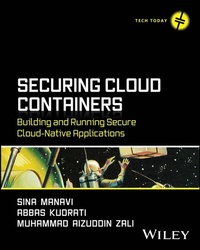
Securing Cloud Containers
Description

A practical and up-to-date roadmap to securing cloud containers on AWS, GCP, and Azure
Securing Cloud Containers: Building and Running Secure Cloud-Native Applications is a hands-on guide that shows you how to secure containerized applications and cloud infrastructure, including Kubernetes. The authors address the most common obstacles and pain points that security professionals, DevOps engineers, and IT architects encounter in the development of cloud applications, including industry standard compliance and adherence to security best practices.
The book provides step-by-step instructions on the strategies and tools you can use to develop secure containers, as well as real-world examples of secure cloud-native applications. After an introduction to containers and Kubernetes, you'll explore the architecture of containerized applications, best practices for container security, security automation tools, the use of artificial intelligence in cloud security, and more.
Inside the book:
- An in-depth discussion of implementing a Zero Trust model in cloud environments
- Additional resources, including a glossary of important cloud and container security terms, recommendations for further reading, and lists of useful platform-specific tools (for Azure, Amazon Web Services, and Google Cloud Platform)
- An introduction to SecDevOps in cloud-based containers, including tools and frameworks designed for Azure, GCP, and AWS platforms
An invaluable and practical resource for IT system administrators, cloud engineers, cybersecurity and SecDevOps professionals, and related IT and security practitioners, Securing Cloud Containers is an up-to-date and accurate roadmap to cloud container security that explains the "why" and "how" of securing containers on the AWS, GCP, and Azure platforms.
More details
Other editions
Additional editions
Content
- Cover
- Title Page
- Copyright Page
- About the Authors
- About the Technical Editor
- Acknowledgments
- Contents at a Glance
- Contents
- Foreword
- Introduction
- So Why This Book, and Why Now?
- What Does This Book Cover?
- Who Should Read This Book
- A Few Words from the Authors
- Chapter 1 Introduction to Cloud-Based Containers
- Cloud Café Story
- The Story Continues: The Café's Expansion
- The Cloud Kitchen Model
- Making Cloud Kitchen a Success
- How Containers Changed the Whole Game Plan
- The New Hub of HiTechville
- The Evolution of Cloud Infrastructure
- The Era of Mainframes
- The Rise of Virtualization
- The Emergence of Cloud Services
- The Shift to Containers
- Introduction to Containers in Cloud Computing
- The Role of Containers in Modern Cloud Computing
- Virtual Machines versus Containers in Cloud Environments
- Benefits of Using Containers in Cloud
- Popular Cloud Container Technologies
- Overview of Cloud-Native Ecosystem for Containers
- Summary
- Chapter 2 Cloud-Native Kubernetes: Azure, GCP, and AWS
- What Is Kubernetes?
- Managed Kubernetes Services
- Microsoft Azure Kubernetes Services
- Google Kubernetes Engine
- Amazon Elastic Kubernetes Service
- Azure-, GCP-, and AWS-Managed Kubernetes Service Assessment Criteria
- Azure, GCP, and AWS Cloud-Native Container Management Services
- Summary
- Chapter 3 Understanding the Threats Against Cloud-Based Containerized Environments
- Initial Stage of Threat Modeling
- The MITRE ATT&CK Framework
- Threat Vectors
- Tactic and Techniques in MITRE ATT&CK
- Cloud Threat Modeling Using MITRE ATT&CK
- Cloud Container Threat Modeling
- Foundations of Cloud Container Threat Modeling
- Kubernetes Control Plane: Securing the Orchestration Core
- Worker Nodes: Securing the Execution Environment
- Cluster Networking: Defending the Communication Fabric
- Workloads: Hardening Containers and Application Logic
- IAM: Enforcing Granular Access Across Layers
- Persistent Storage: Securing Data at Rest
- CI/CD Pipeline Security: Defending the DevOps Chain
- Log Monitoring and Visibility: Detecting What Matters
- Resource Abuse and Resiliency: Planning for the Worst
- Resource Abuse: Unauthorized Exploitation of Cloud Resources
- Resiliency and Business Continuity Planning in Kubernetes
- Compliance and Governance
- Summary
- Chapter 4 Secure Cloud Container Platform and Container Runtime
- Introduction to Cloud-Specific OS and Container Security
- Cloud-Specific OS: A Shifting Paradigm How OS Should Work
- Container Security Architecture
- Host OS Hardening for Container Environments
- Leverage Container-Optimized OSs
- Establish and Maintain Secure Configuration Baselines
- Implement Robust Access Controls and Authentication
- Apply Timely Security Updates and Patches
- Implement Host-Based Security Controls
- Container Runtime Hardening
- Minimal Container Images
- Multistage Build
- Drop Unnecessary Capabilities
- Implement Seccomp Profiles
- Resource Controls
- Use Memory and CPU Limits
- Process and File Restrictions
- Logging and Monitoring
- Regular Security Updates
- Network Security
- Implementing Kubernetes Network Policies (netpol)
- Leveraging Service Mesh for Advanced Secure Communication
- Leveraging Cloud Network Security Groups
- Linux Kernel Security Feature for the Container Platform
- Linux Namespaces, Control Groups, and Capabilities
- OS-Specific Security Capabilities (SELinux, AppArmor)
- Security Best Practices in Cloud Container Stack
- Least Privilege (RBAC) and Resource Limitation for Azure, GCP, AWS
- Scanning and Verifying Images Using Cloud Services
- Compliance and Governance in Cloud Environments
- Meeting Regulatory Compliance (PCI-DSS, HIPAA) for Containerized Workload
- Tools to Help Meet Compliance
- Cloud-Native Security Benchmarks and Certifications
- Future Trends and Emerging Standards in Cloud-Native Security
- AI and Machine Learning Security Standards
- Automated Compliance and Continuous Assessment
- Summary
- Chapter 5 Secure Application Container Security in the Cloud
- Securing Containerized Applications in Cloud Container Platforms
- Shared Responsibility Model
- Image Security
- Network Security
- Threat Intelligence for Cloud-Native Containers
- CI/CD Security in Cloud-Based Container Pipelines
- Shifting Left and Managing Privileges in Azure DevOps, Google Cloud Build, and AWS CodePipeline
- Azure DevOps
- Google Cloud Build
- AWS CodePipeline
- Penetration Testing for Cloud-Based Containers
- Supply Chain Risks and Best Practices in the Cloud
- Securing Container Registries in the Cloud (ACR, ECR, GCR)
- Image Signing and Verification in Cloud Platforms
- Role-Based Access Control in Cloud Supply Chains
- Summary
- Chapter 6 Secure Monitoring in Cloud-Based Containers
- Introduction to Secure Container Monitoring
- Key Monitoring Enablement Business Goals
- Enabling Cost Efficiency
- Supporting Compliance and Audit Readiness
- Enhancing Incident Response
- Ensuring High Availability
- Continuous Risk Identification and Remediation
- Driving Strategic Decision-Making
- Challenges in Monitoring Cloud-Based Containers
- Ephemeral Workloads
- Distributed Architectures
- Data Volume and Noise
- Security Considerations in Container Monitoring
- Observability in Multitenancy
- Integration with Modern DevOps and SecOps Toolchains
- Lack of Standardization
- Advanced Analytics and Predictive Insights
- Comprehensive Monitoring and Security Architecture for Containerized Workloads
- Comprehensive Visibility Across Layers
- Container-LevelMonitoring: Runtime Security and Observability
- Kubernetes Control Plane Monitoring: Orchestration Platform Security
- Infrastructure Monitoring: Host and Cloud Environment Security
- Threat Intelligence Integration: Enriched Detection and Proactive Defense
- Automated Detection and Response
- Application Performance Monitoring and Security
- Compliance and Regulatory Adherence
- Proactive Threat Detection: MITRE ATT&CK Operationalization
- Enhancing Modern Capabilities with Advanced Techniques
- Toward a Secure and Resilient Cloud-Native Future
- Summary
- Chapter 7 Kubernetes Orchestration Security
- Cloud-Specific Kubernetes Architecture Security
- Control Plane Security
- Worker Node Security
- Shared Security Responsibilities
- Securing the Kubernetes API in Azure, GCP, and AWS
- Securing AKS API
- Securing GKE API
- Securing EKS API
- Best Practices for Securing the Kubernetes API
- Audit Logging and Policy Engine in Cloud Platform
- Implementation Strategies
- Policy Engine
- Integration and Operational Considerations
- AKS Policy Implementation
- GKE Policy Controls
- EKS Policy Framework
- Cross-Platform Policy Considerations
- Advanced Policy Patterns
- Audit Logging
- AKS Audit Logging
- GKE Audit Logging
- EKS Audit Logging
- Cross-Platform Audit Logging Strategies
- Advanced Audit Logging Patterns
- Security Policies and Resource Management for Cloud-Based Kubernetes
- Network Policies and Admission Controllers in Cloud
- Azure Policy Implementation
- Google Kubernetes Engine Policy Control
- AWS Network Policy Implementation
- Network Policy Implementation
- Advanced Implementation Strategies
- Summary
- Chapter 8 Zero Trust Model for Cloud Container Security
- Zero Trust Concept and Core Principles
- Core Principles of Zero Trust Architecture
- Implementing Zero Trust in Cloud-Based Containers
- IAM in Zero Trust
- Network Segmentation and Micro-Segmentation in Cloud Containers
- Network Segmentation
- Micro-Segmentation
- Continuous Monitoring and Risk-Based Access Decisions in Cloud
- End-to-End Encryption and Data Security in Cloud Containers
- Zero Trust in Kubernetes Security
- Enforcing Kubernetes Security Policies with Zero Trust Principles
- Zero Trust for Service Meshes (Istio, Linkerd) in Cloud-Based Kubernetes
- Secure Access to Cloud-Based Kubernetes Control Planes
- The Importance of Secure Access
- Securing with Private Azure Kubernetes Service Cluster
- Implementing Zero Trust for Multicloud Container Environments
- Zero Trust Framework in Multicloud
- Case Study: Applying Zero Trust in Cloud Container Workloads for a Banking Customer
- Summary
- Chapter 9 DevSecOps in Cloud-Based Container Platform
- DevOps to DevSecOps in Azure, GCP, and AWS
- Integrating Security into Cloud CI/CD Pipelines
- SAST and Dependency Analysis in Cloud Environments
- Infrastructure as Code Security for Cloud
- Secrets Management in Cloud-Native DevSecOps
- Continuous Monitoring and Alerts in Cloud-Based DevSecOps
- Cloud-Based DevSecOps Tools and Frameworks
- Azure DevOps
- Google Cloud Build
- AWS CodePipeline
- Cross-Platform DevSecOps Frameworks
- Selecting Cloud-Based DevSecOps Tools and Frameworks
- Summary
- Chapter 10 Application Modernization with Cloud Containers
- Analyzing Legacy Architectures
- Microservices Transformation in Practice
- Adopting an API-First Strategy
- Containerization and Orchestration
- Cloud Migration and Modernization Approaches
- Implementing Security Development Operation Practices
- Microservices Architecture
- Netflix's Journey to Microservices
- Security Challenges in Microservices-Based Applications
- Kubernetes and Service Mesh for Microservices
- Implementing Zero Trust Security in Microservices
- Securing APIs in Cloud-Native Microservices
- Securing APIs in Cloud-Native Microservices
- API Security Challenges in Cloud-Native Environments
- API Gateway Solutions in Each Cloud Provider
- Best Practices for API Security and Rate Limiting
- Security Design Principles for Cloud-Native Apps
- The 12-Factor App as a Cloud-Native Development Guiding Principle
- Runtime Protection and CNAPP Integration
- Application Modernization and Resiliency
- Summary
- Chapter 11 Compliance and Governance in Cloud-Based Containers
- Understanding the Key Compliance and Governance in Containerized Environments
- General Data Protection Regulation (GDPR)
- Health Insurance Portability and Accountability Act (HIPAA)
- Payment Card Industry Data Security Standard (PCI-DSS)
- System and Organization Controls (SOC 2)
- NIST SP 800-190: Application Container Security Guide
- ISO/IEC 27000 Series
- ISO/IEC 27001
- ISO/IEC 27017
- ISO/IEC 27018
- CIS Kubernetes Benchmark (General)
- CIS AKS Benchmark (Azure Kubernetes Service)
- CIS GKE Benchmark (Google Kubernetes Engine)
- CIS EKS Benchmark (Amazon Elastic Kubernetes Service)
- A Comparison of the Key Compliance Standards and Regulations
- How to Achieve Container Compliance and Governance for AKS, GKE, and EKS
- Identity and Access Management (IAM)
- Authentication and Authorization
- Data Encryption (at Rest and in Transit)
- Logging and Monitoring
- Vulnerability Management
- Network Security
- Policy and Governance
- Incident Response
- Data Residency and Privacy
- Supply Chain Security
- Continuous Compliance and Automation
- Container-Specific Best Practices
- Compliance Dashboard
- Summary
- Chapter 12 Case Studies and Real-World Examples in Cloud Container Security
- Case Study 1: Netflix's Adoption of Cloud Containers Security
- Case Study 2: Capital One's Adoption of Zero Trust Security for Cloud Containers
- Case Study 3: PayPal's Adoption of Zero Trust Security for Cloud Containers
- Case Study 4: Uber's Cloud Container Security Implementation
- Summary
- Chapter 13 The Future of Cloud-Based Container Security
- The Rise of Advanced Container Orchestration
- Zero Trust and Container Security
- Enhanced Runtime Security and AI Integration
- Evolution of Container Image Security
- Container Security as Code
- Shift-Left Security Paradigm
- Serverless Containers and Security Implications
- Compliance and Regulatory Frameworks
- Blockchain and Container Provenance
- Increased Visibility and Observability
- Quantum Computing and Container Security
- Community-Driven Security Standards
- Business Impact of Container Security Failures
- Organizational Maturity and Operating Models for Container Security
- Talent and Skills Gap in Container Security
- Global Regulations and Data Sovereignty Impact
- Integration with Enterprise Security Ecosystem
- Future Predictions: Autonomous Container Security
- Summary
- Chapter 14 Security Automation and AI in Cloud Container Security
- Threat Landscape in Container Environments
- Foundations of Security Automation in Container Platforms
- Integrating AI and Machine Learning for Proactive Defense
- Security Orchestration, Automation, and Response in Cloud-Based Containers
- Microsoft Azure Kubernetes Service Integration with SOAR
- Google Kubernetes Engine Integration with SOAR
- Amazon Elastic Kubernetes Service Integration with SOAR
- Enhancing Container Threat Intelligence Feeds with Cloud-Based AI
- Azure Kubernetes Service: Proactive Defense with AI-Enhanced Threat Intelligence
- Google Kubernetes Engine: Threat Intelligence Amplified with Chronicle and AI Correlation
- Amazon EKS: Scaling AI-Driven Threat Intelligence in Hyper-Scale Environments
- Challenges and Considerations
- Ensuring Explainability and Trust in AI Decisions
- Addressing the Skills Gap in AI and Automation
- Best Practices and Automation Strategies
- The Road Ahead: Future of AI and Automation in Container Security
- Strategic Roadmap for Decision Makers
- Summary
- Chapter 15 Cloud Container Platform Resiliency
- High Availability and Fault Tolerance in Cloud Container Platforms
- Disaster Recovery Strategies for Cloud Container Platform
- Core Components of Modern DR Architecture
- Implementation Strategies and Best Practices
- Advanced Topics in Container DR
- Operational Considerations and Maintenance
- Future Planning
- Security and Compliance in DR Strategies
- Resiliency in Multicloud Container Platform Environments
- Architectural Foundations
- Data Management and Persistence
- Platform Operations and Management
- Security and Compliance
- Cost Management and Resource Optimization
- Disaster Recovery and Business Continuity
- Monitoring and Testing Container Resiliency
- Summary
- Appendix A Glossary of Cloud and Container Security Terms
- Appendix B Resources for Further Reading on Cloud-Based Containers
- Foundational Concepts and Containerization Basics
- Cloud-Specific Container Services
- Advanced Container Management and Orchestration
- Books and Articles
- Online Courses and Tutorials
- Security Resources
- Appendix C Cloud-Specific Tools and Platforms for Container Security
- Microsoft Azure Container Security Tools
- Amazon Web Services (AWS) Container Security Tools
- Google Cloud Platform (GCP) Container Security Tools
- Multicloud and Open-Source Container Security Tools
- Index
- EULA
