

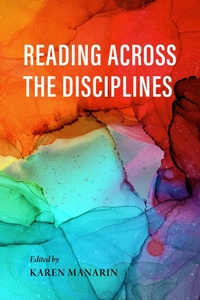
Reading Across the Disciplines
Published on 3. May 2022
282 pages
978-0-253-05874-4 (ISBN)
Description

Reading Across the Disciplines offers a collection of twelve essays detailing a range of approaches to dealing with students' reading needs at the college level. Transforming reading in higher education requires more than individual faculty members working on SoTL projects in their particular fields. Teachers need to consider reading across the disciplines.
In this collection, authors from Australia and North America, teaching in a variety of disciplines, explore reading in undergraduate courses, doctoral seminars, and faculty development activities. By paying attention to the particular classroom and placing those observations in conversation with scholarly literature, they create new knowledge about reading in higher education from disciplinary and cross-disciplinary perspectives.
Reading Across the Disciplines demonstrates how existing research about reading can be applied to specific classroom contexts, offering models for faculty members whose own research interests may lie elsewhere but who believe in the importance of reading.
In this collection, authors from Australia and North America, teaching in a variety of disciplines, explore reading in undergraduate courses, doctoral seminars, and faculty development activities. By paying attention to the particular classroom and placing those observations in conversation with scholarly literature, they create new knowledge about reading in higher education from disciplinary and cross-disciplinary perspectives.
Reading Across the Disciplines demonstrates how existing research about reading can be applied to specific classroom contexts, offering models for faculty members whose own research interests may lie elsewhere but who believe in the importance of reading.
More details
Series
Language
English
Place of publication
Bloomington, IN
United States
Target group
Professional and scholarly
Product notice
Reflowable
Illustrations
5 b&w illus., 7 b&w tables - 7 Tables, black and white - 5 Illustrations, black and white
File size
1,60 MB
ISBN-13
978-0-253-05874-4 (9780253058744)
Copyright in bibliographic data and cover images is held by Nielsen Book Services Limited or by the publishers or by their respective licensors: all rights reserved.
Schweitzer Classification
Other editions
Additional editions
Karen Manarin
Reading Across the Disciplines
Book
05/2022
Indiana University Press
€99.20
Shipment within 10-20 days
Karen Manarin
Reading Across the Disciplines
Book
05/2022
Indiana University Press
€43.60
Shipment within 10-20 days
Persons
Karen Manarin is Professor of English and Board of Governors Chair in Advanced Literacy at Mount Royal University. Lead author (with Miriam Carey, Melanie Rathburn, and Glen Ryland) of Critical Reading in Higher Education: Academic Goals and Social Engagement, she has also published in a number of teaching and learning journals.
Content
Foreword, by Pat Hutchings
Reading across the Disciplines: An Introduction, by Karen Manarin
Ways of Reading
1. Exploring Readerly Diversity, by Margaret Mackey
2. Understandings of Reading, by Nelson Graff, Rebecca Kersnar, Daniel Shapiro, and Ryne Leuzinger
3. "Mind the Gap", by Heather C. Easterling and John Eliason
4. Understanding how Students across the Disciplines Read Images, by Dana Statton Thompson
5. Student Reading of Documentary and Fiction Film, by Elizabeth Marquis
Reading in Specific Contexts
6. Reading-to-Write, by Rosemary Green
7. Embedding Scaffolded Reading Practices into the First-Year University Science Curriculum, by Neela Griffiths and Yvonne Davila
8. Reading and Relationships in Organic Chemistry, by Brett McCollum and Layne A. Morsch
9. Teaching Analytical Reading in Psychology at Alverno College, by Joyce Tang Boyland, Kris Vasquez, Rachel Henry, and Jordan R. Donovan
10. Strategies to Promote Reading Compliance and Student Learning in an Introductory Child Development Course, by Trent W. Maurer and Catelyn Shipp
11. Read Literature, Read the World, by Angela Zito and Jakob T. Zehms
12. Capturing Confusion, by Aimee Knupsky and M. Soledad Caballero
Index
Reading across the Disciplines: An Introduction, by Karen Manarin
Ways of Reading
1. Exploring Readerly Diversity, by Margaret Mackey
2. Understandings of Reading, by Nelson Graff, Rebecca Kersnar, Daniel Shapiro, and Ryne Leuzinger
3. "Mind the Gap", by Heather C. Easterling and John Eliason
4. Understanding how Students across the Disciplines Read Images, by Dana Statton Thompson
5. Student Reading of Documentary and Fiction Film, by Elizabeth Marquis
Reading in Specific Contexts
6. Reading-to-Write, by Rosemary Green
7. Embedding Scaffolded Reading Practices into the First-Year University Science Curriculum, by Neela Griffiths and Yvonne Davila
8. Reading and Relationships in Organic Chemistry, by Brett McCollum and Layne A. Morsch
9. Teaching Analytical Reading in Psychology at Alverno College, by Joyce Tang Boyland, Kris Vasquez, Rachel Henry, and Jordan R. Donovan
10. Strategies to Promote Reading Compliance and Student Learning in an Introductory Child Development Course, by Trent W. Maurer and Catelyn Shipp
11. Read Literature, Read the World, by Angela Zito and Jakob T. Zehms
12. Capturing Confusion, by Aimee Knupsky and M. Soledad Caballero
Index
