

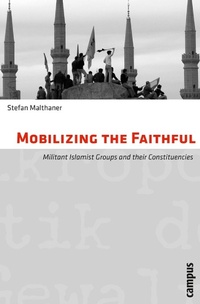
Mobilizing the Faithful
Militant Islamist Groups and their Constituencies
1st Edition
Published on 9. May 2011
273 pages
978-3-593-41070-8 (ISBN)
Description

Militante islamistische Gruppen sind zentrale Akteure in zahlreichen kriegerischen Konflikten der Gegenwart. Wie sie entstehen und organisiert sind, erscheint meist rätselhaft. Der Band präsentiert einen neuen Ansatz, der solche Gruppen in Bezug setzt zu ihrem sozialen Umfeld. Basierend auf dem Vergleich zweier islamistischer Gewaltbewegungen - der ägyptischen Gruppen al-Jamaa al-Islamiyya und
al-Jihad sowie der libanesischen Hisbollah - zeigt der Autor, wie zentral der Einfluss des Umfelds auf das Verhalten militanter Gruppen ist. Er identifiziert typische Formen der Unterstützung und Entwicklung, die ebenso zu Dynamiken der Entfremdung und Radikalisierung wie zu Konsolidierung und Begrenzung führen können. Damit leistet der Band einen innovativen Beitrag für die Analyse gegenwärtiger Gewaltkonflikte im Nahen und Mittleren Osten sowie in anderen Weltregionen.
More details
Other editions
Additional editions
Book
05/2011
1st Edition
Campus
€39.00
Shipment within 5-7 days
Person
Stefan Malthaner studierte Politikwissenschaft und Soziologie und ist wissenschaftlicher Mitarbeiter am Institut für interdisziplinäre Konflikt- und Gewaltforschung an der Universität Bielefeld.
Content
Contents
Acknowledgements 9
1. Introduction 11
1.1 Militant Islamist groups and their constituencies in social science research 15
1.2 Research question and design of this study 24
1.3 The case studies and criteria for comparison 25
1.4 Central concepts 27
1.5 Research strategies, methods, and sources 30
1.6 The structure of this book 36
2. Violent insurgencies and relationships of support: Outlines of an analytical framework 38
2.1 Engaging in relationships: Forms of orientation and reference groups 39
2.2 Support relationships: Setting and basic forms 42
2.3 Forms of influence in relationships of support 51
2.4 Summary 55
3. Between Islamic revolution and resistance: The militant groups' aims and perspectives 56
3.1 Killing the Pharaoh, creating an Islamic society: Al-Jamaa al-Islamiyya and al-Jihad in Egypt 57
3.2 Resistance against occupation and the Islamic revolution in Lebanon: Hizbullah 77
3.3 Summary: Aims and patterns of orientation 93
4. The setting: Militant Islamist groups and their social environment 95
4.1 Al-Jamaa al-Islamiyya: Rebellion in the Sa'id and Cairo's shantytowns 96
4.2 Hizbullah: Insurgency in South Lebanon, ruling the suburbs 108
4.3 Summary 116
5. Support relationships I: Al-Jamaa al-Islamiyya - Spreading the Call and ruling the neighborhood 118
5.1 "They were just good Muslims": Support for the Islamist movement and al-Jamaa al-Islamiyya in Ayn Shams 119
5.2 Al-Jamaa al-Islamiyya in Imbaba: "Ruling" the neighborhood 127
5.3 Establishing a following at the university and beyond: Al-Jamaa al-Islamiyya in Assiut 131
5.4 Breaking with the past: Family relationships and al-Jamaa al-Islamiyya 136
5.5 Al-Jihad: Preparing clandestinely for a coup d'état 140
5.6 Summary: Relationships of support between al-Jamaa al-Islamiyya and its constituency 141
6. Development patterns I: Al-Jamaa al-Islamiyya - Escalation, estrangement, and radicalization 144
6.1 Fragmentation under pressure: The development of support relationships in Ayn Shams and Imbaba 145
6.2 Losing ground: Al-Jamaa al-Islamiyya's insurgency in Assiut 150
6.3 The war against collaborators: Al-Jamaa al-Islamiyya in al-Minya 159
6.4 From ambushes to massacres: Decline of the insurgency and loss of constraints on violent practices 164
6.5 From ambivalence to condemnation: Al-Jamaa al-Islamiyya and their audiences in public discourse 167
6.6 The development of al-Jihad 169
6.7 Summary: Dynamics of estrangement and fragmentation 171
7. Support Relationships II: Outcast, defender, provider - Hizbullah and the Shiite community in Lebanon 174
7.1 Building a movement and providing for the neighborhood: Hizbullah in the southern suburbs of Beirut 175
7.2 Reigning in the clans: Hizbullah in the Beqaa 182
7.3 Becoming part of the community: The Islamic Resistance in South Lebanon 185
7.4 Joining a subculture and an army: Becoming a member of Hizbullah 195
7.5 Summary: Relationships of support between Hizbullah and the Shiite community in Lebanon 198
8. Development Patterns II: Hizbullah - Resilience, adaptation, and consolidation of support 201
8.1 Support for the "resistance" and its resilience under pressure 202
8.2 Bringing Iran to Lebanon and "wasting" the community's sons: Elements of controversy and friction 204
8.3 Adaptation and strategic re-orientation: Hizbullah's response to opposition and weakening support 211
8.4 Consolidation of support and control 218
8.5 Summary: Dynamics of support, adaptation, and control 230
9. Conclusion: Militant Islamist groups and their constituencies - Relationships of support and control 232
9.1 Relationship structures: Forms of reference, ties of support, and forms of influence 233
9.2 Development patterns 246
9.3 Militant groups and their constituencies: The logic of relational analysis 255
10. List of maps and tables 260
11. References 261
Acknowledgements 9
1. Introduction 11
1.1 Militant Islamist groups and their constituencies in social science research 15
1.2 Research question and design of this study 24
1.3 The case studies and criteria for comparison 25
1.4 Central concepts 27
1.5 Research strategies, methods, and sources 30
1.6 The structure of this book 36
2. Violent insurgencies and relationships of support: Outlines of an analytical framework 38
2.1 Engaging in relationships: Forms of orientation and reference groups 39
2.2 Support relationships: Setting and basic forms 42
2.3 Forms of influence in relationships of support 51
2.4 Summary 55
3. Between Islamic revolution and resistance: The militant groups' aims and perspectives 56
3.1 Killing the Pharaoh, creating an Islamic society: Al-Jamaa al-Islamiyya and al-Jihad in Egypt 57
3.2 Resistance against occupation and the Islamic revolution in Lebanon: Hizbullah 77
3.3 Summary: Aims and patterns of orientation 93
4. The setting: Militant Islamist groups and their social environment 95
4.1 Al-Jamaa al-Islamiyya: Rebellion in the Sa'id and Cairo's shantytowns 96
4.2 Hizbullah: Insurgency in South Lebanon, ruling the suburbs 108
4.3 Summary 116
5. Support relationships I: Al-Jamaa al-Islamiyya - Spreading the Call and ruling the neighborhood 118
5.1 "They were just good Muslims": Support for the Islamist movement and al-Jamaa al-Islamiyya in Ayn Shams 119
5.2 Al-Jamaa al-Islamiyya in Imbaba: "Ruling" the neighborhood 127
5.3 Establishing a following at the university and beyond: Al-Jamaa al-Islamiyya in Assiut 131
5.4 Breaking with the past: Family relationships and al-Jamaa al-Islamiyya 136
5.5 Al-Jihad: Preparing clandestinely for a coup d'état 140
5.6 Summary: Relationships of support between al-Jamaa al-Islamiyya and its constituency 141
6. Development patterns I: Al-Jamaa al-Islamiyya - Escalation, estrangement, and radicalization 144
6.1 Fragmentation under pressure: The development of support relationships in Ayn Shams and Imbaba 145
6.2 Losing ground: Al-Jamaa al-Islamiyya's insurgency in Assiut 150
6.3 The war against collaborators: Al-Jamaa al-Islamiyya in al-Minya 159
6.4 From ambushes to massacres: Decline of the insurgency and loss of constraints on violent practices 164
6.5 From ambivalence to condemnation: Al-Jamaa al-Islamiyya and their audiences in public discourse 167
6.6 The development of al-Jihad 169
6.7 Summary: Dynamics of estrangement and fragmentation 171
7. Support Relationships II: Outcast, defender, provider - Hizbullah and the Shiite community in Lebanon 174
7.1 Building a movement and providing for the neighborhood: Hizbullah in the southern suburbs of Beirut 175
7.2 Reigning in the clans: Hizbullah in the Beqaa 182
7.3 Becoming part of the community: The Islamic Resistance in South Lebanon 185
7.4 Joining a subculture and an army: Becoming a member of Hizbullah 195
7.5 Summary: Relationships of support between Hizbullah and the Shiite community in Lebanon 198
8. Development Patterns II: Hizbullah - Resilience, adaptation, and consolidation of support 201
8.1 Support for the "resistance" and its resilience under pressure 202
8.2 Bringing Iran to Lebanon and "wasting" the community's sons: Elements of controversy and friction 204
8.3 Adaptation and strategic re-orientation: Hizbullah's response to opposition and weakening support 211
8.4 Consolidation of support and control 218
8.5 Summary: Dynamics of support, adaptation, and control 230
9. Conclusion: Militant Islamist groups and their constituencies - Relationships of support and control 232
9.1 Relationship structures: Forms of reference, ties of support, and forms of influence 233
9.2 Development patterns 246
9.3 Militant groups and their constituencies: The logic of relational analysis 255
10. List of maps and tables 260
11. References 261
