


Literacy Research Methodologies
3rd Edition
Published on 28. October 2020
470 pages
978-1-4625-4436-3 (ISBN)
Description

Teacher educators and graduate students; literacy researchers. Serves as a text in graduate-level courses such as Methods of Educational Research, Methods of Reading Research, and Research in Special Education.
More details
Other editions
Additional editions
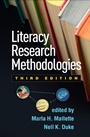
Marla H. Mallette | Nell K. Duke
Literacy Research Methodologies, Third Edition
Book
12/2020
3rd Edition
Guilford Press
€62.00
Shipment within 15-20 days
Persons
Marla H. Mallette, PhD, is Associate Professor in the Department of Teaching, Learning and Educational Leadership at Binghamton University, State University of New York, where she also serves as Doctoral Program Coordinator. Her research focuses on early literacy, research methodologies, and mixed methods research in literacy. Dr. Mallette has published and presented on literacy research methodologies and the preparation of literacy researchers, and has used various methodologies in her own work.
Nell K. Duke, EdD, is Professor in Language, Literacy, and Culture and in the Combined Program in Education and Psychology at the University of Michigan. Her work focuses on early literacy development, particularly among children living in economic poverty. She has a strong interest in bridging gaps between educational research, policy, and practice. Dr. Duke is a recipient of the William S. Gray Citation of Merit from the International Literacy Association. She has used a variety of research methodologies in her own research and has taught courses on research design.
Nell K. Duke, EdD, is Professor in Language, Literacy, and Culture and in the Combined Program in Education and Psychology at the University of Michigan. Her work focuses on early literacy development, particularly among children living in economic poverty. She has a strong interest in bridging gaps between educational research, policy, and practice. Dr. Duke is a recipient of the William S. Gray Citation of Merit from the International Literacy Association. She has used a variety of research methodologies in her own research and has taught courses on research design.
Content
Foreword, Seth A. Parsons
1. Introduction, Marla H. Mallette & Nell K. Duke
2. Turtles, Tortoises, Ethnographies, and Case Study: Nuances of Difference and Design, Catherine Compton-Lilly
3. Content Analysis: The Past, Present, and Future, Samuel DeJulio, James V. Hoffman, Misty Sailors, Ramón A. Martínez, & Melissa B. Wilson
4. Correlational Designs and Analyses, Michael J. Kieffer
5. Critical Race Methodologies, Alice Y. Lee & Amos J. Lee
6. Research Methods Unique to Digital Contexts: An Introduction to Virtual Ethnography, Christine Greenhow, Sarah Galvin, & K. Bret Staudt Willet
7. Approaches to Discourse Analysis in Language and Literacy Research, Amy Vetter & Melissa Schieble
8. Design-Based Research in Literacy, Gay Ivey
9. Causal Effects: Randomized Trials and Regression Discontinuity, Christina Weiland, Anne Shapiro, & Julia Lindsey
10. Doing Historical Research in Literacy, Norman A. Stahl & Douglas K. Hartman
11. Instrument Development, Sharon Walpole, John Z. Strong, & Meaghan N. Vitale
12. Meta-Analysis, Adriana G. Bus, Marinus H. van IJzendoorn, & Suzanne E. Mol
13. Mixed Research Approaches in Literacy Research, Anthony J. Onwuegbuzie & Marla H. Mallette
14. Narrative Approaches: Exploring the Phenomenon and/or Method, M. Kristiina Montero & Rachelle D. Washington
15. Neuroimaging, Jessica A. Church & Jack M. Fletcher
16. Single-Subject Experimental Design, Susan B. Neuman
17. Understanding Literacy Trends Through Survey Research, Gwynne Ellen Ash, James F. Baumann, & James J. Bason
18. Verbal Protocol Analysis in Literacy, Byeong-Young Cho
19. Considerations of Methodology and Epistemology in Designing Literacy Studies, Sarah J. McCarthey
20. Conclusion, Marla H. Mallette & Nell K. Duke
Appendix. Alphabetical Listing of the Exemplars
1. Introduction, Marla H. Mallette & Nell K. Duke
2. Turtles, Tortoises, Ethnographies, and Case Study: Nuances of Difference and Design, Catherine Compton-Lilly
3. Content Analysis: The Past, Present, and Future, Samuel DeJulio, James V. Hoffman, Misty Sailors, Ramón A. Martínez, & Melissa B. Wilson
4. Correlational Designs and Analyses, Michael J. Kieffer
5. Critical Race Methodologies, Alice Y. Lee & Amos J. Lee
6. Research Methods Unique to Digital Contexts: An Introduction to Virtual Ethnography, Christine Greenhow, Sarah Galvin, & K. Bret Staudt Willet
7. Approaches to Discourse Analysis in Language and Literacy Research, Amy Vetter & Melissa Schieble
8. Design-Based Research in Literacy, Gay Ivey
9. Causal Effects: Randomized Trials and Regression Discontinuity, Christina Weiland, Anne Shapiro, & Julia Lindsey
10. Doing Historical Research in Literacy, Norman A. Stahl & Douglas K. Hartman
11. Instrument Development, Sharon Walpole, John Z. Strong, & Meaghan N. Vitale
12. Meta-Analysis, Adriana G. Bus, Marinus H. van IJzendoorn, & Suzanne E. Mol
13. Mixed Research Approaches in Literacy Research, Anthony J. Onwuegbuzie & Marla H. Mallette
14. Narrative Approaches: Exploring the Phenomenon and/or Method, M. Kristiina Montero & Rachelle D. Washington
15. Neuroimaging, Jessica A. Church & Jack M. Fletcher
16. Single-Subject Experimental Design, Susan B. Neuman
17. Understanding Literacy Trends Through Survey Research, Gwynne Ellen Ash, James F. Baumann, & James J. Bason
18. Verbal Protocol Analysis in Literacy, Byeong-Young Cho
19. Considerations of Methodology and Epistemology in Designing Literacy Studies, Sarah J. McCarthey
20. Conclusion, Marla H. Mallette & Nell K. Duke
Appendix. Alphabetical Listing of the Exemplars
