

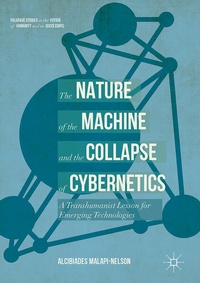
The Nature of the Machine and the Collapse of Cybernetics
Description

This book is a philosophical exploration of the theoretical causes behind the collapse of classical cybernetics, as well as the lesson that this episode can provide to current emergent technologies. Alcibiades Malapi-Nelson advances the idea that the cybernetic understanding of the nature of a machine entails ontological and epistemological consequences that created both material and theoretical conundrums. However, he proposes that given our current state of materials research, scientific practices, and research tools, there might be a way for cybernetics to flourish this time.
The book starts with a historical and theoretical articulation of cybernetics in order to proceed with a philosophical explanation of its collapse-emphasizing the work of Alan Turing, Ross Ashby and John von Neumann. Subsequently, Malapi-Nelson unveils the common metaphysical signature shared between cybernetics and emergent technologies, identifying this signature as transhumanist in nature. Finally, avenues of research that may allow these disruptive technologies to circumvent the cybernetic fate are indicated. It is proposed that emerging technologies ultimately entail an affirmation of humanity.
Reviews / Votes
"Anyone interested and involved in pervasive computation and ubiquitous machine learning will find this book makes stimulating reading." (J.J. Ramsden, Journal of Biological Physics and Chemistry, Vol. 21, 2021)"Cybernetics, an approach for understanding control and communication in a very general way that applies to both machines and living systems, thrived as a movement for about a decade after WW II. . This is a technical scholarly work with ample primary source citations . . Recommended. Upper-division undergraduates through faculty and professionals." (D. Bantz, Choice, Vol. 56 (1), September, 2018)
More details
Other editions
Additional editions
Person
Alcibiades Malapi-Nelson pursued studies in philosophy in Latin America, French Canada and Toronto, where he obtained a doctorate from York University. He is currently working on the implications of emergent technologies for the future of humanity, particularly in what regards human identity, ethics and policy. He currently teaches at Seneca and Humber colleges, in Toronto.
