

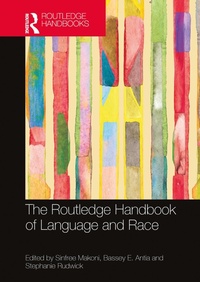
The Routledge Handbook of Language and Race
1st Edition
Published on 26. December 2025
538 pages
978-1-040-36746-9 (ISBN)
Description

The Routledge Handbook of Language and Race provides an up-to-date overview of language and race from a modern global perspective. Challenging the concept of race that has been defined by global North scholarship, this book interrogates these academic conventions and encourages the reader to look beyond these narrow viewpoints of language and race.
Taking a decolonizing approach, this Handbook includes contributions from academics from Africa, Latin America, Southeast Asia and the Pacific as well as those based in Europe and North America with the aim of deconstructing the center of power into a direction where not only marginalized people are given a voice but also where marginalized scholars can be heard. Chapters in the volume review the state of the art of the study of language and race, capture the prevailing realities of race as experienced in the localities which the authors represent, critique the prevailing conceptualization to advance debate, and provide an account of specific ethnographic case studies.
The Routledge Handbook of Language and Race is essential reading for all students and academics who want to broaden their understanding of this crucial topic.
Taking a decolonizing approach, this Handbook includes contributions from academics from Africa, Latin America, Southeast Asia and the Pacific as well as those based in Europe and North America with the aim of deconstructing the center of power into a direction where not only marginalized people are given a voice but also where marginalized scholars can be heard. Chapters in the volume review the state of the art of the study of language and race, capture the prevailing realities of race as experienced in the localities which the authors represent, critique the prevailing conceptualization to advance debate, and provide an account of specific ethnographic case studies.
The Routledge Handbook of Language and Race is essential reading for all students and academics who want to broaden their understanding of this crucial topic.
More details
Series
Edition
1. Auflage
Language
English
Place of publication
London
United Kingdom
Publishing group
Taylor & Francis Ltd
Target group
College/higher education
Professional and scholarly
Illustrations
15 Tables, black and white; 5 Line drawings, black and white; 7 Halftones, black and white; 12 Illustrations, black and white
File size
4,39 MB
ISBN-13
978-1-040-36746-9 (9781040367469)
Copyright in bibliographic data and cover images is held by Nielsen Book Services Limited or by the publishers or by their respective licensors: all rights reserved.
Schweitzer Classification
Other editions
Additional editions
Sinfree Makoni | Bassey E. Antia | Stephanie Rudwick
The Routledge Handbook of Language and Race
Book
approx. 12/2025
1st Edition
Routledge
€309.70
Not yet published
Persons
Sinfree Makoni, Pennsylvania State University, USA. He has recently co-edited The Routledge Handbook of Language and the Global South/s (Routledge).
Bassey E. Antia, University of the Western Cape, South Africa. He has recently co-edited (with Sinfree Makoni) Southernizing Sociolinguistics: Colonialism, Racism, and Patriarchy in Language in the Global South (Routledge).
Stephanie Rudwick, Institute of Ethnology, Czech Academy of Science and University of Hradec Kralove, Czechia. She has recently published The Ambiguity of English as a Lingua Franca: Politics of Language and Race in South Africa (Routledge).
Bassey E. Antia, University of the Western Cape, South Africa. He has recently co-edited (with Sinfree Makoni) Southernizing Sociolinguistics: Colonialism, Racism, and Patriarchy in Language in the Global South (Routledge).
Stephanie Rudwick, Institute of Ethnology, Czech Academy of Science and University of Hradec Kralove, Czechia. She has recently published The Ambiguity of English as a Lingua Franca: Politics of Language and Race in South Africa (Routledge).
Content
List of Contributors
Introduction
Section 1: Conceptual issues and their political predicates
1. Nick Riemer: Racism and ideology in linguistics
2. Eduardo Henrique Diniz de Figueiredo, Juliana Zeggio Martinez & Clarissa Menezes Jordao: The concept of whiteness in Applied Linguistics research within Brazil
3. Romina Istratii: The Discourse of 'Whiteness' and the Risk of Re-colonising through Decolonising
4. ?badele Kambon: GandhiMustFall,#AugustusMustFall, Temporal Reality, Ma'at and srw? t? n Kmt 'Restoring the Land of Black People'
5. Joshua Babcock & Jay Ke-Schutte: Against Methodological Monolingualism: "Language," "Race," and Western-Intellectual Cultures of Monoglot Standardization
6. Nick Faraclas, Ian Hancock in conversation with Sinfree Makoni & Bassey E. Antia: Rethinking boundaries and the trans-national Romani experience
7. Uju Anya in conversation with the African Studies Global Virtual Forum: Blackness: multiple and scalable?
Section 2: Encounters and encountering
8. Sangeeta Bagga-Gupta: Undisciplined research at the margins. (Non)-naming people's identities in Swedish spaces
9. Daniel Ochieng Orwenjo & Rachel Muchira: On Being Black: The Linguistic Conceptualisation of Colourisms in English and German
10. Margaret Ohia-Nowak: From "Murzyn" and "Mulat" to "Czarny". Naming Black People in Poland
11. Ajohche N. Awungjia: Race, Discourse and Friendship
12. Miche Thompson: Racialised relations: constructing the "other" through the discourse of prejudice in China Town in Cape Town South Africa
13. Kwesi Kwaa Prah in conversation with Bassey E. Antia & Sinfree Makoni: Conversations on seven decades of peripatetic activism
Section 3: Contestations within and beyond
14. Ying-Ying Tan: Race(ing) accents in Singapore
15. Cristine Gorski Severo & Sinfree Makoni: African heritage in Brazil
16. Gavin Furukawa & Mie Hiramoto: Language, race and nationalism: Views from East Asia
17. Lara-Stephanie Krause-Alzaidi & Agnes Young: To Hold or not to Hold a Placard: Transracialisation and White Grappling at Black Lives Matter Protests in Germany
18. Saffo Papantonopoulou: Anal Temporalities: Racialisation, Homosex, and the Legacy of Nation-Building in the Balkans
19. Nathan Oyori Ogechi: Relics of imperialism? Portrayal of ethnic and racial identities through code choice in multicultural Kenya
20. John Baugh in conversation with Bassey E. Antia: Linguistic Profiling
Section 4: Education and media
21. Afua Yeboah: Belonging and Not Belonging: A Personal Narrative
22. Cristine Gorski Severo and Ezra Alberto Chambal Nhampoca: Language ideologies and racialization in Mozambique: from the colonial era to contemporary bilingual education
23. Pinky Makoe & Carolyn McKinney: Race and coloniality of language policy in education
24. Racializing to delegitimize: Indigenous epistemology in Ghanaian English language textbooks
25. Tamah Sherman & Jiri Homolac: Asian or Vietnamese? The intersection of racial, ethnic and national categorization in discourses of young Vietnamese in the Czech Republic
26. Sisanda Nkoala: The Intersection of Race and Gender in Online Violence Against South African Female Journalists
27. Busi Makoni in conversation with Bassey E. Antia: The woman in the academy as a black person, student, faculty and researcher
28. Arthur Spears in conversation with Bassey E. Antia and Sinfree Makoni: Language and race in careers in the academy
Index
Introduction
Section 1: Conceptual issues and their political predicates
1. Nick Riemer: Racism and ideology in linguistics
2. Eduardo Henrique Diniz de Figueiredo, Juliana Zeggio Martinez & Clarissa Menezes Jordao: The concept of whiteness in Applied Linguistics research within Brazil
3. Romina Istratii: The Discourse of 'Whiteness' and the Risk of Re-colonising through Decolonising
4. ?badele Kambon: GandhiMustFall,#AugustusMustFall, Temporal Reality, Ma'at and srw? t? n Kmt 'Restoring the Land of Black People'
5. Joshua Babcock & Jay Ke-Schutte: Against Methodological Monolingualism: "Language," "Race," and Western-Intellectual Cultures of Monoglot Standardization
6. Nick Faraclas, Ian Hancock in conversation with Sinfree Makoni & Bassey E. Antia: Rethinking boundaries and the trans-national Romani experience
7. Uju Anya in conversation with the African Studies Global Virtual Forum: Blackness: multiple and scalable?
Section 2: Encounters and encountering
8. Sangeeta Bagga-Gupta: Undisciplined research at the margins. (Non)-naming people's identities in Swedish spaces
9. Daniel Ochieng Orwenjo & Rachel Muchira: On Being Black: The Linguistic Conceptualisation of Colourisms in English and German
10. Margaret Ohia-Nowak: From "Murzyn" and "Mulat" to "Czarny". Naming Black People in Poland
11. Ajohche N. Awungjia: Race, Discourse and Friendship
12. Miche Thompson: Racialised relations: constructing the "other" through the discourse of prejudice in China Town in Cape Town South Africa
13. Kwesi Kwaa Prah in conversation with Bassey E. Antia & Sinfree Makoni: Conversations on seven decades of peripatetic activism
Section 3: Contestations within and beyond
14. Ying-Ying Tan: Race(ing) accents in Singapore
15. Cristine Gorski Severo & Sinfree Makoni: African heritage in Brazil
16. Gavin Furukawa & Mie Hiramoto: Language, race and nationalism: Views from East Asia
17. Lara-Stephanie Krause-Alzaidi & Agnes Young: To Hold or not to Hold a Placard: Transracialisation and White Grappling at Black Lives Matter Protests in Germany
18. Saffo Papantonopoulou: Anal Temporalities: Racialisation, Homosex, and the Legacy of Nation-Building in the Balkans
19. Nathan Oyori Ogechi: Relics of imperialism? Portrayal of ethnic and racial identities through code choice in multicultural Kenya
20. John Baugh in conversation with Bassey E. Antia: Linguistic Profiling
Section 4: Education and media
21. Afua Yeboah: Belonging and Not Belonging: A Personal Narrative
22. Cristine Gorski Severo and Ezra Alberto Chambal Nhampoca: Language ideologies and racialization in Mozambique: from the colonial era to contemporary bilingual education
23. Pinky Makoe & Carolyn McKinney: Race and coloniality of language policy in education
24. Racializing to delegitimize: Indigenous epistemology in Ghanaian English language textbooks
25. Tamah Sherman & Jiri Homolac: Asian or Vietnamese? The intersection of racial, ethnic and national categorization in discourses of young Vietnamese in the Czech Republic
26. Sisanda Nkoala: The Intersection of Race and Gender in Online Violence Against South African Female Journalists
27. Busi Makoni in conversation with Bassey E. Antia: The woman in the academy as a black person, student, faculty and researcher
28. Arthur Spears in conversation with Bassey E. Antia and Sinfree Makoni: Language and race in careers in the academy
Index
