


Entanglements
Between Decolonial and Southernizing Linguistics
Published on 12. August 2025
280 pages
978-1-83668-111-3 (ISBN)
Description

This book explores the ways in which language is understood in diverse contexts, and how linguistic theories - and the idea of language as an object - fail to represent a reality that is inherently multi- and trans-. The chapters tease out the way that an understanding of language as a social practice, and the central role of the speaker(s) and their repertoire, allows for a more nuanced interpretation of language in contexts ranging from English as an international 'neutral' language in research and teaching, to the importance of life trajectories and multilingualism in the development of theoretical perspectives. The book offers a glimpse of a decolonial linguistics that recognizes the importance of entanglement - between languages, between the North and South and between the personal and the theoretical.
Reviews / Votes
This volume is most remarkable for its intellectual humility. Even as it shares insights from some of the most important scholars of decolonial thought and praxis, the volume - and the Forum that led to it - remains committed to diverse perspectives and genuine debate. In refusing 'a perpetual search for mythical purity', this volume offers readers a radical example of how to listen carefully and think openly about decoloniality. * Jeff Bale, University of Toronto, Canada * Anyone cracking under the pressure of neoliberalism would benefit from listening to the voices pushing boundaries in glocal epistemes in this eloquent volume. What is particularly special about this book is that it is not only about entanglements in the negotiation of both space and time in knowledge production in Applied Linguistics; it is in itself an entanglement. * Eric Enongene Ekembe, University of Yaounde 1, Cameroon * The diverse, renowned collection of scholars in this book push the boundaries of knowledge by showing how colonial and imperial entanglements have shaped most of the analytical concepts that are used in Applied Linguistics from Global South perspectives. A focus on the ontologies of English complicates entanglements by revealing that scholarship has been entangled with monolingualism rather than multilingual, southern and decolonial projects. * Sibusiso Cliff Ndlangamandla, University of South Africa *More details
Series
Language
English
Place of publication
Bristol
United Kingdom
Publishing group
Channel View Publications Ltd
Target group
College/higher education
Product notice
Reflowable
File size
7,30 MB
ISBN-13
978-1-83668-111-3 (9781836681113)
Copyright in bibliographic data and cover images is held by Nielsen Book Services Limited or by the publishers or by their respective licensors: all rights reserved.
Schweitzer Classification
Other editions
Additional editions
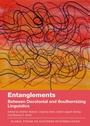
Sinfree Makoni | Unyierie Idem | Edwin Appah Dartey
Entanglements
Between Decolonial and Southernizing Linguistics
Book
08/2025
Multilingual Matters
€56.70
Shipment within 3-4 weeks
Persons
Sinfree Makoni is a Professor in Applied Linguistics and African Studies and Director of African Studies at Pennsylvania State University, USA. He holds Extraordinary Professorship, Visiting Professor and Researcher positions at several South African institutions: North-West University, Nelson Mandela University, University of the Western Cape and University of Zululand.
Unyierie Idem is a Professor in the Academic ESL Department, Holyoke Community College, USA.
Edwin Appah Dartey is a PhD candidate in the Department of Applied Linguistics and the African Studies Program at Pennsylvania State University, USA. His research interests include language policy and planning, multilingualism and southern epistemologies. Edwin's recent works have appeared in the Journal of English for Specific Purposes, Current Issues in Language Planning and the International Journal of Multilingualism.
Bassey E. Antia is Professor of Applied Linguistics at the University of the Western Cape, South Africa. His teaching and/or research interests span multilingualism (in higher education), language policy, terminology and decolonial approaches to sociolinguistics. He is co-editor with Sinfree Makoni of Southernizing Sociolinguistics: Colonialism, Racism and Patriarchy in Language in the Global South (Routledge, 2023).
Unyierie Idem is a Professor in the Academic ESL Department, Holyoke Community College, USA.
Edwin Appah Dartey is a PhD candidate in the Department of Applied Linguistics and the African Studies Program at Pennsylvania State University, USA. His research interests include language policy and planning, multilingualism and southern epistemologies. Edwin's recent works have appeared in the Journal of English for Specific Purposes, Current Issues in Language Planning and the International Journal of Multilingualism.
Bassey E. Antia is Professor of Applied Linguistics at the University of the Western Cape, South Africa. His teaching and/or research interests span multilingualism (in higher education), language policy, terminology and decolonial approaches to sociolinguistics. He is co-editor with Sinfree Makoni of Southernizing Sociolinguistics: Colonialism, Racism and Patriarchy in Language in the Global South (Routledge, 2023).
Content
Contributors
Cecile Vigouroux: Foreword
Sinfree Makoni, Unyierie Idem, Edwin Dartey and Bassey Antia: Political and Linguistic Entanglements
Chapter 1. Sinfree Makoni and Henry Widdowson: In Conversation
Chapter 2. Lynn Mario de Souza: Southernizing Linguistics
Chapter 3. Ofelia Garcia, Ricardo Otheguy and Sinfree Makoni: In Conversation
Chapter 4. Susan Gal and Judith Irvine: Signs of Difference: A Conversation
Chapter 5. Joseph Errington: Living with Lingua Francas: English in Indonesia and Indonesian
Chapter 6. Stephanie Rudwick: Southernizing the Study of English as a Lingua Franca: In Conversation
Chapter 7. Ellen Hurst: African Youth Language Research: Stylects and Decolonial Practice
Chapter 8. Rachel Wicaksono: Ontologies of English: In Applied Linguistics, TESOL and Beyond
Chapter 9. Mary Louise Pratt: Epilogue
Chapter 10. Yecid Ortega: Palabras Finales
Index
Cecile Vigouroux: Foreword
Sinfree Makoni, Unyierie Idem, Edwin Dartey and Bassey Antia: Political and Linguistic Entanglements
Chapter 1. Sinfree Makoni and Henry Widdowson: In Conversation
Chapter 2. Lynn Mario de Souza: Southernizing Linguistics
Chapter 3. Ofelia Garcia, Ricardo Otheguy and Sinfree Makoni: In Conversation
Chapter 4. Susan Gal and Judith Irvine: Signs of Difference: A Conversation
Chapter 5. Joseph Errington: Living with Lingua Francas: English in Indonesia and Indonesian
Chapter 6. Stephanie Rudwick: Southernizing the Study of English as a Lingua Franca: In Conversation
Chapter 7. Ellen Hurst: African Youth Language Research: Stylects and Decolonial Practice
Chapter 8. Rachel Wicaksono: Ontologies of English: In Applied Linguistics, TESOL and Beyond
Chapter 9. Mary Louise Pratt: Epilogue
Chapter 10. Yecid Ortega: Palabras Finales
Index
