


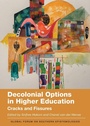
Decolonial Options in Higher Education
Cracks and Fissures
Published on 10. June 2025
202 pages
978-1-83668-090-1 (ISBN)
Description

In order for decolonization to avoid becoming yet another orthodoxy, this book argues that it is necessary to recognize the neoliberal ideologies and imperatives that drive so much work in universities in both the Global Norths and Global Souths, and to understand the enmeshment (both historical and ongoing) of universities in colonial practices. The chapters interrogate both these issues and the terms in which they are usually critiqued in order to identify the cracks and fissures within institutions that may enable decolonization to be leveraged as a praxis and a means of radical change. The chapters explore a range of issues across Higher Education including reparations, allyship, soft power, academic publishing and the politics of race within the university; together they represent an argument for the necessity of continually rethinking and re-making the theories, methods and assumptions of decolonization.
Reviews / Votes
Profound and complex explorations of decoloniality in academia are needed and this timely volume offers them. Scholars from across the globe critique institutional racism, advocate for inclusive knowledge production, and emphasize the need for global solidarity and transformative education. This volume is essential reading for understanding and probing decolonial praxis. * LaWanda W. M. Ward, The Pennsylvania State University, USA * This book is a monumental intellectual contribution to the reimagination of higher education into one that is animated by reconciliation of humanity with our essence - interconnected and interdependent within the web of life. Dismantling the current system calls for ignition of a deep sense of responsibility for shaping the desired future. * Mamphela Ramphele, Global Thought Leader, South Africa * Using Makoni and van der Merwe's volume as a basis for discussion about the alternative forms of writing characterised by the different chapters' initiatives intended to enhance student learning, especially at postgraduate level, would allow for the development of criticality of academic genres themselves, what they achieve, how they achieve it and, more importantly, what they fail to achieve. This is all the more possible given that some chapters refer to work already published in more conventional formats. In addition, as the discussion sections presented at the end of each chapter model practice in academic seminars, they could be used as a means of introducing students to dominant academic practices as well as to critiques of them. The focus of the book on decoloniality potentially means that the volume holds interest for students from a range of backgrounds, given the fervour with which calls for decolonisation were taken up more than ten years ago. * Chrissie Boughey, Rhodes University, South Africa, South African Journal of Science, Vol. 122 No. 5/6 (2026) *More details
Series
Language
English
Place of publication
Bristol
United Kingdom
Publishing group
Channel View Publications Ltd
Target group
College/higher education
Product notice
Reflowable
File size
3,04 MB
ISBN-13
978-1-83668-090-1 (9781836680901)
Copyright in bibliographic data and cover images is held by Nielsen Book Services Limited or by the publishers or by their respective licensors: all rights reserved.
Schweitzer Classification
Other editions
Additional editions
Book
06/2025
Multilingual Matters
€51.90
Shipment within 3-4 weeks
Persons
Sinfree Makoni is a Liberal Arts Professor in applied linguistics and African studies and Director of the African Studies Program at Pennsylvania State University, USA. He holds Extraordinary Professorship, Visiting Professor and Researcher positions at several South African institutions: North-West University, Nelson Mandela University, University of the Western Cape and University of Zululand.
Chanel van der Merwe is a Lecturer in linguistics and applied linguistics at Nelson Mandela University, and a doctoral candidate at University of Cape Town, South Africa. Her research interests include the African university, language policy, multilingualism and feminist and southern epistemologies. She is an organizing team member of the Global Virtual Forum hosted by the African Studies Centre at Penn State University under the leadership of Professor Sinfree Makoni.
Chanel van der Merwe is a Lecturer in linguistics and applied linguistics at Nelson Mandela University, and a doctoral candidate at University of Cape Town, South Africa. Her research interests include the African university, language policy, multilingualism and feminist and southern epistemologies. She is an organizing team member of the Global Virtual Forum hosted by the African Studies Centre at Penn State University under the leadership of Professor Sinfree Makoni.
Content
Contributors
Andre Keet: Foreword
Sinfree Makoni and Chanel van der Merwe: Introduction: Decolonial Options in Higher Education: Cracks and Fissures
1. Horace G. Campbell: Reparations and the University in the 21st Century
2. Jonathan Jansen: How Institutions Defang Radical Curriculum Ideas: The Fate of Decolonization in South African Universities
3. Tshepo Madlingozi: Decoloniality as the Forging of Communities of Critical Consciousness or Beloved Communities
4. Pedro Mzileni and Chanel van der Merwe: Interlude: A Conversation with Dr Pedro Mzileni about #RhodesMustFall and Decolonial Options in Higher Education
5. Shirley Anne Tate: The Impossibility of Black-White Feminist Allyship: A Summary
6. Raewyn Connell: The Good University
7. Kenneth King: China and India's Higher Education Cooperation with Africa: Cultural Diplomacy and Soft Power
8. Diana Jeater: Imperial Standards in African Publishing
9. Adam Habib: Structural Racism, Social Change and the Politics of Race in Universities in the United Kingdom
Cecile B. Vigouroux: Epilogue
Index
Andre Keet: Foreword
Sinfree Makoni and Chanel van der Merwe: Introduction: Decolonial Options in Higher Education: Cracks and Fissures
1. Horace G. Campbell: Reparations and the University in the 21st Century
2. Jonathan Jansen: How Institutions Defang Radical Curriculum Ideas: The Fate of Decolonization in South African Universities
3. Tshepo Madlingozi: Decoloniality as the Forging of Communities of Critical Consciousness or Beloved Communities
4. Pedro Mzileni and Chanel van der Merwe: Interlude: A Conversation with Dr Pedro Mzileni about #RhodesMustFall and Decolonial Options in Higher Education
5. Shirley Anne Tate: The Impossibility of Black-White Feminist Allyship: A Summary
6. Raewyn Connell: The Good University
7. Kenneth King: China and India's Higher Education Cooperation with Africa: Cultural Diplomacy and Soft Power
8. Diana Jeater: Imperial Standards in African Publishing
9. Adam Habib: Structural Racism, Social Change and the Politics of Race in Universities in the United Kingdom
Cecile B. Vigouroux: Epilogue
Index
