

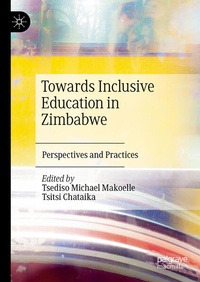
Towards Inclusive Education in Zimbabwe
Description

This book aims to provide a comprehensive review of the state of inclusive education in Zimbabwe since the adoption of the philosophy in 1994. While literature exists that accounts for the situation regarding special and inclusive education in Zimbabwe, there is a need for a more thorough and complete understanding of the state of inclusive education in the country. This book explores and reflects on the perspectives of various stakeholders within the Zimbabwean education system. It offers a conceptual understanding of the implementation of inclusive education in a postcolonial and politically troubled Zimbabwe and provides recommendations for policy development and formulation, as well as the development and strengthening of inclusive teaching and learning practices. The insights offered in this book could have a significant impact on clarifying the roles of stakeholders and ensuring that education provision leads to student support that addresses the needs of all students in Zimbabwe.
More details
Other editions
Additional editions
Persons
Tsediso Michael Makoelle is Vice Dean for Research and Professor of Inclusive Education at the Graduate School of Education at Nazarbayev University, Kazakhstan.
Tsitsi Chataika is Associate Professor in Inclusive Education and Disability Inclusion at the University of Zimbabwe on secondment to CBM Global Disability Inclusion as Disability Inclusion Advisor.
Content
Chapter 1. Conceptualization, policy and enactment of inclusive education in Zimbabwe.- Chapter 2. Educational organization, structures and inclusion within the Zimbabwe education context Historical and Policy Perspectives on Inclusive Education in Zimbabwe.- Chapter 3. Educational barriers to inclusion: analysis of Zimbabwe context Successes and Challenges to inclusion in Zimbabwe.- Chapter 4. Curriculum and inclusion in Zimbabwe Inclusive Curriculum Development and Implementation in Zimbabwe.- Chapter 5. Teacher Preparation, teacher professional development and inclusion in Zimbabwe Teacher Education and Professional Development in Inclusive Education in Zimbabwe.- Chapter 6. Early childhood Development (ECD) and inclusive education in Zimbabwe.- Chapter 7. Role of Zimbabwean community, parents and parent association towards inclusive education.- Chapter 8. NGOs and inclusive education in Zimbabwe.- Chapter 9. Inclusive education: a Zimbabwean higher education context.- Chapter 10. Inclusive education in Technical and Vocational education institutions of Zimbabwe Inclusive Pedagogy in Zimbabwe.- Chapter 11. Inclusive education in Zimbabwe: educational leaders' perspectives.- Chapter 12. Inclusive education: voices and narratives from High school, TVET and University students in Zimbabwe Looking Ahead for Inclusive Education in Zimbabwe.
