

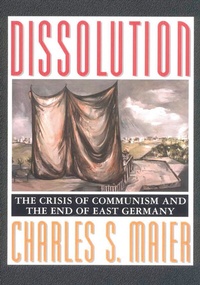
Dissolution
The Crisis of Communism and the End of East Germany
1st Edition
Published on 1. March 1999
464 pages
978-1-4008-2225-6 (ISBN)
Description

Against the backdrop of one of the great transformations of our century, the sudden and unexpected fall of communism as a ruling system, Charles Maier recounts the history and demise of East Germany. Dissolution is his poignant, analytically provocative account of the decline and fall of the late German Democratic Republic.
This book explains the powerful causes for the disintegration of German communism as it constructs the complex history of the GDR. Maier looks at the turning points in East Germany's forty-year history and at the mix of coercion and consent by which the regime functioned. He analyzes the GDR as it evolved from the purges of the 1950s to the peace movements and emerging youth culture of the 1980s, and then turns his attention to charges of Stasi collaboration that surfaced after 1989. In the context of describing the larger collapse of communism, Maier analyzes German elements that had counterparts throughout the Soviet bloc, including its systemic and eventually terminal economic crisis, corruption and privilege in the SED, the influence of the Stasi and the plight of intellectuals and writers, and the slow loss of confidence on the part of the ruling elite. He then discusses the mass protests and proliferation of dissident groups in 1989, the collapse of the ruling party, and the troubled aftermath of unification.
Dissolution is the first book that spans the communist collapse and the ensuing process of unification, and that draws on newly available archival documents from the last phases of the GDR, including Stasi reports, transcripts of Politburo and Central Committee debates, and papers from the Economic Planning Commission, the Council of Ministers, and the office files of key party officials. This book is further bolstered by Maier's extensive knowledge of European history and the Cold War, his personal observations and conversations with East Germans during the country's dramatic transition, and memoirs and other eyewitness accounts published during the four-decade history of the GDR.
This book explains the powerful causes for the disintegration of German communism as it constructs the complex history of the GDR. Maier looks at the turning points in East Germany's forty-year history and at the mix of coercion and consent by which the regime functioned. He analyzes the GDR as it evolved from the purges of the 1950s to the peace movements and emerging youth culture of the 1980s, and then turns his attention to charges of Stasi collaboration that surfaced after 1989. In the context of describing the larger collapse of communism, Maier analyzes German elements that had counterparts throughout the Soviet bloc, including its systemic and eventually terminal economic crisis, corruption and privilege in the SED, the influence of the Stasi and the plight of intellectuals and writers, and the slow loss of confidence on the part of the ruling elite. He then discusses the mass protests and proliferation of dissident groups in 1989, the collapse of the ruling party, and the troubled aftermath of unification.
Dissolution is the first book that spans the communist collapse and the ensuing process of unification, and that draws on newly available archival documents from the last phases of the GDR, including Stasi reports, transcripts of Politburo and Central Committee debates, and papers from the Economic Planning Commission, the Council of Ministers, and the office files of key party officials. This book is further bolstered by Maier's extensive knowledge of European history and the Cold War, his personal observations and conversations with East Germans during the country's dramatic transition, and memoirs and other eyewitness accounts published during the four-decade history of the GDR.
More details
Other editions
Additional editions

Book
03/1999
Princeton University Press
€59.20
Shipment within 10-20 days
Person
Charles S. Maier teaches history at Harvard University. He is Krupp Foundation Professor of European Studies, Director of the Minda de Gunzburg Center for European Studies, and Chairman of the Committee on Degrees in Social Studies. His books include Recasting Bourgeois Europe: Stabilization in France, Germany, and Italy in the Decade after World War I and The Unmasterable Past: History, Holocaust, and German National Identity.
Content
Preface xi
Chapter One Losing Faith 3
Believers and Victims 3
Real Existing Socialism 22
Privilege, Secrecy, and Complicity 32
A Tethered Consciousness 52
Chapter Two The Economic Collapse 59
The Debt Crisis and the Contradictions of Comecon 59
The Costs of Computerization 73
Retreat from Reform: State Socialism in Retrospect 78
The Archaeology of Coal and Steel 97
Chapter Three The Autumn Upheaval 108
Prologue: A Revolution in Germany 108
Decomposition and Flight 120
Two Languages of Revolution 131
Monday Nights in Leipzig 135
Berlin: Rulers and Ruled 146
Chapter Four Protagonists of the Transition 168
New Forums and Round Tables 169
Redeeming "Civil Society" 185
Political Parties and the Elections of March 18, 1990 195
Chapter Five Unification 215
Still Masters of the Game? Soviet Policy Shifts on Germany 216
2 = 1 or 1 = 1? The Economics of Unification 227
2 + 4 = 1: The Diplomacy of Unification 244
Chapter Six Anschluss and Melancholy 285
Between Two Berlins, 1990 285
Between Socialism and Capitalism 290
Abwicklung: Academic Purge and Renewal 303
Stasi Stains: The Old Regime on Trial 311
Epilogue Wrapped Reichstag, 1995 330
Notes 339
A Note on Sources 421
Index 427
Chapter One Losing Faith 3
Believers and Victims 3
Real Existing Socialism 22
Privilege, Secrecy, and Complicity 32
A Tethered Consciousness 52
Chapter Two The Economic Collapse 59
The Debt Crisis and the Contradictions of Comecon 59
The Costs of Computerization 73
Retreat from Reform: State Socialism in Retrospect 78
The Archaeology of Coal and Steel 97
Chapter Three The Autumn Upheaval 108
Prologue: A Revolution in Germany 108
Decomposition and Flight 120
Two Languages of Revolution 131
Monday Nights in Leipzig 135
Berlin: Rulers and Ruled 146
Chapter Four Protagonists of the Transition 168
New Forums and Round Tables 169
Redeeming "Civil Society" 185
Political Parties and the Elections of March 18, 1990 195
Chapter Five Unification 215
Still Masters of the Game? Soviet Policy Shifts on Germany 216
2 = 1 or 1 = 1? The Economics of Unification 227
2 + 4 = 1: The Diplomacy of Unification 244
Chapter Six Anschluss and Melancholy 285
Between Two Berlins, 1990 285
Between Socialism and Capitalism 290
Abwicklung: Academic Purge and Renewal 303
Stasi Stains: The Old Regime on Trial 311
Epilogue Wrapped Reichstag, 1995 330
Notes 339
A Note on Sources 421
Index 427
