

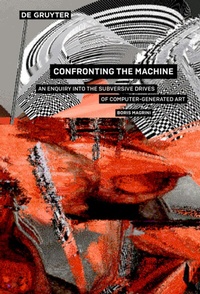
Confronting the Machine
Description

Künstler, die mit neuen Medien arbeiten, zeigen in der Regel einen kritischen Medien-Ansatz, anders als Künstler die mit traditionellen Kunstmedien arbeiten. Worin liegt der Unterschied zwischen Medien-Künstlern und Künstlern, die moderne Kunst produzieren? Welche Schlüsselwerke machen diesen Trend sichtbar?
Der Autor untersucht die Beziehung von Kunst und Technologie an beispielhaften Arbeiten von Edward Ihnatowicz und Harald Cohen sowie an der pionierhaften Computerkunst-Ausstellung auf der Dokumenta X im Jahr 1997. Er argumentiert dabei gegen die allgemein geltende Ansicht, dass Computer-Kunst die Gegensätze zwischen Kunst und Technologie überbrückt. Sein Anliegen ist es vielmehr, die Ursprünge der Medien-Kunst genuin zu interpretieren und neue Perspektiven für sie zu entwickeln.
More details
Other editions
Additional editions
Person
Content
- Intro
- CONTENTS
- PREFACE
- ACKNOWLEDGMENTS
- Introduction
- BETWEEN GOOD AND EVIL
- SUBVERSIVE DRIVES: QUESTIONS AND ORIGINS
- METHODOLOGICAL APPROACH
- CHAPTERS AND CASE STUDIES
- Chapter 1
- 1.1 COMPUTER-GENERATED ART AND ITS MULTIPLES
- 1.2 AN OPEN HISTORY OF GENERATIVE ART
- 1.3 RECURRING DEFINITIONS AND THE CONCEPT OF EMERGENCE
- 1.4 A COMMON NARRATIVE: BRIDGING THE ARTS AND THE SCIENCES
- 1.5 THE DIGITAL DIVIDE
- Chapter 2
- 2.1 THE PIONEERING PERIOD OF COMPUTER ART 1968-1983
- 2.2 HAROLD COHEN
- 2.2.1 FROM PAINTING TO PROGRAMMING
- 2.2.2 EARLY COMPUTER DRAWINGS
- 2.2.3 CREATIVITY, INTELLIGENCE AND COMPUTER SCIENCE
- 2.2.4 ON ARTIFICIAL INTELLIGENCE AND THE EVOLUTION OF AARON0 OF AARON
- 2.2.5 0RECEPTION OF COHEN'S WORK AND IDEAS
- 2.3 EDWARD IHNATOWICZ
- 2.3.1 FROM ASSEMBLAGES TO CYBERNETICS
- 2.3.2 THE SENSTER
- 2.3.3 THE UNDERSTANDING OF UNDERSTANDING
- 2.3.4 RECEPTION OF IHNATOWICZ'S WORK AND IDEAS
- 2.4 ART, COMPUTERS AND THE CONTRIBUTION TO KNOWLEDGE
- Chapter 3
- 3.1 DIVERGENT POSITIONS AFTER THE SEVENTIES
- 3.2 OPPOSITION TO AI AND THE COMPUTING MACHINE FROM WITHIN
- 3.3 QUESTIONING MODERN TECHNOLOGIES IN THE POST-INDUSTRIAL SOCIETY
- 3.4 ARTISTIC POSITIONS ON AI IN THE EIGHTIES AND NINETIES
- 3.5 EPISTEMOLOGICAL AND ETHICAL ARGUMENTS
- Chapter 4
- 4.1 COMPUTER ART AT THE DOCUMENTA X EXHIBITION
- 4.2 WHICH CRITERIA FOR MEDIA ART?
- 4.3 JODI, A BOMB IN THE SOURCE CODE
- 4.4 ONLINE AND OFFLINE: PROBLEMS OF PRESENTATION
- 4.5 RECEPTION OF MEDIA ART
- 4.6 THE SIGNIFICANCE OF DOCUMENTA FOR JODI
- 4.7 SUBVERSIVE DRIVES IN MEDIA ART
- Conclusion
- THE MYTH OF THE TWO CULTURES
- ANOTHER TAKE ON THE DIGITAL DIVIDE
- BIBLIOGRAPHY
