

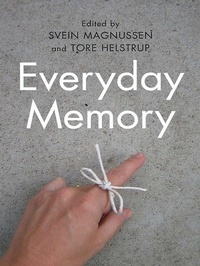
Everyday Memory
Published on 7. May 2007
352 pages
978-1-135-42065-9 (ISBN)
Description

This book presents an authoritative overview of memory in everyday contexts. Written by an expert team of international authors, it gathers together research on some of the more neglected but revealing areas of memory, to provide a comprehensive overview of remembering in real life situations.
Contributions from leading experts deal with a variety of important questions concerning everyday memory, from under-researched areas such as memory for odours, to more well known areas, like collective memory. Topics covered also include:
Beliefs about memory and the metaphors used to discuss memory
The relation between self-referent beliefs and actual memory performance
The development of autobiographical memory.
Everyday Memory summarises current knowledge and presents new interpretations and hypotheses to be explored by future research. It discusses aspects of human memory which are frequently ignored or dealt with only very briefly by ordinary textbooks and as a result will have a broad appeal for researchers and students.
Contributions from leading experts deal with a variety of important questions concerning everyday memory, from under-researched areas such as memory for odours, to more well known areas, like collective memory. Topics covered also include:
Beliefs about memory and the metaphors used to discuss memory
The relation between self-referent beliefs and actual memory performance
The development of autobiographical memory.
Everyday Memory summarises current knowledge and presents new interpretations and hypotheses to be explored by future research. It discusses aspects of human memory which are frequently ignored or dealt with only very briefly by ordinary textbooks and as a result will have a broad appeal for researchers and students.
Reviews / Votes
'There are many books on memory, but I do not know of any that cover quite as much material in quite as much depth and quite as expertly as does this volume.' - Robert H. Logie, Professor of Human Cognitive Neuroscience, University of Edinburgh'Everyday Memory is very comprehensive, covering the major themes in memory research as well as topics of more recent focus; it will prove to be a leading source of information.' - Lorna Goddard, Goldsmiths College, London
'An interesting and entertaining analysis of practical aspects of memory in everyday life, including popular beliefs about memory, combined with a thought-provoking discussion of limitations of current memory research.' - Claus Bundesen, Professor of Cognitive Psychology, University of Copenhagen
More details
Language
English
Place of publication
London
United Kingdom
Publishing group
Taylor & Francis Ltd
Target group
College/higher education
Illustrations
7 Tables, black and white; 8 Line drawings, black and white
File size
2,09 MB
ISBN-13
978-1-135-42065-9 (9781135420659)
Copyright in bibliographic data and cover images is held by Nielsen Book Services Limited or by the publishers or by their respective licensors: all rights reserved.
Schweitzer Classification
Other editions
Additional editions
Svein Magnussen | Tore Helstrup
Everyday Memory
Book
02/2014
1st Edition
Psychology Press Ltd
€79.20
Shipment within 15-20 days
Svein Magnussen | Tore Helstrup
Everyday Memory
Book
01/2007
1st Edition
Psychology Press Ltd
€207.20
Shipment within 3-4 weeks
Persons
Svein Magnussen is Professor at the Department of Psychology, University of Oslo, Norway. He has been carrying out research in several areas of cognitive psychology and neuropsychology, with focus on visual perception and visual memory; in recent years he has been engaged in research on eyewitness testimony. He has edited three books and published more than 75 papers in international scientific journals.
Tore Helstrup is Professor at the Department of Psychology, University of Oslo, Norway. He is also adjunct professor at the University of Trondheim, Norway. He has taught psychology at all course levels, with learning, memory and problem solving as his main research areas. He has published numerous books and journal articles.
Tore Helstrup is Professor at the Department of Psychology, University of Oslo, Norway. He is also adjunct professor at the University of Trondheim, Norway. He has taught psychology at all course levels, with learning, memory and problem solving as his main research areas. He has published numerous books and journal articles.
Content
Introduction. By Svein Magnussen and Tore Helstrup
Chapter 1. What do people believe about memory, and how do they talk about memory? By Svein Magnussen, Tor Endestad, Asher Koriat and Tore Helstrup,
Chapter 2. Visuo-spatial thinking, imagination, and remembering. By Hubert Zimmer, Svein Magnussen, Mary Rudner and Jerker Roennberg
Chapter 3. Action events in everyday life and their remembering. By Hubert Zimmer, Tore Helstrup and Lars-Goeran Nilsson
Chapter 4. Underestimated sensations: Everyday odour memory in clinical and forensic settings. By Maria Larsson and Annika Melinder
Chapter 5. The development of autobiographical memory. A new model. By Gail S. Goodman and Annika Melinder
Chapter 6. Collaborative memory: How is our ability to remember affected by interaction with others? By Jan Andersson, Tore Helstrup and Jerker Roennberg
Chapter 7. Memory illusions and false memories in the real world. By Gail Goodman, Svein Magnussen, Jan Andersson, Tor Endestad, Lene Lokken and Cathrine Mostue.
Chapter 8. Memory sensitivity in autobiographical memory. By Cesare Cornoldi Rossana De Beni and Tore Helstrup.
Chapter 9. Memory experts. Visual learning, wine tasting, orienteering and speech reading. By Rosanna De Beni, Cesare Cornoldi, Maria Larsson, Svein Magnussen and Jerker Roennberg
Chapter 10. Compensatory changes in everyday memory and communication: disabilities, abilities and social context. By Jerker Roennberg and Annika Melinder
Chapter 11. Metacognitive aspects of memory, By Asher Koriat and Tore Helstrup.
Chapter 12. Self-referent beliefs about memory and actual performance: Relationships with age and sex. By Lars-Goeran Nilsson and Maria Larsson
Chapter 13. Memory pathways: Involuntary and voluntary processes in retrieving personal memories. By Tore Helstrup, Rosanna De Beni, Cesare Cornoldi and Asher Koriat.
Chapter 1. What do people believe about memory, and how do they talk about memory? By Svein Magnussen, Tor Endestad, Asher Koriat and Tore Helstrup,
Chapter 2. Visuo-spatial thinking, imagination, and remembering. By Hubert Zimmer, Svein Magnussen, Mary Rudner and Jerker Roennberg
Chapter 3. Action events in everyday life and their remembering. By Hubert Zimmer, Tore Helstrup and Lars-Goeran Nilsson
Chapter 4. Underestimated sensations: Everyday odour memory in clinical and forensic settings. By Maria Larsson and Annika Melinder
Chapter 5. The development of autobiographical memory. A new model. By Gail S. Goodman and Annika Melinder
Chapter 6. Collaborative memory: How is our ability to remember affected by interaction with others? By Jan Andersson, Tore Helstrup and Jerker Roennberg
Chapter 7. Memory illusions and false memories in the real world. By Gail Goodman, Svein Magnussen, Jan Andersson, Tor Endestad, Lene Lokken and Cathrine Mostue.
Chapter 8. Memory sensitivity in autobiographical memory. By Cesare Cornoldi Rossana De Beni and Tore Helstrup.
Chapter 9. Memory experts. Visual learning, wine tasting, orienteering and speech reading. By Rosanna De Beni, Cesare Cornoldi, Maria Larsson, Svein Magnussen and Jerker Roennberg
Chapter 10. Compensatory changes in everyday memory and communication: disabilities, abilities and social context. By Jerker Roennberg and Annika Melinder
Chapter 11. Metacognitive aspects of memory, By Asher Koriat and Tore Helstrup.
Chapter 12. Self-referent beliefs about memory and actual performance: Relationships with age and sex. By Lars-Goeran Nilsson and Maria Larsson
Chapter 13. Memory pathways: Involuntary and voluntary processes in retrieving personal memories. By Tore Helstrup, Rosanna De Beni, Cesare Cornoldi and Asher Koriat.
