

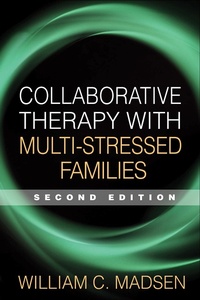
Collaborative Therapy with Multi-Stressed Families
2nd Edition
Published on 3. April 2013
388 pages
978-1-4625-1237-9 (ISBN)
Description

Family therapists, social workers, clinical psychologists, and counselors; supervisors and case managers in outpatient clinics, community agencies, and home-based family preservation programs; others who work with families in crisis. Serves as a text in direct practice and therapy courses within family therapy, social work, clinical psychology, and counseling programs.
More details
Other editions
Additional editions
William C. Madsen | Froma Walsh | Peter Fraenkel
Collaborative Therapy with Multi-Stressed Families, Second Edition
Book
03/2007
2nd Edition
Guilford Publications
€58.00
Shipment within 15-20 days
Person
William C. Madsen, PhD, until his death in 2023, was Founder and Director of the Family-Centered Services Project in Watertown, Massachusetts, an organizational change initiative dedicated to helping state and provincial organizations and community agencies develop more respectful and responsive ways of serving youth and families. Dr. Madsen developed, administered, and consulted to many innovative programs. He provided international training and consultation regarding collaborative approaches to therapy and the development of institutional structures and organizational cultures that support family-centered work.
Content
Introduction: Reflective Practice in Frenzied Times
1. Working with Multi-Stressed Families: Recognizing the Importance of Relational Stance
2. What We See Is What We Get: Reexamining Our Assessment Process
3. Collaboration Is a Two-Way Street: Engaging Reluctant Families
4. Developing a Proactive Vision to Guide Clinical Work: Collaborative Therapy Contracts
5. Collaborative Inquiry: An Anthropological Approach to "Intervening" with Families
6. Examining the Relationship between Clients and the Problems in Their Lives
7. Helping Clients Shift Their Relationship to Problems and Develop Preferred Lives
8. Developing Communities to Support New Lives
9. Solidifying New Lives through Therapeutic Documents
10. Sustaining a Collaborative Practice in the "Real" World
Appendices: A. One Example of a Strength-Based Assessment Outline. B. Questions to Assess Externalized Problems Rather Than Families. C. Considerations in Collaborative Therapy Contracts. D. An Interview Outline to Consolidate Alternative Stories. E. Coauthoring Termination/Consolidation Summaries with Clients.
1. Working with Multi-Stressed Families: Recognizing the Importance of Relational Stance
2. What We See Is What We Get: Reexamining Our Assessment Process
3. Collaboration Is a Two-Way Street: Engaging Reluctant Families
4. Developing a Proactive Vision to Guide Clinical Work: Collaborative Therapy Contracts
5. Collaborative Inquiry: An Anthropological Approach to "Intervening" with Families
6. Examining the Relationship between Clients and the Problems in Their Lives
7. Helping Clients Shift Their Relationship to Problems and Develop Preferred Lives
8. Developing Communities to Support New Lives
9. Solidifying New Lives through Therapeutic Documents
10. Sustaining a Collaborative Practice in the "Real" World
Appendices: A. One Example of a Strength-Based Assessment Outline. B. Questions to Assess Externalized Problems Rather Than Families. C. Considerations in Collaborative Therapy Contracts. D. An Interview Outline to Consolidate Alternative Stories. E. Coauthoring Termination/Consolidation Summaries with Clients.
