

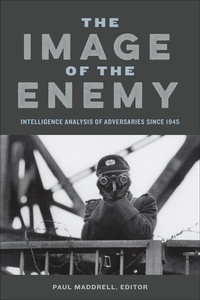
The Image of the Enemy
Description

Intelligence agencies spend huge sums of money to collect and analyze vast quantities of national security data for their political leaders. How well is this intelligence analyzed, how often is it acted on by policymakers, and does it have a positive or negative effect on decision making? Drawing on declassified documents, interviews with intelligence veterans and policymakers, and other sources, The Image of the Enemy breaks new ground as it examines how seven countries analyzed and used intelligence to shape their understanding of their main adversary. The cases in the book include the Soviet Union's analysis of the United States (and vice versa), East Germany's analysis of West Germany (and vice versa), British intelligence in the early years of the Troubles in Northern Ireland, Israeli intelligence about the Palestinians, Pakistani intelligence on India, and US intelligence about Islamist terrorists.
These rivalries provide rich case studies for scholars and offer today's analysts and policymakers the opportunity to closely evaluate past successes and failures in intelligence analysis and the best ways to give information support to policymakers. Using these lessons from the past, they can move forward to improve analysis of current adversaries and future threats.
More details
Other editions
Additional editions
Person
Paul Maddrell is a lecturer in modern history in the Department of Politics, History, and International Relations at Loughborough University (UK). He is the author of Spying on Science: Western Intelligence in Divided Germany, 1945?1961.
Content
Introduction: Achieving Objective, Policy-Relevant Intelligence
Paul Maddrell
1. Soviet Leaders, Soviet Intelligence, and Changing Views of the United States, 1965?1991
Raymond L. Garthoff
2. The Stasi's Reporting on the Federal Republic of Germany
Paul Maddrell
3. ?We May Not Always Be Right, but We're Never Wrong?: US Intelligence Assessments of the Soviet Union, 1972?1991
Benjamin B. Fischer
4. East Germany in the Sights of the West German Federal Intelligence Service: Four Examples from As Many Decades
Matthias Uhl
5. British Intelligence, PIRA, and the Early Years of the Northern Ireland Crisis: Remembering, Forgetting, and Mythologizing
Eunan O'Halpin
6. Israeli Intelligence Threat Perceptions of Palestinian Terrorist Organizations, 1948?2008
Tamir Libel and Shlomo Shpiro
7. Pakistani Intelligence and India
Julian Richards
8. American Intelligence Assessments of the Jihadists, 1989?2011
Mark Stout
Conclusion: Intelligence and Policy
Paul Maddrell
List of Contributors
Index
