


Digital Family Justice
From Alternative Dispute Resolution to Online Dispute Resolution?
1st Edition
Published on 12. December 2019
256 pages
978-1-5099-2853-8 (ISBN)
Description

The editors' earlier book Delivering Family Justice in the 21st Century (2016) described a period of turbulence in family justice arising from financial austerity. Governments across the world have sought to reduce public spending on private quarrels by promoting mediation (ADR) and by beginning to look at digital justice (ODR) as alternatives to courts and lawyers.
But this book describes how mediation has failed to take the place of courts and lawyers, even where public funding for legal help has been removed. Instead ODR has developed rapidly, led by the Dutch Rechtwijzer. The authors question the speed of this development, and stress the need for careful evaluation of how far these services can meet the needs of divorcing families.
In this book, experts from Canada, Australia, Turkey, Spain, Germany, France, Poland, Scotland, and England and Wales explore how ADR has fallen behind, and how we have learned from the rise and fall of ODR in the Rechtwijzer about what digital justice can and cannot achieve. Managing procedure and process? Yes. Dispute resolution? Not yet.
The authors end by raising broader questions about the role of a family justice system: is it dispute resolution? Or dispute prevention, management, and above all legal protection of the vulnerable?
This title is included in Bloomsbury Professional's International Arbitration online service.
But this book describes how mediation has failed to take the place of courts and lawyers, even where public funding for legal help has been removed. Instead ODR has developed rapidly, led by the Dutch Rechtwijzer. The authors question the speed of this development, and stress the need for careful evaluation of how far these services can meet the needs of divorcing families.
In this book, experts from Canada, Australia, Turkey, Spain, Germany, France, Poland, Scotland, and England and Wales explore how ADR has fallen behind, and how we have learned from the rise and fall of ODR in the Rechtwijzer about what digital justice can and cannot achieve. Managing procedure and process? Yes. Dispute resolution? Not yet.
The authors end by raising broader questions about the role of a family justice system: is it dispute resolution? Or dispute prevention, management, and above all legal protection of the vulnerable?
This title is included in Bloomsbury Professional's International Arbitration online service.
More details
Series
Edition
1. Auflage
Language
English
Place of publication
London
United Kingdom
Publishing group
Bloomsbury Publishing PLC
Target group
College/higher education
ISBN-13
978-1-5099-2853-8 (9781509928538)
Copyright in bibliographic data and cover images is held by Nielsen Book Services Limited or by the publishers or by their respective licensors: all rights reserved.
Schweitzer Classification
Other editions
Additional editions
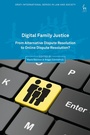
Mavis Maclean | Bregje Dijksterhuis
Digital Family Justice
From Alternative Dispute Resolution to Online Dispute Resolution?
Book
07/2021
Hart Publishing
€57.19
Shipment within 15-20 days
Persons
Mavis Maclean is co-founder of the Oxford Centre for Family Law and Policy, Department of Social Policy and Intervention, Oxford University and Senior Research Fellow of St Hilda's College, Oxford.
Bregje Dijksterhuis is Assistant Professor at Utrecht University.
Bregje Dijksterhuis is Assistant Professor at Utrecht University.
Content
Introduction
Mavis Maclean and Bregje Dijksterhuis
PART A
DIGITAL FAMILY JUSTICE: POLITICAL AND PROFESSIONAL CONTEXTS FOR CHANGE
(1) The Political Landscape
1. 'My Problem, My Solution'? Private Ordering and Self-help in British Columbia, Canada
Rachel Treloar
2. Choosing Paths to Dispute Resolution in Post-Communist Poland
Malgorzata Fuszara and Jacek Kurczewski
3. Competing Logics, Norms and World Visions: The Family Justice System in Turkey
Verda Irtis
(2) The Professional Landscape
4. Legal Help by Student Lawyers: Harnessing the Thinking Behind Digital Expert Systems
Lisa Webley
5. Mediation in Germany - The Possibilities for and Limits of Mediation
Adelheid Kuhne and Barbara Willenbacher
6. Different Forms of Alternative Dispute Resolution: The Framework for Family Mediation in Spain
Teresa Piconto Novales, Elena Lauroba, Cristina Merino and Marcos Loredo Colunga
PART B
THE DEVELOPMENT OF DIGITAL FAMILY JUSTICE
7. Family Justice in France: Two Dimensions of Digitisation
Benoit Bastard
8. From ADR to ODR in Scots Family Justice: No Clear Direction of Travel
Jane Mair
9. Representations of Family Justice in Online Communities
Leanne Smith
10. Digital Pathways in Australian Family Law: An Initial Snapshot
Belinda Fehlberg and Bruce Smyth
PART C
THE WAY AHEAD
11. The Online Divorce Resolution Tool 'Rechtwijzer uit Elkaar' Examined
Bregje Dijksterhuis
12. The Digital Contribution to Reforming the Traditional Family Justice System in England and Wales: Reaching for the Best of Both Worlds?
Mavis Maclean
13. A Short Case Study: A Considered and Collaborative Approach to Digital Delivery in England and Wales
Alexy Buck, Alejandra Diaz and Kate Gregory-Smith
Mavis Maclean and Bregje Dijksterhuis
PART A
DIGITAL FAMILY JUSTICE: POLITICAL AND PROFESSIONAL CONTEXTS FOR CHANGE
(1) The Political Landscape
1. 'My Problem, My Solution'? Private Ordering and Self-help in British Columbia, Canada
Rachel Treloar
2. Choosing Paths to Dispute Resolution in Post-Communist Poland
Malgorzata Fuszara and Jacek Kurczewski
3. Competing Logics, Norms and World Visions: The Family Justice System in Turkey
Verda Irtis
(2) The Professional Landscape
4. Legal Help by Student Lawyers: Harnessing the Thinking Behind Digital Expert Systems
Lisa Webley
5. Mediation in Germany - The Possibilities for and Limits of Mediation
Adelheid Kuhne and Barbara Willenbacher
6. Different Forms of Alternative Dispute Resolution: The Framework for Family Mediation in Spain
Teresa Piconto Novales, Elena Lauroba, Cristina Merino and Marcos Loredo Colunga
PART B
THE DEVELOPMENT OF DIGITAL FAMILY JUSTICE
7. Family Justice in France: Two Dimensions of Digitisation
Benoit Bastard
8. From ADR to ODR in Scots Family Justice: No Clear Direction of Travel
Jane Mair
9. Representations of Family Justice in Online Communities
Leanne Smith
10. Digital Pathways in Australian Family Law: An Initial Snapshot
Belinda Fehlberg and Bruce Smyth
PART C
THE WAY AHEAD
11. The Online Divorce Resolution Tool 'Rechtwijzer uit Elkaar' Examined
Bregje Dijksterhuis
12. The Digital Contribution to Reforming the Traditional Family Justice System in England and Wales: Reaching for the Best of Both Worlds?
Mavis Maclean
13. A Short Case Study: A Considered and Collaborative Approach to Digital Delivery in England and Wales
Alexy Buck, Alejandra Diaz and Kate Gregory-Smith
