

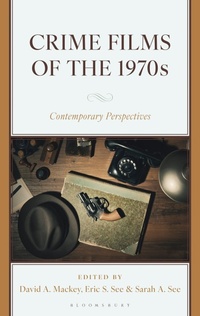
Crime Films of the 1970s
Contemporary Perspectives
1st Edition
Published on 5. February 2026
218 pages
979-8-8818-6773-7 (ISBN)
Description

The 1970s was a pivotal era for crime and criminal justice films in the United States. Many films produced during this period provocatively captured the tumultuous spirit of the era, while also shaping cinematic representations in the decades that followed. This edited volume offers a captivating exploration of the intricate connections between these films and the administration and social perceptions and attitudes toward justice, marginalized individuals, and the complexities of the criminal justice system.
Each chapter delves into the intricate connections between these films and the administration of justice, the social construction of justice, as well as the social constructions of marginalized individuals and groups based on race, ethnicity, gender, and sexuality. The contents of this collection provide insightful perspectives on the relationships between past representations and present social and cultural conditions.
By examining these crime-based films through a critical lens, this book sheds light on how they have shaped societal perceptions and attitudes towards justice, marginalization, the complexities of the criminal justice system, and the views towards the larger political establishment. This thought-provoking analysis expands our understanding of the enduring influence of these cinematic representations on our collective cultural consciousness.
Each chapter delves into the intricate connections between these films and the administration of justice, the social construction of justice, as well as the social constructions of marginalized individuals and groups based on race, ethnicity, gender, and sexuality. The contents of this collection provide insightful perspectives on the relationships between past representations and present social and cultural conditions.
By examining these crime-based films through a critical lens, this book sheds light on how they have shaped societal perceptions and attitudes towards justice, marginalization, the complexities of the criminal justice system, and the views towards the larger political establishment. This thought-provoking analysis expands our understanding of the enduring influence of these cinematic representations on our collective cultural consciousness.
More details
Edition
1. Auflage
Language
English
Place of publication
London
United Kingdom
Publishing group
Bloomsbury Publishing PLC
Target group
Professional and scholarly
ISBN-13
979-8-8818-6773-7 (9798881867737)
Copyright in bibliographic data and cover images is held by Nielsen Book Services Limited or by the publishers or by their respective licensors: all rights reserved.
Schweitzer Classification
Other editions
Additional editions
Book
approx. 04/2026
Bloomsbury Academic
€102.80
Not yet published
Persons
David A. Mackey is professor of Criminal Justice at Plymouth State University.
Eric S. See is professor and division head of criminal justice and military science at Methodist University.
Sarah A. See is assistant professor in the division of criminal justice and military science at Methodist University.
Eric S. See is professor and division head of criminal justice and military science at Methodist University.
Sarah A. See is assistant professor in the division of criminal justice and military science at Methodist University.
Content
Acknowledgments
Preface
David A. Mackey (Plymouth State University, USA)
Introduction
Kevin Swift (University of North Carolina at Pembroke, USA)
1. A Clockwork Orange and Our Parallel Societies
Robert Heiner (Plymouth State University, USA)
2. Feeling Lucky, Punk? Reflections on the Social and Cultural Significance of Dirty Harry
Eric S. See (Methodist University, USA), Sarah A. See (Methodist University, USA), Kaydee Adams (Methodist University, USA), Bertha Llamas, and Cameron See
3. Popeye's Quest for the Frog: Social and Legal Analysis of The French Connection
David A. Mackey (Plymouth State University, USA)
4. An Offer They Should Have Refused: The Godfather, Family, Respect, Crime
Eric S. See (Methodist University, USA), Andrew Clark, and Kaydee Adams
5. Serpico and the Future of the Blue Code of Silence
Martin Alan Greenberg
6. Cotton Comes to Harlem Across 110th Street, Trick Baby: Race, Identity, and Power in 1970s American Crime Drama
Declan O'Reilly
7. Death Wish: The Social Construction of Crime, Justice, and Self-Help
David A. Mackey (Plymouth State University, USA)
8. Control, Urban Ecology, and Sexual Commerce in 1970s Cinema
Aaron Hammes (Case Western Reserve University, USA)
9. Hauntological Horrors: Bridging Together Postwar Americas in The Town That Dreaded Sundown
Fernando Gabriel Pagnoni Berns (Universidad de Buenos Aires, Argentina)
10."For the Money, for the Glory, and for the Fun:" Reassessing Smokey and the Bandit and the "Trucker Films" of the 1970s
Stephen E. Nepa (Temple University, USA; Rowan University, USA; Moore College of Art and Design, USA; Holy Family University, USA; and Penn State University-Abington, USA)
11. Systematic Suspicion: Offender Control and Reformation as Portrayed in Escape from Alcatraz and Straight Time
Kevin E. Courtright (Penn West University at Edinboro, USA) and Ihor J. Bemko (Penn West University at Edinboro, USA)
12. Dog Day Afternoon: Every Dog has his Day......or Does He?
Kevin Swift (University of North Carolina at Pembroke, USA)
13. The Taking of Pelham One Two Three and Reducing the Opportunities for Subway Crime
Martin Alan Greenberg
14. Shaft: "An African-American Hero or a Pawn in the Machine"
Keith L. Coleman (North Carolina Agricultural and Technical State University, USA)
15. The Charm of the Con
Joshua Wakeham (Plymouth State University, USA)
About the Contributors
Index
Preface
David A. Mackey (Plymouth State University, USA)
Introduction
Kevin Swift (University of North Carolina at Pembroke, USA)
1. A Clockwork Orange and Our Parallel Societies
Robert Heiner (Plymouth State University, USA)
2. Feeling Lucky, Punk? Reflections on the Social and Cultural Significance of Dirty Harry
Eric S. See (Methodist University, USA), Sarah A. See (Methodist University, USA), Kaydee Adams (Methodist University, USA), Bertha Llamas, and Cameron See
3. Popeye's Quest for the Frog: Social and Legal Analysis of The French Connection
David A. Mackey (Plymouth State University, USA)
4. An Offer They Should Have Refused: The Godfather, Family, Respect, Crime
Eric S. See (Methodist University, USA), Andrew Clark, and Kaydee Adams
5. Serpico and the Future of the Blue Code of Silence
Martin Alan Greenberg
6. Cotton Comes to Harlem Across 110th Street, Trick Baby: Race, Identity, and Power in 1970s American Crime Drama
Declan O'Reilly
7. Death Wish: The Social Construction of Crime, Justice, and Self-Help
David A. Mackey (Plymouth State University, USA)
8. Control, Urban Ecology, and Sexual Commerce in 1970s Cinema
Aaron Hammes (Case Western Reserve University, USA)
9. Hauntological Horrors: Bridging Together Postwar Americas in The Town That Dreaded Sundown
Fernando Gabriel Pagnoni Berns (Universidad de Buenos Aires, Argentina)
10."For the Money, for the Glory, and for the Fun:" Reassessing Smokey and the Bandit and the "Trucker Films" of the 1970s
Stephen E. Nepa (Temple University, USA; Rowan University, USA; Moore College of Art and Design, USA; Holy Family University, USA; and Penn State University-Abington, USA)
11. Systematic Suspicion: Offender Control and Reformation as Portrayed in Escape from Alcatraz and Straight Time
Kevin E. Courtright (Penn West University at Edinboro, USA) and Ihor J. Bemko (Penn West University at Edinboro, USA)
12. Dog Day Afternoon: Every Dog has his Day......or Does He?
Kevin Swift (University of North Carolina at Pembroke, USA)
13. The Taking of Pelham One Two Three and Reducing the Opportunities for Subway Crime
Martin Alan Greenberg
14. Shaft: "An African-American Hero or a Pawn in the Machine"
Keith L. Coleman (North Carolina Agricultural and Technical State University, USA)
15. The Charm of the Con
Joshua Wakeham (Plymouth State University, USA)
About the Contributors
Index
