

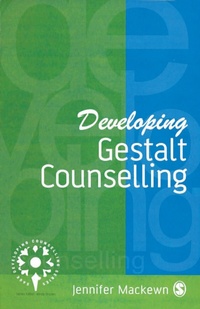
Developing Gestalt Counselling
1st Edition
Published on 28. August 1997
272 pages
978-1-4462-2642-1 (ISBN)
Description

`In this eminently sensible, practical and thought-provoking book, Jennifer Mackewn takes gestalt light years forward towards a synthesis and integration of psychological styles and away from what she describes as "Perlism". I agree with her: this is a book for therapists, not principally for gestaltists... In inviting the reader to "pick and choose" from the many and varied, always practical, hands-on approach chapters... Jennifer Mackewn hopes we will both enjoy her book and find it of use. This reader, commending the book to you all, has no doubt that both her hopes will be fulfilled' - Self & Society
Describing contemporary integrative Gestalt counselling and psychotherapy, this book addresses 30 key issues which will help both trainee and practising counsellors examine and improve crucial areas of their work.
The field theoretical and relational model which underpins the book suggests that therapy is a complex process which requires therapists to be intuitive and self-aware while engaging in a number of interrelated therapeutic tasks. The importance of meeting clients person-to-person in a meaningful relationship is highlighted. Jennifer Mackewn encourages counsellors to focus on areas that they may feel need special attention, and shows them how to blend their skills into a subtle and versatile art form. The book covers vital aspects of Gestalt counselling and psychotherapy, such as: appreciating the significance of beginnings; understanding the client's context; the dialogic relationship; contact and awareness; exploring life themes and support systems; and experimental and creative methods.
Describing contemporary integrative Gestalt counselling and psychotherapy, this book addresses 30 key issues which will help both trainee and practising counsellors examine and improve crucial areas of their work.
The field theoretical and relational model which underpins the book suggests that therapy is a complex process which requires therapists to be intuitive and self-aware while engaging in a number of interrelated therapeutic tasks. The importance of meeting clients person-to-person in a meaningful relationship is highlighted. Jennifer Mackewn encourages counsellors to focus on areas that they may feel need special attention, and shows them how to blend their skills into a subtle and versatile art form. The book covers vital aspects of Gestalt counselling and psychotherapy, such as: appreciating the significance of beginnings; understanding the client's context; the dialogic relationship; contact and awareness; exploring life themes and support systems; and experimental and creative methods.
Reviews / Votes
`In this eminently sensible, practical and thought-provoking book, Jennifer Mackewn takes gestalt light years forwards towards a synthesis and integration of psychological styles and away from what she describes as "Perlism". I agree with her: this is a book for therapists, not principally for gestaltists... In inviting the reader to "pick and choose" from the many and varied, always practical, hands-on approach chapters... Jennifer Mackewn hopes we will both enjoy her book and find it of use. This reader, commending the book to you all, has no doubt that both her hopes will be fulfilled' - Self & SocietyMore details
Series
Edition
1. Auflage
Language
English
Place of publication
London
United Kingdom
Target group
College/higher education
Product notice
Reflowable
ISBN-13
978-1-4462-2642-1 (9781446226421)
Copyright in bibliographic data and cover images is held by Nielsen Book Services Limited or by the publishers or by their respective licensors: all rights reserved.
Schweitzer Classification
Other editions
Additional editions
Jennifer Mackewn
Developing Gestalt Counselling
Book
08/1997
1st Edition
SAGE Publications Inc
€88.60
Shipment within 15-20 days
Jennifer Mackewn
Developing Gestalt Counselling
Book
08/1997
1st Edition
SAGE Publications Inc
€228.90
Shipment within 15-20 days
Person
Jennifer Mackewn is a psychotherapist, trainer, organizational consultant and writer. She is a teaching member of the Gestalt Psychotherapy Training Institute, a trainer at the Institute for the Arts in Therapy and Education, the Metanoia Institute, and an Associate of Roffey Park Management College. She is co-author of Fritz Perls (SAGE, 1993) and has written several articles and chapters on counselling and psychotherapy.
Content
Introduction
A Field Theoretical and Relational Model of Contemporary Integrative Gestalt
Attending to Beginnings
Initial Conditions and Existential Meeting
Exploring the Client's Context and Culture
Developing a Dialogic Relationship as a Crucible for Self Development
Observing Process, Developing Diagnostic Perspectives and Therapeutic Strategies
Exploring Awareness and Contact
Integrating Experimental, Creative and Transpersonal Dimensions
Working with Embodiment, Energy and `Resistance'
Attending to the Background Features and Processes in Clients' Lives
Shaping Counselling over Time
Conclusion
Simplicity, Complexity and Paradox in Gestalt Counselling and Therapy
A Field Theoretical and Relational Model of Contemporary Integrative Gestalt
Attending to Beginnings
Initial Conditions and Existential Meeting
Exploring the Client's Context and Culture
Developing a Dialogic Relationship as a Crucible for Self Development
Observing Process, Developing Diagnostic Perspectives and Therapeutic Strategies
Exploring Awareness and Contact
Integrating Experimental, Creative and Transpersonal Dimensions
Working with Embodiment, Energy and `Resistance'
Attending to the Background Features and Processes in Clients' Lives
Shaping Counselling over Time
Conclusion
Simplicity, Complexity and Paradox in Gestalt Counselling and Therapy
