

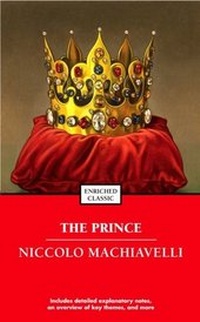
The Prince
Published on 19. April 2016
192 pages
978-1-4516-8627-2 (ISBN)
Description

Enriched Classics offer readers accessible editions of great works of literature enhanced by helpful notes and commentary. Each book includes educational tools alongside the text, enabling students and readers alike to gain a deeper and more developed understanding of the writer and their work.
In The Prince, Machiavelli offers a monarchical ruler advice designed to keep that ruler in power. He recommends policies that would discourage mass political activism and channel subjects' energies into private pursuits. Machiavelli wanted to persuade the monarch that he could best preserve his power by the judicious use of violence, by respecting private property and the traditions of his subjects, and by promoting material prosperity. Machiavelli held that political life cannot be governed by a single set of moral or religious absolutes, and that the monarch may sometimes be excused for performing acts of violence and deception that would be ethically indefensible in private life. During the Renaissance, Italy was a scene of intense political conflict. The result was massive political intrigue, blackmail, and violence. The Prince was written against this backdrop, and in its conclusion Machiavelli issued an impassioned call for Italian unity, and an end to foreign intervention.
This edition includes:
-A concise introduction that gives readers important background information
-A chronology of the author's life and work
-A timeline of significant events that provides the book's historical context
-An outline of key themes and plot points to help readers form their own interpretations
-Detailed explanatory notes
-Critical analysis, including contemporary and modern perspectives on the work
-Discussion questions to promote lively classroom and book group interaction
-A list of recommended related books and films to broaden the reader's experience
Enriched Classics offer readers affordable editions of great works of literature enhanced by helpful notes and insightful commentary. The scholarship provided in Enriched Classics enables readers to appreciate, understand, and enjoy the world's finest books to their full potential.
In The Prince, Machiavelli offers a monarchical ruler advice designed to keep that ruler in power. He recommends policies that would discourage mass political activism and channel subjects' energies into private pursuits. Machiavelli wanted to persuade the monarch that he could best preserve his power by the judicious use of violence, by respecting private property and the traditions of his subjects, and by promoting material prosperity. Machiavelli held that political life cannot be governed by a single set of moral or religious absolutes, and that the monarch may sometimes be excused for performing acts of violence and deception that would be ethically indefensible in private life. During the Renaissance, Italy was a scene of intense political conflict. The result was massive political intrigue, blackmail, and violence. The Prince was written against this backdrop, and in its conclusion Machiavelli issued an impassioned call for Italian unity, and an end to foreign intervention.
This edition includes:
-A concise introduction that gives readers important background information
-A chronology of the author's life and work
-A timeline of significant events that provides the book's historical context
-An outline of key themes and plot points to help readers form their own interpretations
-Detailed explanatory notes
-Critical analysis, including contemporary and modern perspectives on the work
-Discussion questions to promote lively classroom and book group interaction
-A list of recommended related books and films to broaden the reader's experience
Enriched Classics offer readers affordable editions of great works of literature enhanced by helpful notes and insightful commentary. The scholarship provided in Enriched Classics enables readers to appreciate, understand, and enjoy the world's finest books to their full potential.
More details
Other editions
Additional editions
Niccolo Machiavelli
Prince,the:Enriched Classics
Book
07/2004
Simon & Schuster
€8.00
Shipment within 10-20 days
Person
Niccolo Machiavelli
Content
- Intro
- Title Page
- Introduction
- Chronology of Niccolò Machiavelli's Life and Work
- Historical Context of 'The Prince'
- The Prince
- Dedication
- Chapter I: Of the Various Kinds of Princedom, and of the Ways in Which They are Acquired
- Chapter II: Of Hereditary Princedoms
- Chapter III: Of Mixed Princedoms
- Chapter IV: Why the Kingdom of Darius, Conquered by Alexander, Did Not, on Alexander's Death, Rebel against His Successors
- Chapter V: How Cities or Provinces Which before Their Acquisition Have Lived under Their Own Laws Are to Be Governed
- Chapter VI: Of New Princedoms Which a Prince Acquires with His Own Arms and by Merit
- Chapter VII: Of New Princedoms Acquired by the Aid of Others and by Good Fortune
- Chapter VIII: Of Those Who by Their Crimes Come to Be Princes
- Chapter IX: Of the Civil Princedom
- Chapter X: How the Strength of All Princedoms Should Be Measured
- Chapter XI: Of Ecclesiastical Princedoms
- Chapter XII: How Many Different Kinds of Soldiers There Are, and of Mercenaries
- Chapter XIII: Of Auxiliary, Mixed, and National Arms
- Chapter XIV: Of the Duty of a Prince in Respect of Military Affairs
- Chapter XV: Of the Qualities in Respect of Which Men, and Most of All Princes, Are Praised or Blamed
- Chapter XVI: Of Liberality and Miserliness
- Chapter XVII: Of Cruelty and Clemency, and Whether It Is Better to Be Loved or Feared
- Chapter XVIII: How Princes Should Keep Faith
- Chapter XIX: That a Prince Should Seek to Escape Contempt and Hatred
- Chapter XX: Whether Fortresses, and Certain Other Expedients to Which Princes Often Have Recourse, Are Profitable or Hurtful
- Chapter XXI: How a Prince Should Bear Himself So As to Acquire Reputation
- Chapter XXII: Of the Secretaries of Princes
- Chapter XXIII: That Flatterers Should Be Shunned
- Chapter XXIV: Why the Princes of Italy Have Lost Their States
- Chapter XXV: What Fortune Can Effect in Human Affairs, and How She May Be Withstood
- Chapter XXVI: An Exhortation to Liberate Italy from the Barbarians
- Interpretive Notes
- Critical Excerpts
- Questions for Discussion
- Suggestions for the Interested Reader
- Notes
- Copyright
