

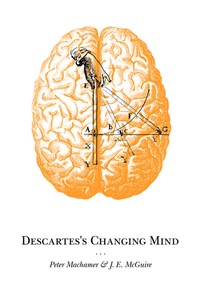
Descartes's Changing Mind
1st Edition
Published on 6. July 2009
272 pages
978-1-4008-3043-5 (ISBN)
Description

Descartes's works are often treated as a unified, unchanging whole. But in Descartes's Changing Mind, Peter Machamer and J. E. McGuire argue that the philosopher's views, particularly in natural philosophy, actually change radically between his early and later works--and that any interpretation of Descartes must take account of these changes. The first comprehensive study of the most significant of these shifts, this book also provides a new picture of the development of Cartesian science, epistemology, and metaphysics.
No changes in Descartes's thought are more significant than those that occur between the major works The World (1633) and Principles of Philosophy (1644). Often seen as two versions of the same natural philosophy, these works are in fact profoundly different, containing distinct conceptions of causality and epistemology. Machamer and McGuire trace the implications of these changes and others that follow from them, including Descartes's rejection of the method of abstraction as a means of acquiring knowledge, his insistence on the infinitude of God's power, and his claim that human knowledge is limited to that which enables us to grasp the workings of the world and develop scientific theories.
No changes in Descartes's thought are more significant than those that occur between the major works The World (1633) and Principles of Philosophy (1644). Often seen as two versions of the same natural philosophy, these works are in fact profoundly different, containing distinct conceptions of causality and epistemology. Machamer and McGuire trace the implications of these changes and others that follow from them, including Descartes's rejection of the method of abstraction as a means of acquiring knowledge, his insistence on the infinitude of God's power, and his claim that human knowledge is limited to that which enables us to grasp the workings of the world and develop scientific theories.
More details
Other editions
Additional editions
Peter Machamer | James E. McGuire
Descartes's Changing Mind
Book
07/2009
Princeton University Press
€71.92
Shipment within 10-20 days
Persons
Peter Machamer is professor of history and philosophy of science and associate director of the Center for Philosophy of Science at the University of Pittsburgh. J. E. McGuire is professor of history and philosophy of science at the University of Pittsburgh, and a resident fellow of the Center for Philosophy of Science.
Content
Preface ix
CHAPTER ONE: From Method to Epistemology and from Metaphysics to the Epistemic Stance 1
Descartes's Early Work: The Rules 5
The World 14
The Discourse on Method 24
CHAPTER TWO: God and Efficient Causation 36
A Historical Preamble 37
God's Efficient Causation and the Introduction of Causa Secundum Esse 45
God, Time, and Continual Creation: The Emergence of Re-creationism 59
Causal Axioms and Common Notions 73
CHAPTER THREE: Seeing the Implications of His Causal Views: The Response to His Critics 82
God as Causa Sui: The High Tide of Descartes's Causalism 83
Eminent Containment, Transcendence, Divine Powers, and God's Causal Harmony 91
Epistemic Teleology 102
CHAPTER FOUR: Body-Body Causation and the Cartesian World of Matter 111
The Current Debate on Body-Body Causation 111
The Early Descartes 116
Cartesian Conservationism 119
Three Questions of Metaphysics: Principles Parts I and II 127
Mature Motion 134
The Place of Our Position in the Current Debate 157
CHAPTER FIVE: Mind, Intuition, Innateness, and Ideas 164
Intuition and Enumeration 165
Ideas and Descartes's New Theory of Mind 169
Innate Ideas 176
Innateness and Sensory Ideas 183
Innate Ideas: Present but Swamped 186
Innateness and Intellectual Memory 188
Common Notions, Eternal Truths, and Immutable Natures 193
CHAPTER SIX: Mind-Body Causality and the Mind-Body Union: The Case of Sensation 198
Sensation 199
The Physical Side of Perception 202
The Mental Side of Perception 209
How the Soul Moves the Body, or Mind-to-Body Causation 221
The Nature of the Distinction between Mind and Body 224
The Mind-Body (Soul-Body) Union 232
Epistemic Teleology and Dualism 239
References 243
Index 251
CHAPTER ONE: From Method to Epistemology and from Metaphysics to the Epistemic Stance 1
Descartes's Early Work: The Rules 5
The World 14
The Discourse on Method 24
CHAPTER TWO: God and Efficient Causation 36
A Historical Preamble 37
God's Efficient Causation and the Introduction of Causa Secundum Esse 45
God, Time, and Continual Creation: The Emergence of Re-creationism 59
Causal Axioms and Common Notions 73
CHAPTER THREE: Seeing the Implications of His Causal Views: The Response to His Critics 82
God as Causa Sui: The High Tide of Descartes's Causalism 83
Eminent Containment, Transcendence, Divine Powers, and God's Causal Harmony 91
Epistemic Teleology 102
CHAPTER FOUR: Body-Body Causation and the Cartesian World of Matter 111
The Current Debate on Body-Body Causation 111
The Early Descartes 116
Cartesian Conservationism 119
Three Questions of Metaphysics: Principles Parts I and II 127
Mature Motion 134
The Place of Our Position in the Current Debate 157
CHAPTER FIVE: Mind, Intuition, Innateness, and Ideas 164
Intuition and Enumeration 165
Ideas and Descartes's New Theory of Mind 169
Innate Ideas 176
Innateness and Sensory Ideas 183
Innate Ideas: Present but Swamped 186
Innateness and Intellectual Memory 188
Common Notions, Eternal Truths, and Immutable Natures 193
CHAPTER SIX: Mind-Body Causality and the Mind-Body Union: The Case of Sensation 198
Sensation 199
The Physical Side of Perception 202
The Mental Side of Perception 209
How the Soul Moves the Body, or Mind-to-Body Causation 221
The Nature of the Distinction between Mind and Body 224
The Mind-Body (Soul-Body) Union 232
Epistemic Teleology and Dualism 239
References 243
Index 251
