

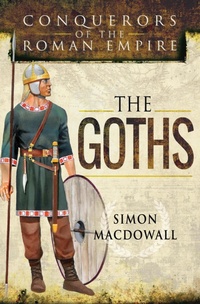
The Goths
Published on 20. February 2019
184 pages
978-1-4738-8963-7 (ISBN)
Description

The fascinating history of "a race that simply would not accept defeat" (
Books Monthly).
In the late fourth century, pressure from the Huns forced the Goths to cross the Danube into the Roman Empire. The resultant Battle of Adrianople in 378 was one of Rome's greatest defeats. Both western (Visigoth) and eastern (Ostrogoth) branches of the Goths had a complex relationship with the Romans, sometimes fighting as their allies against other "barbarian" interlopers but carving out their own kingdoms in the process. Under Alaric, the Visigoths sacked Rome itself in 410 and went on to establish a kingdom in Gaul (France). They helped the Romans defeat the Hunnic invasion of Gaul at Chalons in 451 but continued to expand at Roman expense. Defeated by the Franks, they then took Spain from the Vandals. The Ostrogoths had a similar relationship with the Eastern Roman Empire before eventually conquering Italy. Adrianople, the events of 410, and the Ostrogoths' long war with Belisarius, including the Siege of Rome, are among the campaigns and battles Simon MacDowall narrates in detail. He analyses the arms and contrasting fighting styles of the Ostro- and Visi- Goths and evaluates their effectiveness against the Romans.
In the late fourth century, pressure from the Huns forced the Goths to cross the Danube into the Roman Empire. The resultant Battle of Adrianople in 378 was one of Rome's greatest defeats. Both western (Visigoth) and eastern (Ostrogoth) branches of the Goths had a complex relationship with the Romans, sometimes fighting as their allies against other "barbarian" interlopers but carving out their own kingdoms in the process. Under Alaric, the Visigoths sacked Rome itself in 410 and went on to establish a kingdom in Gaul (France). They helped the Romans defeat the Hunnic invasion of Gaul at Chalons in 451 but continued to expand at Roman expense. Defeated by the Franks, they then took Spain from the Vandals. The Ostrogoths had a similar relationship with the Eastern Roman Empire before eventually conquering Italy. Adrianople, the events of 410, and the Ostrogoths' long war with Belisarius, including the Siege of Rome, are among the campaigns and battles Simon MacDowall narrates in detail. He analyses the arms and contrasting fighting styles of the Ostro- and Visi- Goths and evaluates their effectiveness against the Romans.
More details
Other editions
Additional editions
Simon Macdowall
Conquerors of the Roman Empire: The Goths
Book
07/2017
Pen & Sword Military
€25.00
Shipment within 10-20 days
Person
Simon MacDowall was born in England but from the age of 10 grew up in Canada. He joined the Canadian army, was commissioned into the Royal Canadian Dragoons and saw active service with the UN in Honduras and Nicuragua and with NATO in Croatia, Bosnia and Kosovo. In 1994 he was the UN spokesman in Sarajevo. He later worked for NATO as a civilian before joining the UK civil service, where he was the Communications Director for several departments, including the Ministry of Defence and Her Majesty's Revenue and Customs. In his spare time he is a keen wargamer and military historian, with eight previous books to his name, including two previous volumes in this series: The Vandals and The Goths.
Content
- Intro
- Title
- Copyright
- Contents
- List of Plates
- Maps
- Chapter 1 First Contact
- Chapter 2 Over Land and Sea
- Chapter 3 The Calm Before the Storm
- Chapter 4 The Great Migration
- Chapter 5 Alaric and the Sack of Rome
- Chapter 6 The Visigoths
- Chapter 7 The Ostrogoths
- Chapter 8 The Gothic Kingdoms
- Chapter 9 The Road to War
- Chapter 10 The War for Italy
- Chapter 11 The Gothic Epilogue
- Chronology
- The Visigothic Kings
- The Ostrogothic Kings
- The Later Roman Emperors
- Glossary
- Select Bibliography
- Plate section
