

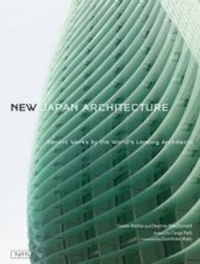
New Japan Architecture
Recent Works by the World's Leading Architects
1st Edition
Published on 1. January 2012
226 pages
978-1-4629-0850-9 (ISBN)
Description

Featuring dozens of high-quality photographs, schematic designs and insightful commentary this Japanese architecture book is a must-have for architects or collectors.
The past five years are widely consider to have been the most innovative period in contemporary Japanese design history. The projects featured in New Japan Architecture were completed during this extraordinarily fertile time. Featuring breathtaking images of modern Japan, this volume presents forty-eight extraordinary projects by forty-two of the world's leading architects, including:
Insightful text by two leading experts in the field of Japanese architecture highlights the remarkable aspects of each building and places these developments within the wider context of world architecture. Offering an essential overview of current trends, New Japan Architecture points the way to modern architecture's future.
The past five years are widely consider to have been the most innovative period in contemporary Japanese design history. The projects featured in New Japan Architecture were completed during this extraordinarily fertile time. Featuring breathtaking images of modern Japan, this volume presents forty-eight extraordinary projects by forty-two of the world's leading architects, including:
- Hitoshi Abe
- Ward Kishi
- Tadao Ando
- Chiba Manabu Architects
- Toyo Ito
- Kengo Kuma
- Kazuyo Sejima
Insightful text by two leading experts in the field of Japanese architecture highlights the remarkable aspects of each building and places these developments within the wider context of world architecture. Offering an essential overview of current trends, New Japan Architecture points the way to modern architecture's future.
All prices
More details
Language
English
Place of publication
La Vergne
United States
Illustrations
300 color photos, 100 plans and drawings
ISBN-13
978-1-4629-0850-9 (9781462908509)
Copyright in bibliographic data and cover images is held by Nielsen Book Services Limited or by the publishers or by their respective licensors: all rights reserved.
Schweitzer Classification
Other editions
Additional editions
Book
02/2015
Tuttle Publishing
€47.91
Article exhausted; check for reprint
Book
08/2011
Tuttle Shokai Inc
€82.00
Article exhausted; check for reprint
Content
- Intro
- Contents
- Preface
- Foreword
- From Wasabi to White Cubes
- Architecture for Living
- Passage House
- Weekend House Alley
- House in Kitakamakura
- House Like a Museum
- Coal House
- House N
- House C
- M House
- Okurayama Apartments
- A-Ring-Aluminum Ring House 3
- C-1 (Curiosity 1) House
- Jardin
- Natural Cubes
- Glashaus
- Architecture for Culture
- 21_21 Design Sight
- National Museum of Contemporary Art
- Mihara Performing Arts Center
- Aomori Museum of Art
- The National Art Center, Tokyo
- Bubbletecture H
- Nakamura Keith Haring Museum
- Nezu Museum
- Inujima Art Project "Seirensho
- Shimane Museum of Ancient Izumo
- Architecture for Learning
- Techno-Plaza Ota
- Tama Art University Library
- Kanagawa Institute of Technology (Kait) Workshop
- Fukutake Hall, University of Tokyo
- Fuji Kindergarten Montessori School
- Mode Gakuen Cocoon Tower
- Tama University School of Global Studies
- Nishimachi International School Yashiro Media Center
- Architecture for Work
- Namics Techno Core
- Tokyo Midtown
- Sia Aoyama Building
- F-Town Building
- Acritecture for Consumers
- The Iceberg
- Prada Aoyama Epicenter
- Tod's Omotesando
- Nicolas G. Hayek Center
- De Beers Ginza Building
- Gyre Building
- Architecture for the City
- Fussa City Hall
- Hyuga City Station
- Monument at Shin-Yatsushiro
- Architecture for Renewal
- Tomamu Towers
- International House of Japan
- Ginzan Onsen Fujiya
- Architects
- Acknowledgments and Credits

