

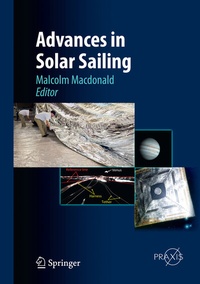
Advances in Solar Sailing
1st Edition
Published on 3. February 2014
XXIV, 980 pages
978-3-642-34907-2 (ISBN)
Description

This book presents the best contributions of the the Third International Symposium on Solar Sailing Glasgow, 11 - 13 June 2013. It is a rapid snap-shot of the state-of-the art of solar sail technology in 2013 across the globe, capturing flight programs, technology development programs and new technology and application concepts. The book contains contributions from all of the leading figures in the field, including NASA, JAXA, ESA & DLR as well as university and industry experts. It therefore provides a unique reference point for the solar sail technology. The book also includes key contributions from the prospective users of solar sail technology, which will allow the technology to be considered by the user in this unique context.
More details
Other editions
Additional editions
Content
- Intro
- Contents
- Preface
- Organizing Committee
- Part I: Flight Programs
- 1 An overview of solar sail related activities at JAXA
- I .Introduction
- II.Ikaros Mission-how it was born and what was demonstrated
- III. Solar Power Sail to Trojan Asteroids
- IV. Preparation Activities for Solar Power Sail mission
- V. Conclusion
- References
- 2 An Overview of Solar Sail Propulsion within NASA
- I. Introduction
- II. Solar Sails In Perspective: 1990's to the Present
- III. Potential Future Missions and Concepts
- IV. Technology Development and Demonstrations
- V. Conclusion
- References
- 3 Overview of IKAROS Mission
- I. Introduction
- II. IKAROS Mission
- III.Devolopment of IKAROS Spacecraft
- IV. IKAROS Operation
- V. Conclusion
- References
- 4 How IKAROS Shape is Designed -Attitude Stability ofSpinning Solar Sail
- I. Introduction
- II. Derivation of Attitude Stability for Spinning Solar Sail
- III. Designing Spinning Sail Spacecraft Configuration
- IV. Numerical and In-Flight Evaluation of Stability
- V. Conclusion
- References
- 5 Evaluation of Sail Mechanics of IKAROS on its Slow-spinand Reverse-spin Operation
- I. Introduction
- II. Configuration of the Sail
- III. Slow-spin Operation
- IV. Numerical Analysis of the Shape of the Sail
- V. Reverse-spin Operation
- VI. Discussion
- VII. Conclusion
- References
- 6 Attitude and Orbit Prediction of IKAROS in Actual Flight Operation
- I. Introduction
- II. Characteristics of IKAROS
- III. Search Operation
- IV. Attitude Prediction
- V. Orbit Prediction
- VI. Results of Search Operation
- VII. Analysis to Improve Trajectory Prediction
- VIII. Summary
- References
- 7 NanoSail - D Orbital and Attitude Dynamics
- I. Introduction
- II. Background
- III. Analysis
- IV. Models
- V. Results
- VI. Conclusions
- References
- 8 Sunjammer : A Solar Sail Demonstration
- Sunjammer Mission Overview
- Deployment
- Attitude Calibration
- Thrust Calibration
- Flyout and Other Extended Operations
- References
- 9 Commercial Solar Sail Applications: Overview andUpdate on NASA's Sunjammer Mission
- I. About Sunjammer
- II. About SSHI
- III. Precursor Private Solar Sail Efforts
- IV. SSHI and Sunjammer
- V. Post Sunjammer Commercial Infusion Activities and Opportunities
- VI. Conclusion
- VII. References
- 10 The Preliminary Design of the GOSSAMER-1 Solar SailMembrane and Manufacturing Strategies
- I. Introduction
- II. Sail Storage
- III. Material Selection
- IV. Membrane Design
- V. Sail Membrane Manufacturing
- VI. Conclusion
- References
- 11 Demonstrator Flight Missions at the Surrey SpaceCentre involving Gossamer Sails
- I. Introduction
- II. CubeSail
- III. DGOSS - Deployable Gossamer Sail for Deorbiting
- IV. DeorbitSail
- V. InflateSail
- VI. Conclusions
- References
- 12 ISS-based solar sail deployment experiment "BMSTU- Sail"
- I. Introduction
- II. Mission design
- III. BMSTU-Sail picosatellite and launch device
- IV. Data acquisition
- V. Conclusion
- References
- Part II Mission Applications
- 13 Magnetic field measurements from a solar sail platformwith space weather applications
- I. Motivation: An Introduction to the Near Earth Space Environment and Space Weather
- II. Drivers of Geomagnetic Activity
- III. Measurement of the Interplanetary Magnetic Field upstream of the Earth
- IV. The Sunjammer solar sail mission
- V. MAGIC: MAGnetometer from Imperial College
- VI. Conclusion
- References
- 14 The Solar Wind Analyser (SWAN) for the Sunjammer solar sail mission
- I. Introduction
- II. Measurement requirements
- III. Instrument technical details
- IV. Conclusi
- Acknowledgments
- References
- 15 Gossamer Roadmap Technology Reference Studyfor a Multiple NEO Rendezvous Mission
- I. Introduction
- II. Previous Work on Solar Sail Missions to NEOs
- III. Study and Mission Objectives
- IV. Solar Sailcraft Design
- V. Preliminary Potential Mission Scenario
- VI. Conclusions and Future Work
- References
- 16 Gossamer Roadmap Technology Reference Study for aSub-L1 Space Weather Mission
- I. Introduction
- II. Mission Requirements
- III. Mission Architecture
- IV. Spacecraft Sizing
- V. Trajectory Analysis
- VI. Propulsion System Comparison
- VII. Conclusions
- Appendix A
- References
- 17 Gossamer Roadmap Technology Reference Study for aSolar Polar Mission
- I. Introduction
- II. Mission Architecture & Analysis
- III. System Analysis
- IV. Conclusions
- References
- 18 SOLARIS: Solar sail investigation of the Sun
- I. Introduction
- II. Scientific Objectives
- III. Instrument and Mission Requirements
- IV. Solar-sail mission design
- V. Interest of the scientific community
- VI. Conclusion
- References
- 19 A Fractionated Space Weather Base at L5 using CubeSatsand Solar Sails
- I. Introduction
- II. Solar Sail Trajectory Calculation
- III. Mission and Spacecraft Overview
- IV. Engineering and Science Subsystems
- V. Summary and Discussion
- References
- 20 Design and Trade-offs of a Pole-Sitter Mission
- I. Introduction
- II. Mission Description and Propulsion Options
- III. Mission Design
- IV. Spacecraft Subsystems Sizing
- V. Conclusions
- References
- 21 Reduction of Martian Sample Return Mission LaunchMass with Solar Sail Propulsion
- I. Introduction
- II. Ground Rules and Assumptions
- III. Orbiter Chemical Propulsion Mission Analysis
- IV. Solar Sail Mission Analysis
- V. Configurations
- VI. Spacecraft Structure Analysis
- VII. Solar Sail Structures
- VIII. Power
- IX. Avionics
- X. Thermal Control
- XI. Mass Properties
- XII. Study Conclusion
- References
- 22 Distributed Reflectivity Solar Sails for Extended MissionApplications
- I. Introduction
- II. Sail Attitude Control using Variable Reflectivity Distribution
- III. Sail Shape Control using Variable Reflectivity Distribution
- IV. Computation of Focal Length of Parabolic Sail Reflector
- References
- 23 Alternative Application of Solar Sail Technology
- I. Introduction
- II. System Overview
- III. Key Technology
- IV. Design Details
- V. Flight Results
- VI. Prospect
- References
- 24 Earth-crossing asteroids deflection with a sailcraft
- I. Introduction
- II. Options of Deflection Trajectories
- III. Case Studies
- IV. Concluding Remarks
- Reference
- 25 Solar Sai ls and the Search for Dark Matter
- I. Introduct ion
- II . Dark Matter: Its Effect on Interstellar Probe Trajectories
- III .Sailcraf t for a Mission to 10,000 AU
- IV. Conclusions: Can We Conduct ~100-Year Extra-Solar Missions?
- References
- Part III Technology Activities
- 26 Light pressure measurement at DLR Bremen
- I. Introduction
- II. Theory
- III. Test Facility LPMF
- IV. Results
- V. Conclusion
- References
- 27 Realistic Solar Sail Thrust
- I. Introduction
- II. Ideal Solar Sail Characteristics
- III. Non-ideal Sail Characteristics
- IV. Realistic Solar Sail Characteristics
- V. Solar Sailcraft Characteristic Performance Comparison
- VI. Conclusion
- References
- 28 Direct Thrust Efficiency for the L'Garde Sail Surfacewith a Linear Reflectivity Model
- I. Introduction
- II. Solar Radiation Force Modeling and the Linear Thrust Model
- III. The L'Garde Sail Architecture and its Trough Shape
- IV. Conclusion
- References
- 29 Thrust Efficiency on an Idealized Deformable Sail
- I. Introduction
- II. Force efficiency and CM-CP offset
- III. Impact of sail sag
- IV. Model of a deformable sail
- V. Conclusion
- References
- 30 The Solar Radiation Pressure Force Models for a GeneralSail Surface Shape
- I. Introduction
- II. Sail Surface Assumption and the Differential Force & Moment
- III. The Tensor Forms of the Total Force & Moment
- IV. The Parameterized Forms of the Total Force & Moment
- V. Some Properties for the Deformed Sail Surface
- VI. Example
- VII. Conclusions
- Appendix
- References
- 31 Applying Vector Scattering Theory to Solar-Photon SailThrust Modeling
- I. Introduction
- II. BRDF: a reminder
- III. Solar-Sail Surface Modeling
- IV. Polarization in SPS
- V. Sail Reflectance Photon Momenta
- VI. Numerical Results
- VII. Conclusion and Next Development
- References
- 32 The Solar Sail Materials (SSM) Project - Results ofActivities
- I. Introduction
- II. Project Objectives and Logic
- III. Synthesis of Material Tests
- IV. Synthesis of Breadboarding
- V. Synthesis of FEM Activities
- VI. Synthesis of System Activities
- VII. Conclusions
- References
- 33 Selection and Manufacturing of Membrane Materials forSolar Sails
- I. Introduction:
- II. Discussion:
- III. Conclusions:
- References:
- 34 The Complex Irradiation Facility at DLR-Bremen
- I. Introduction
- II. Overview of the configuration and instrumentation of the CIF
- III. The radiation sources of the CIF
- IV. Conclusion
- References
- 35 H2 blister formation on metallic surfaces - a candidate fordegradation processes in space
- I. Introduction
- II. Temporal evolution of bubble formation
- III. Formation possibility of H2 bubbles in the interplanetary medium, numerical analysis ofbubble growth.
- IV. The effect of bubble formation on to the reflectivity
- V. Conclusion
- References
- 36 Solar Sail: Materials and Space Environmental Effects
- I. Introduction
- II. Solar Radiation
- III. Temperature Dependence of Solar Sail Parameters
- IV. Degradation of Solar Sail Materials by Solar Radiations
- V. Discussion and Conclusions
- References
- 37 Design and Sizing of theGOSSAMER Boom Deployment Concept
- I. Introduction
- II. Basic Concept
- III. Boom Design
- IV. Boom & Sail Deployment Unit Design
- V. Conclusion
- References
- 38 Bistable Over the Whole Length (BOWL) CFRP Boomsfor Solar Sails
- I. Introduction
- II. Bistability of thin composite shells
- III. Challenges in the design of long bistable composite tubes
- IV. Determining coiled curvature as a function of braid angle
- V. Bistable Over the Whole Length (BOWL) booms
- VI. New low-cost manufacturing technique
- VII. Experimental analysis of bistable composite booms
- VIII. Current applications of BOWL CFRP booms in large gossamer structures
- IX. Discussion
- X. Conclusion
- References
- Part IV Dynamics
- 39 Heliogyro Solar Sail Research at NASA
- I. Introduction
- II. HELIOS: A Reference Design Concept for Heliogyro Technology Development
- III. Heliogyro Technology Development Activities
- IV. Conclusion
- References
- 40 Solarelastic Stability of the Heliogyro
- I. Introduction
- II. Model Description
- III. Structural Results
- IV. Solarelastic Results
- V. Conclusion
- References
- 41 Heliogyro Attitude Control Moment Authority via BladePitch Maneuvers
- I. Introduction
- II. Background
- III. Discussion of Attitude Control Strategies
- IV. Inversion of HGForce with Half-p strategy
- V. Conclusions
- Appendix
- References
- 42 Dynamics of a Coupled Pendulum Model of a HeliogyroMembrane Blade
- I. Introduction
- II. Discrete Configuration of a Membrane
- III. Dynamic Equations of Motion
- IV. Continuous Equations
- V. Natural Frequencies Observed from the Linearized Equations
- VI. Simulation Results for a 3-dof Hanging Model
- VII. Experiment Results for a 3-dof Model
- VIII. Conclusion
- References
- 43 Challenges Associated with System Identification andControl of a Heliogyro Membrane Blade
- I. Introduction
- II. Model Description
- III. Simulation of Spinning Membrane Model
- IV. Design of Controller
- V. Stability robustness
- VI. Conclusion
- References
- 44 Two-blade solar sail dynamics
- I. Introduction
- II. Problem formulation
- III. Mathematical model
- IV. Numerical experiments
- V. Estimation of design parameters
- VI. Conclusion
- References
- 45 Solar Sail Coning Control to Induce Orbital Effects inSpinning Versus Non-Spinning Sails
- I. Solar Sail Introduction
- II. Solar Sail Attitude Dynamics and Control
- III. Solar Sail Coning Dynamics
- IV. Natural Dynamics of Spinning Versus Non-Spinning Solar Sails
- V. Dynamics of Spinning Versus Non-Spinning Solar Sails using Sail Coning Controller
- VI. Conclusion
- References
- 46 The Attitude Control of a Tri-Spin Solar Sail Satellite
- I. Introduction
- II. Spinning Sail Concept
- III. Dynamic Model
- IV. Attitude Control
- V. Conclusion
- References
- 47 Influence of Attitude Control on Orbital Plane Change forFlexible Solar Sail
- I. Introduction
- II. Coupled Dynamic Model of a Flexible Solar Sail
- III. Optimal trajectory design for the transfer mission
- IV. Analysis of the transfer mission of the flexible solar sail with attitude control
- V. Conclusion
- References
- 48 Coupled Attitude-orbit Dynamics and Control of ReflectivityModulated Solar Sail for GeoSail Formation Flying
- I. Introduction
- II. Force and Torque Models of Reflectivity Modulated Solar Sail
- III. Attitude-orbit Coupled Dynamics of Reflectivity Modulated Solar Sail on a GeoSailOrbit
- IV. Coupled Dynamics and Control of Relative Motion of Two Sails
- V. Numerical Results
- VI. Conclusion
- References
- 49 Dynamical Analysis of The Deployment for A ReducedSpinning Solar Sail Model
- I. Introduction
- II. Two Steps Deployment Method
- III. Modeling of Three Dimensional Yo-Yo Booms
- IV. Numerical Simulations
- V. Conclusion
- References
- Part V Advanced Concepts
- 50 Optimal Solar Sail Interplanetary Trajectories withConstant Cone Angle
- I. Introduction
- II. Mathematical Model
- III. Mission Applications
- IV. Conclusions
- References
- 51 New Families of non-Keplerian Orbits: Solar SailMotion over Cylinders and Spheres
- I. Introduction
- II. Cylindrically constrained NKOs
- III. Spherically constrained NKOs
- IV. Conclusions
- References
- 52 Families of periodic orbits for solar sails in the CRBTP
- I. Introduction
- II. The Solar Sail CRTBP
- III. Numerical Continuation
- IV. The Radial Case
- V. The Non-Radial Case
- VI. Conclusion
- References
- 53 Periodic Motion for an Imperfect Solar Sail near an Asteroid
- Introduction
- The Augmented Hill for a Non-Perfectly Reflecting Solar Sail
- Equilibrium Points
- Periodic Orbits
- Conclusions and Future Work
- References
- 54 Variable-geometry solar sailing:the possibilities of the quasi-rhombic pyramid
- I. Introduction
- II. Geometry and mass properties
- III. Mechanical layout
- IV. Spacecraft data
- V. Attitude motion
- VI. Orbital motion
- VII. Conclusions
- References
- 55 Real Solar Sails Are Not Ideal, And Yes It Matters
- I. Introduction
- II. Non-Ideal Sail Behavior
- III. Leeward Force
- IV. Leeward Force Consequences 1: L1 Maneuvering
- V. Leeward Force Consequences 2: Asteroid Formation Flying
- VI. Conclusion
- References
- 56 Inspection of a co-orbital solar sail using a microthrusterattitude control system
- I. Introduction
- II. The InspectorSat mission concept
- III. Inspection and co-orbital motion manoeuvres
- IV. µCPS thrust requirements
- V. Conclusions
- References
- 57 Deployment Simulations of the Space Tow Solar Sail
- I. Introduction
- II. Deployment Simulations
- III. Deployment Analytical Solutions
- IV. Conclusions
- References
- 58 Electric solar Wind Sail: Deployment, Long-Term Dynamics, and Control Hardware Requirements
- Introduction
- Tether Planar Orbit Control Efficiency
- Sail Spain Rate Evolution
- Non-planar Tether Orbit Control
- Conclusions and Discussion
- References
