

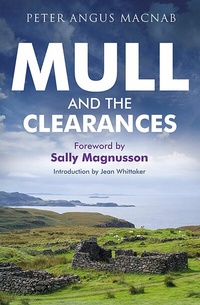
Mull and the Clearances
1st Edition
Will be published approx. on 3. October 2024
112 pages
E-Book
978-1-78885-740-6 (ISBN)
Description

The Clearances are well known as one of the darkest periods of Highland history. Over a hundred-year period somewhere in the region of 150,000 people evicted from the land they had worked for generations; many were forced to start new lives overseas. The human cost was enormous, but there were huge consequences for the Highland economy too as the land was put to different uses.
This book details the Clearances as they affected the island of Mull - the Hebridean hub for the emigrant ships which left for the New World. Peter Macnab discusses the influences which changed crofting in the 18th and 19th centuries, the triggers for migration, the crofter protests, the Napier Commission of 1883 and the introduction of various laws to provide security of tenure.
Having been brought up in what likely was the last poorhouse in the Hebrides, where his father was governor, Peter Macnab was able to hear directly the stories and about the cruelties suffered. This makes his book a uniquely fascinating perspective on a complex and significant period of Scottish history.
This book details the Clearances as they affected the island of Mull - the Hebridean hub for the emigrant ships which left for the New World. Peter Macnab discusses the influences which changed crofting in the 18th and 19th centuries, the triggers for migration, the crofter protests, the Napier Commission of 1883 and the introduction of various laws to provide security of tenure.
Having been brought up in what likely was the last poorhouse in the Hebrides, where his father was governor, Peter Macnab was able to hear directly the stories and about the cruelties suffered. This makes his book a uniquely fascinating perspective on a complex and significant period of Scottish history.
Reviews / Votes
'Meticulously researched... an important fragment of Scotland's social history' * Herald * 'a very useful survey of the comprehensive process of clearance on Mull' * West Highland Notes and Queries *More details
Language
English
Place of publication
Edinburgh
United Kingdom
Publishing group
Birlinn General
ISBN-13
978-1-78885-740-6 (9781788857406)
Copyright in bibliographic data and cover images is held by Nielsen Book Services Limited or by the publishers or by their respective licensors: all rights reserved.
Schweitzer Classification
Other editions
Additional editions
Persons
Peter Macnab was born in 1903. Originally destined for a career as journalist, he switched to banking after contracting Spanish flu. On retirement he expanded writing for national and international papers into writing books, particularly on Mull, influenced by the sufferings he had learned from the last of the victims of the Clearances. His books included the standard study of Mull and Iona.
