

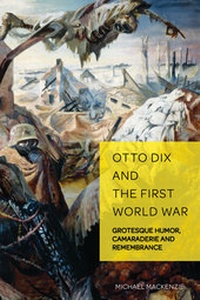
Otto Dix and the First World War
Description

Otto Dix fought in the First World War for the better part of four years before becoming one of the most important artists of the Weimar era. Marked by the experience, he made monumental, difficult and powerful works about it. Whereas Dix has often been presented as a lone voice of reason and opposition in Germany between the wars, this book locates his work squarely in the mainstream of Weimar society.
Informed by recent studies of collective remembrance, of camaraderie, and of the popular, working-class socialist groups that commemorated the war, this book takes Dix's very public, monumental works out of the isolation of the artist's studio and returns them to a context of public memorials, mass media depictions, and the communal search for meaning in the war. The author argues that Dix sought to establish a community of veterans through depictions of the war experience that used the soldier's humorous, grotesque language of the trenches and that deliberately excluded women and other non-combatants. His depictions were preoccupied with heteronormativity in the context of intimate touch and tenderness between soldiers at the front and with sexual potency in the face of debilitating wounds suffered by others in the war.
More details
Other editions
Additional editions
Person
Michael Mackenzie is Professor of Modern Art History at DePauw University. He holds a PhD from the University of Chicago. Significant publications include «From Athens to Berlin: The 1936 Olympics and Leni Riefenstahl's Olympia» (Critical Inquiry, Vol. 29) and, most recently, «Painters, Planners, and Bricklayers: Making the Social Circulate in Otto Nagel's Young Bricklayer from the Stalinallee» (Centropa, Vol. 15, No. 2).
Content
CONTENTS: Dix in Uniform: The First World War and the Front Experience - Dix and Dada: War Cripples and Neurasthenics, Soldier's Slang, and the Humor of Grotesque Realism - Dix in Dusseldorf: the Scandal of The Trench and Business with Karl Nierendorf During the Inflation Years - Dix and Other Veterans: The Print Portfolio The War, the Reichsbanner, and Social Democratic Memories of the War Experience - Dix in the Late Weimar Era: The Triptych The War, All Quiet on the Western Front, and the Contest over the Memory of the War - Dix in Nazi Germany and «Inner Emigration»: Flanders and the End of the Contest Over the Memory of the War.
