

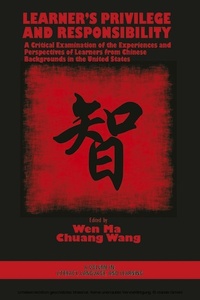
Learner's Privilege and Responsibility
A Critical Examination of the Experiences and Perspectives of Learners from Chinese Backgrounds in the United States
1st Edition
Published on 1. March 2014
271 pages
978-1-62396-591-4 (ISBN)
Description

This book is about the learner side of the teaching and learning equilibrium, centering on the educational experiences and perspectives of Chinese students in the United States. These students ranged from kindergarteners, adolescents, undergraduate, graduate, to adult learners, across the educational spectrum. Because Chinese students are the largest cohort among all international students in the U.S., and their prior educational experiences and perspectives in China are so different from those in the U.S., exploring who they are, what their learning experiences have been, and how their learning needs can be better met, may not only allow U.S. educators to teach them more effectively, but also help the educational community in both countries better learn about and from each other.
The chapters in the book examine the constructs of learner privilege and responsibility in the teaching and learning equation, cultural and linguistic challenges and transitional adjustments, self-concept, learning strategies, comparison and contrast of differences and similarities between Chinese and American students, and/or critical reflections on significant issues confronting Chinese learners. While each chapter is situated in its own research literature and connects with its own teaching and learning practices, all of them are united around the overarching themes of the book: the experiences and perspectives of diverse learners from Chinese backgrounds in the United States. The chapters also flesh out some of the larger theoretical/pedagogical issues between education in China and in the United States, provide useful lenses for rethinking about and better understanding their differences and similarities, as well as offer pertinent suggestions about how the educational community in both countries may benefit from learning about and from each other.
All prices
More details
Other editions
Additional editions
Wen Ma | Chuang Wang
Learner's Privilege and Responsibility
A Critical Examination of the Experiences and Perspectives of Learners from Chinese Backgrounds in the United
Book
03/2014
Information Age Publishing
€122.50
Shipment within 3-4 weeks
Content
- Cover
- Learner's Privilege and Responsibility: A Critical Examination of the Experiences and Perspectives of Learners from Chinese Backgrounds in the United States
- Literacy, Language, and Learning
- Learner's Privilege and Responsibility: A Critical Examination of the Experiences and Perspectives of Learners from Chinese Backgrounds in the United States
- Copyright
- CONTENTS
- ACKNOWLEDGEMENTS
- PREFACE
- REFERENCES
- PART 1: INTRODUCTION
- CHAPTER 1: WHY THE EDUCATIONAL COMMUNITY SHOULD CARE ABOUT THE EXPERIENCES AND PERSPECTIVES OF CHINESE STUDENTS IN THE UNITED STATES
- WHY IS THIS BOOK NEEDED NOW?
- WHAT IS THE ORGANIZATION OF THE BOOK?
- VIEWING THE U.S. AND CHINA'S EDUCATIONAL THINKINGAND PRACTICES FROM THEIR OWN PERSPECTIVES
- FINAL THOUGHTS
- REFERENCES
- CHAPTER 2: UNDERSTANDING THE CULTURAL LEGACY OF CHINESE STUDENTS
- HOW ARE THE DATA COLLECTED?
- RESEARCHER'S IDENTITY
- THE HISTORICAL AND CULTURAL CONTEXT
- CHINESE STUDENTS IN THE UNITED STATES
- Application Process
- Assumptions upon Arrival
- Expectations and Pressures
- Adjustments upon Arrival
- Personal Challenges
- CONCLUSIONS
- REFERENCES
- PART II: CHINESE INTERNATIONAL STUDENTS AT AMERICAN UNIVERSITIES
- CHAPTER 3: CONNECTING THE DOTS FROM THE LIVED EXPERIENCES OF CHINESE LEARNERS IN AMERICA
- CHALLENGES FACED BY INTERNATIONAL STUDENTS
- International Students in Higher Education
- Chinese International Students in Higher Education
- WHEN EAST MEETS WEST
- THREE STORIES
- Sunshine State
- Three Musketeers
- Collecting Stories
- Revisiting Stories
- WHAT HAVE I LEARNED?
- Academic Performance
- Social Life
- Cultural Adaptation
- Support
- CONNECTING THE DOTS
- Dot 1: Becoming Professional
- Dot 2: Coping Mechanisms
- Dot 3: Social Services
- Dot 4: Financial Constraint
- "ALL FOR ONE, ONE FOR ALL"
- REFERENCES
- CHAPTER 4: DIFFERENT EDUCATIONAL NORMS AND LINGUISTIC PROFICIENCIES
- THEORETICAL FRAMEWORK
- Cultural and Educational Differences
- Chinese Students' English Proficiency
- WHO ARE THE PARTICIPANTS?
- WHAT DATA DID WE GATHER?
- WHAT HAVE WE FOUND?
- Difficulties with the Spoken English
- Educational Differences and Personal Choices
- IMPLICATIONS OF THE FINDINGS
- Suggestions for the University
- Suggestions for EFL Programs
- Suggestions for Professors
- REFERENCES
- CHAPTER 5: UNDERSTANDING CHINESE INTERNATIONAL STUDENTS' DIFFICULTIES AND STRATEGIES IN LEARNING ENGLISH FOR ACADEMIC PURPOSES
- WHAT DO WE KNOW ABOUT SELF-DIRECTEDLEARNING AND SELF-REGULATION?
- Self-Directed Learning
- Self-Regulation and Language Learning Strategies
- Academic English versus Daily Social English
- WHO ARE THE PARTICIPANTS?
- WHAT DATA DID WE GATHER?
- WHAT HAVE WE FOUND?
- Difficulties the Participants Reported
- Strategies the Participants Used
- Summary of Our Findings
- SO WHAT?
- Importance of Self-Regulation
- Psychological Well-Being and Use of Affective Strategies
- Learning English for Communication Purposes
- Step Out of the Comfort Zone
- REFERENCES
- CHAPTER 6: MAKING ACADEMIC ORAL PRESENTATIONS
- THEORETICAL FRAMEWORK
- WHO ARE THE PARTICIPANTS?
- DATA COLLECTION AND ANALYSIS
- WHAT HAVE WE FOUND?
- Prior Experience with Oral Presentations
- Students Being Socialized into the Oral Presentation Discourses
- Students' Experience with the Socialization Process
- Ella and Ming's Challenges and Needs
- WHAT ARE THE IMPLICATIONS?
- Mind the Gap between Academic Experience in China and in theUnited States
- Make the Transition Easier: Help Newcomers Socialized into NewAcademic Community of Practice
- See the Unseen: The Complexity of the New AcademicCommunity
- Put Yourself in Others' Shoes: Applying Culturally SensitivePedagogy
- REFERENCES
- CHAPTER 7: A CROSS-CULTURAL STUDENT TEACHING EXPERIENCE
- THEORETICAL FRAMEWORK
- Sociocultural Theory
- Challenges of Teaching and Learning in the United States
- WHO IS THE PARTICIPANT?
- WHAT ARE OUR DATA SOURCES?
- WHAT HAVE WE FOUND?
- Rhonda's Teaching Perspectives
- Rhonda's Discoveries and Challenges
- WHAT ARE THE IMPLICATIONS?
- APPENDIX A
- University Supervisor Interview Questions
- APPENDIX B
- Intern Interview Questions
- REFERENCES
- PART III: TEACHING DIVERSE CHINESE LEARNERS ACROSS THE EDUCATIONAL SPECTRUM
- CHAPTER 8: LEARNING TO WRITE BY EMERGENT BILINGUAL WRITERS USING TWO LANGUAGES
- WRITING IN A SOCIAL WORLD
- WHO ARE THE PARTICIPANTS?
- LEARNING WRITING IN ESL AND CHINESE CLASSES-DIFFERENT EXPERIENCES
- Writing in ESL Class: From Spelling to Meaning Making
- Writing in Chinese Class-Thirty Minutes of Pinyin and Characters
- WHAT CAN WE LEARN FROM THE FINDINGS?
- Writing Opportunities
- Approaches to Invented Spelling
- Appreciation of Pictures
- Sharing Writing
- BARRIERS IN WRITING INSTRUCTION
- IMPLICATIONS FOR EDUCATORS
- REFERENCES
- CHAPTER 9: FROM CANTON TO SAN FRANCISCO
- THEORETICAL FRAMEWORK
- Immigrant Education with Diaspora Studies
- Cultural Model and Dual Frame of Reference
- Transmigrants and Transnational Migration
- THE RESEARCH PROJECT
- WHAT ARE THE DATA SOURCES?
- WHAT ARE THE FINDINGS?
- Changing Perceptions of U.S. Schooling
- Belonging to Two Countries
- Communicating Globally
- Desire for Insular Grouping
- IMPLICATIONS OF THE FINDINGS
- REFERENCES
- CHAPTER 10: AN INTROSPECTIVE LOOK AT A SHORT-TERM, SUMMER STUDY PROGRAM FOR CHINESE PROFESSORS OF ENGLISH AS AFOREIGN LANGUAGE
- BUILDING UP TOWARDS SOMETHING
- A MIX OF EXPERIENCE AND PERSPECTIVE
- Robert
- Josie
- Jeffrey
- Setting Up an Umbrella
- THROUGH THE EXPERIENCE OF THE INDIVIDUALS
- Robert
- Josie
- Jeffrey
- Questions of Experience
- WHAT WERE LESSONS LEARNED FROM THIS EXPERIENCE?
- Robert
- Josie
- Jeffrey
- WHAT ARE THE IMPLICATIONS FOR PEDAGOGY?
- Robert
- Josie
- Jeffrey
- REFERENCES
- CHAPTER 11: ENCOURAGEMENT AND PARTICIPATION IN ACOMMUNITY-BASED ADULT ESL WRITING CLASS
- THEORETICAL FRAMEWORK
- Social and Cultural Theories of Learning
- Communities of Practice
- Cultural Approaches to Literacy and Pedagogy
- LITERACY IN THE COMMUNITY
- STUDENTS IN THE ESL WRITING CLASS
- UNCOVERING STUDENTS'PARTICIPATION IN LITERACY LEARNING
- COMPLEX LIVES, COMPLEX LEARNING
- Xiaoyan: "Maybe I have ability to learn by myself."
- Lily: "I like the things I know."
- AN "ENCOURAGEMENT" MODEL OF APPRENTICESHIP
- THE IMPORTANCE OF PRIOR EXPERIENCES, CURRENTCIRCUMSTANCES, AND FUTURE GOALS
- REFERENCES
- PART IV: SELF-STUDIES BY LEARNERS FROM CHINESE BACKGROUNDS
- CHAPTER 12: REFLECTIONS ON TEACHINGAS-TELLING IN AMERICA ANDCHINA
- AN AUTOETHNOGRAPHIC APPROACH
- A LONG UNSETTLING JOURNEY INTO TEACHING
- CRITICAL REFLECTIONS ON TEACHING "FAILURES"
- ANOTHER DIFFICULT JOURNEY TO "EN-TEACHING"
- EN-TEACHING AS CLEARING BETWEENTRUTH AND UNTRUTH
- EN-TEACHING AS THE "NOISELESS RINGING OF STILLNESS"
- WHAT DOES EN-TEACHING MEAN TO ME AS I FACE MY CLASSON MONDAY MORNING?
- REFERENCES
- CHAPTER 13: THE WINDING ROAD
- THEORETICAL FRAMEWORK AND RESEARCH METHOD
- Autoethnography as Perspective
- Chinese Students in the United States
- Research Method
- MY JOURNEY
- An Unsent Letter
- The Immigrant Student
- The Learning Experience in China
- INTERPRETATION
- Perceptions about Professors' Behavior
- Chinese Students' Inner Struggles
- IMPLICATIONS OF THE FINDINGS
- REFERENCES
- CHAPTER 14: OPENING UP AESTHETIC POSSIBILITIES FOR CROSS-CULTURAL EDUCATION
- CTAS IN U.S. HIGHER EDUCATION
- A NARRATIVE INQUIRY INTO THE CROSS-CULTURALEDUCATION EXPERIENCE
- The Framework of Narrative Inquiry
- Design of the Inquiry
- WHAT HAVE I LEARNED?
- Negotiation of Value and Position in Class
- Pedagogical Negotiation
- Negotiation of Academic Roles
- WHAT ARE THE IMPLICATIONS?
- CROSS-CULTURAL EDUCATION AS AN AESTHETIC EXPERIENCE
- REFERENCES
- CHAPTER 15: BECOMING AN AMERICAN WITHOUT LOSING MY CHINESE IDENTITY
- THEORETICAL LENS INFORMING THIS WORK
- Identity as a Sense of Sameness
- Sameness across Interactions
- INTERNATIONAL STUDENTS FROM CHINESE BACKGROUNDS
- Importance of Social Interaction
- Stages of Assimilation
- Challenges to Identity among Chinese Students in America
- DECONSTRUCTING MY STORY
- The Origin of the Present Story
- Finding Pieces of My Story
- My Role as the Researcher
- RECONSTRUCTING MY STORY
- Being a Traveler
- Bridging the Past and the Present
- Struggle to Find My Voice
- WHAT DOES MY STORY SAY?
- Deciding My Own Identity Is Not Easy
- A Salad Bowl Is Better Than a Melting Pot
- FINAL THOUGHTS
- REFERENCES
- LIST OF CONTRIBUTORS

