

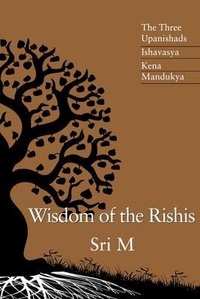
Wisdom of the Rishis: The Three Upanishads
Description

The Isavasya proclaims the all pervasiveness of the totality of consciousness which is here called Isha, the Lord and urges one to let go the narrow and self-centered identity we are caught up in and rejoice in the flow of the infinite wholeness of Life. The word Kena means who. This Upanishad concerns itself with the question of ones ID. Is there a separate I or is it merely a term used to describe the totality of cognizance. Is there an I beyond the limited, self-centered ID? The Mandukya examines the same idea but in a different way, exploring the states of consciousness all human beings experience namely, the waking state, the dream state and the deep sleep state and postulates that there is a common experiencer in all these states, a witness, not affected by the states.
The Upanishads do not concern themselves with mere theories. They raise direct questions regarding the source of thought, the essence of our being and are as relevant today as they were 2000 years ago. The Isavasya proclaims the all-pervasiveness of this totality of consciousness which is here called Isha, the Lord, and urges one to let go the narrow and self-centered identity we are caught up in and rejoice in the flow of the infinite wholeness of Life. The word Kena means Who. This Upanishad concerns itself with the question of ones ID. Is there a separate I or is it merely a term used to describe the totality of cognizance. Is there an I beyond the limited, self-centered ID? The Mandukya examines the same idea but in a different way, exploring the states of consciousness all human beings experience namely, the waking state, the dream state and the deep sleep state, and postulates that there is a common experiencer in all these states, a witness, not affected by the states and which is the totality of consciousness called Turiya represented by the Pranava, OM.
More details
Content
Preface
Foreword
A Profile of 'M'
Ishavasya Upanishad
Kenopanishad
Mandukya Upanishad
