

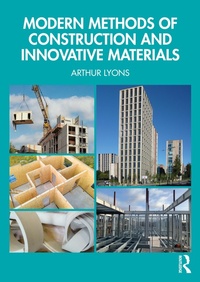
Modern Methods of Construction and Innovative Materials
1st Edition
Published on 1. April 2024
254 pages
978-1-003-86108-9 (ISBN)
Description

This new textbook has two main themes. The first is Modern Methods of Construction (MMC) which is the off-site manufacture of a wide spectrum of products, ranging from whole buildings to be transported onto site, down to smaller units or components for site integration. The second theme describes the innovation and progress towards carbon zero by the major generators of CO2 in the construction industry - namely cement, steel and masonry.
The first section of the book describes and illustrates with photographs, the major forms of Modern Methods of Construction. These include fully completed 3D units, panelised systems, pods, sub-assemblies and on-site MMC. The section on Innovative Materials then describes a wide range of construction products which are entering into the built environment sector. Some new entrants are variants on well-established construction materials such as steel and concrete. Materials such as these will remain major construction materials for the foreseeable future, but their composition and manufacturing processes will inevitably have to change. Timber also will remain a major construction material, but sustainable sourcing is key and its utilisation as cross-lamination timber (CLT) or as modified timber is rapidly developing. As a result, students and practitioners must familiarise themselves with these materials, their composition, and various uses.
The book goes on to describe variants of other traditional building products, such as glass, plastic and insulation, which are undergoing major developments leading towards enhanced environmental sustainability, as well as many emergent materials, some of which are likely to be significant in future. Modern Methods of Construction and Innovative Materials is the only book combining these important elements of the future of the industry in an easy-to-read guide for students and new practitioners. It is essential reading for anyone studying and working in the built environment, be they architects, construction managers, surveyors or engineers.
The first section of the book describes and illustrates with photographs, the major forms of Modern Methods of Construction. These include fully completed 3D units, panelised systems, pods, sub-assemblies and on-site MMC. The section on Innovative Materials then describes a wide range of construction products which are entering into the built environment sector. Some new entrants are variants on well-established construction materials such as steel and concrete. Materials such as these will remain major construction materials for the foreseeable future, but their composition and manufacturing processes will inevitably have to change. Timber also will remain a major construction material, but sustainable sourcing is key and its utilisation as cross-lamination timber (CLT) or as modified timber is rapidly developing. As a result, students and practitioners must familiarise themselves with these materials, their composition, and various uses.
The book goes on to describe variants of other traditional building products, such as glass, plastic and insulation, which are undergoing major developments leading towards enhanced environmental sustainability, as well as many emergent materials, some of which are likely to be significant in future. Modern Methods of Construction and Innovative Materials is the only book combining these important elements of the future of the industry in an easy-to-read guide for students and new practitioners. It is essential reading for anyone studying and working in the built environment, be they architects, construction managers, surveyors or engineers.
Reviews / Votes
"Modern Methods of Construction and Innovative Materials by Arthur Lyons offers a fascinating, thematic introduction into the key technologies and methods shaping the construction industry today.Aimed at students, early-career professionals and those exploring new ways to build, Lyons brings authority and clarity to topics ranging from panellised systems and low carbon alternatives through to sustainable materials, all grounded in real-world application. Each chapter is comprehensively supported by colour diagrams and contemporary case studies, helping demystify complex approaches.
All materials are covered with the current UK Government legislation in mind and with a view of addressing the forthcoming Future Homes Standard, not only providing more value to each entry but also looking ahead to how these materials may be upgraded in the future. While primarily geared towards the UK construction context, global trends are woven throughout.
Rigorously researched, it's an invaluable compendium reference for designers, contractors and developers keen to understand the benefits and limitations of MMC."
- Ken Shuttleworth
More details
Edition
1. Auflage
Language
English
Place of publication
London
United Kingdom
Publishing group
Taylor & Francis Ebooks
Target group
College/higher education
Professional and scholarly
Illustrations
7 Tables, black and white; 2 Line drawings, black and white; 139 Halftones, color; 139 Illustrations, color; 2 Illustrations, black and white
File size
104,19 MB
ISBN-13
978-1-003-86108-9 (9781003861089)
Copyright in bibliographic data and cover images is held by Nielsen Book Services Limited or by the publishers or by their respective licensors: all rights reserved.
Schweitzer Classification
Other editions
Additional editions
Book
04/2024
1st Edition
Routledge
€260.90
Shipment within 10-20 days
Book
04/2024
1st Edition
Routledge
€64.50
Shipment within 10-20 days
Person
Arthur Lyons studied science at Trinity Hall Cambridge, Warwick and Leicester Universities and has a postgraduate diploma in architectural building conservation. Lyons was honoured with life membership of the Leicestershire and Rutland Society of Architects. Since retiring from teaching in the School of Architecture of De Montfort University, Leicester, where he is an honorary research fellow, he has authored several books on construction materials including Materials for Architects and Builders, now in its sixth edition.
Content
About the Author
Preface
Acknowledgements
Abbreviations
Chapter 1 Context
Chapter 2 Introduction to Modern Methods of Construction
Chapter 3 Modern Methods of Construction - Categories and Benefits
Chapter 4 Off-Site Modern Methods of Construction
Chapter 5 On-Site Modern Methods of Construction
Chapter 6 Transportation and Installation
Chapter 7 Foundations
Chapter 8 Fire
Chapter 9 Innovative Materials - Introduction
Chapter 10 Masonry and Alternative Units
Chapter 11 Cement, Concrete and Clay
Chapter 12 Timber and Related Products
Chapter 13 Ferrous and Non-ferrous Metals
Chapter 14 Glass
Chapter 15 Stone and Ceramics
Chapter 16 Plastics
Chapter 17 Plaster
Chapter 18 Insulation Materials
Chapter 19 Paints and Surface Treatments
Chapter 20 Biophilic Design
Chapter 21 Acoustic Control
Chapter 22 General Recycling
Chapter 23 Carbon Storage
Bibliography
Index
Preface
Acknowledgements
Abbreviations
Chapter 1 Context
Chapter 2 Introduction to Modern Methods of Construction
Chapter 3 Modern Methods of Construction - Categories and Benefits
Chapter 4 Off-Site Modern Methods of Construction
Chapter 5 On-Site Modern Methods of Construction
Chapter 6 Transportation and Installation
Chapter 7 Foundations
Chapter 8 Fire
Chapter 9 Innovative Materials - Introduction
Chapter 10 Masonry and Alternative Units
Chapter 11 Cement, Concrete and Clay
Chapter 12 Timber and Related Products
Chapter 13 Ferrous and Non-ferrous Metals
Chapter 14 Glass
Chapter 15 Stone and Ceramics
Chapter 16 Plastics
Chapter 17 Plaster
Chapter 18 Insulation Materials
Chapter 19 Paints and Surface Treatments
Chapter 20 Biophilic Design
Chapter 21 Acoustic Control
Chapter 22 General Recycling
Chapter 23 Carbon Storage
Bibliography
Index
