

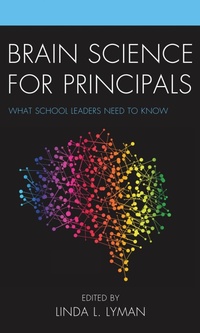
Brain Science for Principals
What School Leaders Need to Know
1st Edition
Published on 8. May 2016
184 pages
979-8-216-20381-0 (ISBN)
Description

Brain Science for Principals: What School Leaders Need to Know features leadership of learning from the perspective of recent findings of educational neuroscience. Each chapter explores a question related to learning and offers practical suggestions for principals. Divided into six sections, each of the 24 short chapters can stand alone or the book can be read cover-to-cover. The opening section explains how understanding brain neuroplasticity changes belief in fixed intelligence. A partial list of subjects explored in the book includes neurogenesis, neurodiversity, memory, brain fitness, the emotional connection, effects of stress, poverty, embodied cognition, movement, mindset, ELL issues, multitasking, the role of the arts, ages and stages of the brain, emotional intelligence, creating resonance, and maintaining mindfulness. The conclusion underscores how neuroscientifically literate principals can enhance learning and advance social justice. Writers of the book anticipate a future when educational neuroscience findings about learning become part of the education of every principal and school leader. Knowing how the brain works is the key to the future of education.
More details
Other editions
Additional editions
Book
05/2016
Rowman & Littlefield Publishers
€47.50
Shipment within 10-20 days
Person
Linda L. Lyman is a professor in the Department of Educational Administration and Foundations at Illinois State University. Through her teaching and writing, she has explored and advocated leadership approaches that enhance learning, promote growth through dialogue, and advance social justice.
Content
List of Tables and Figures
Preface - Linda L. Lyman
Acknowledgments
Introduction - Linda L. Lyman
Section I - Learning
Chapter 1 - How can learning be enhanced? - Linda L. Lyman
Chapter 2 - How does neuroplasticity change belief in fixed intelligence? - Matthew K. Heid
Chapter 3 - How does metacognition enhance learning? - Jennifer McCoy
Chapter 4 - How does being bilingual benefit a learner's brain? - Patricia M. Valente
Chapter 5 - How does multi-tasking affect learning? - Matthew K. Heid
Section II - The Fit Brain
Chapter 6 - How does sleep build brain health? - Stacie M. France
Chapter 7 - How do school breakfast and lunch programs support learning? - Brian M. Swanson
Chapter 8 - How does exercise enhance learning? - Brian M. Swanson
Chapter 9 - How does movement in the classroom benefit learning? - Abigail Larrison
Chapter 10 - How can memory be enhanced? - Linda L. Lyman
Section III - The Emotional Connection
Chapter 11 - Why is a positive learning environment so important? - Jennifer McCoy
Chapter 12 - How do trauma and chronic stress affect the brain? - Stacie M. France
Chapter 13 - How can stress be recognized and reduces? - Jamie L. Hartrich
Chapter 14 - How do the Arts nurture and connect emotions? -Patricia M. Valente
Section IV - The Brain on School
Chapter 15 - How can mindset make someone smarter? - Matthew K. Heid
Chapter 16 - How can knowing brain science improve Reading? - Patricia M. Valente
Chapter 17 - How can knowing brain science improve Math? - Jamie L. Hartrich
Chapter 18 - How can principals support teacher success with ELLs? - Patricia M. Valente
Section V - Ages and Stages of the Brain
Chapter 19 - How can principals help elementary learners? - Jamie L. Hartrich
Chapter 20 - How can principals help middle school learners? - Stacie M. France
Chapter 21 - How can principals help high school learners? - Jennifer McCoy
Section VI - Inside the Brain of a Principal
Chapter 22 - How can principals maintain mindfulness in challenging times? - Christine Paxson
Chapter 23 - How can principals support environments that cultivate learning - Christine Paxson
Chapter 24 - How can brain science inform cultural processes? - Christine Paxson
Conclusion - Linda L. Lyman
About the Authors
About the Editor - Linda L. Lyman
About the Consulting Editor - Abigail Larrison
References
Preface - Linda L. Lyman
Acknowledgments
Introduction - Linda L. Lyman
Section I - Learning
Chapter 1 - How can learning be enhanced? - Linda L. Lyman
Chapter 2 - How does neuroplasticity change belief in fixed intelligence? - Matthew K. Heid
Chapter 3 - How does metacognition enhance learning? - Jennifer McCoy
Chapter 4 - How does being bilingual benefit a learner's brain? - Patricia M. Valente
Chapter 5 - How does multi-tasking affect learning? - Matthew K. Heid
Section II - The Fit Brain
Chapter 6 - How does sleep build brain health? - Stacie M. France
Chapter 7 - How do school breakfast and lunch programs support learning? - Brian M. Swanson
Chapter 8 - How does exercise enhance learning? - Brian M. Swanson
Chapter 9 - How does movement in the classroom benefit learning? - Abigail Larrison
Chapter 10 - How can memory be enhanced? - Linda L. Lyman
Section III - The Emotional Connection
Chapter 11 - Why is a positive learning environment so important? - Jennifer McCoy
Chapter 12 - How do trauma and chronic stress affect the brain? - Stacie M. France
Chapter 13 - How can stress be recognized and reduces? - Jamie L. Hartrich
Chapter 14 - How do the Arts nurture and connect emotions? -Patricia M. Valente
Section IV - The Brain on School
Chapter 15 - How can mindset make someone smarter? - Matthew K. Heid
Chapter 16 - How can knowing brain science improve Reading? - Patricia M. Valente
Chapter 17 - How can knowing brain science improve Math? - Jamie L. Hartrich
Chapter 18 - How can principals support teacher success with ELLs? - Patricia M. Valente
Section V - Ages and Stages of the Brain
Chapter 19 - How can principals help elementary learners? - Jamie L. Hartrich
Chapter 20 - How can principals help middle school learners? - Stacie M. France
Chapter 21 - How can principals help high school learners? - Jennifer McCoy
Section VI - Inside the Brain of a Principal
Chapter 22 - How can principals maintain mindfulness in challenging times? - Christine Paxson
Chapter 23 - How can principals support environments that cultivate learning - Christine Paxson
Chapter 24 - How can brain science inform cultural processes? - Christine Paxson
Conclusion - Linda L. Lyman
About the Authors
About the Editor - Linda L. Lyman
About the Consulting Editor - Abigail Larrison
References
