

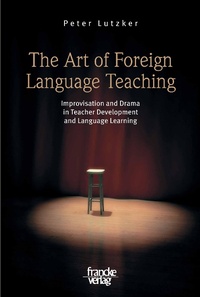
The Art of Foreign Language Teaching
Improvisation and Drama in Teacher Development and Language Learning
1st Edition
Published on 5. October 2007
486 pages
978-3-7720-5243-9 (ISBN)
Description

This study explores and develops the idea that foreign language teaching can be an art. This encompasses both considering the meaning of artistry in language teaching as well as the possibilities which artistic processes offer pupils in language learning. The first part focuses on the in-service education of language teachers in theatre and improvisation workshops, the second part examines pupils rehearsing and performing a full length play in a foreign language. Thus, this work views the fields of language teacher education and foreign language learning within a common conceptual framework.
More details
Other editions
New editions
Peter Lutzker
The Art of Foreign Language Teaching
Improvisation and Drama in Teacher Development and Language Learning
E-Book
01/2022
2nd Edition
Narr Francke Attempto Verlag
€36.00
Available for download
Additional editions
Peter Lutzker
The Art of Foreign Language Teaching
Book
10/2007
Francke, A
€39.90
Article exhausted; check for reprint
Content
- Intro
- Acknowledgements
- Table of Contents
- Part I: The Art of Foreign Language Teaching - Introduction
- 1. Concepts of Teaching
- 1.1 Introduction
- 1.2 The Models of Science and Business
- 1.3 The Model of Teaching as an Art
- 1.3.1 The Origins of Teaching as an Art: The Sophists
- 1.3.2 Socrates
- 1.3.3 Plato
- 1.3.4 European Humanism and the Art of Teaching
- 1.3.5 Schiller: Aesthetic Education
- 1.3.6 Developments in the 19th Century
- 1.3.7 The Teacher as Artist/Die Kunsterziehungsbewegung
- 1.3.8. The Teacher as Artist /Waldorf Education
- 1.3.9 Reform Movements/Overview
- 1.3.10 The Teacher as Artist/Later Developments in Germany
- 1.4 Anglo-American Traditions/William James
- 1.4.1 Art and Education/John Dewey
- 1.4.2 The Teacher as Researcher/Lawrence Stenhouse
- 1.4.3 The Scientific Basis of the Art of Teaching/ N.L.Gage
- 1.4.4 The Concept of Teaching as a Performing Art
- 1.4.5 Teaching as a Performing Art/Dillon and Travers
- 1.4.6 Summary
- 1.4.7 L. Rubin/Artistry in Teaching
- 1.4.8 Relevance for Teacher Training
- 1.4.9 Rubin's "Experiment"
- 1.4.10 Summary
- 1.4.11 Seymour Sarason/Teaching as a Performing Art
- 1.4.12 Summary
- 1.4.13 The Teacher as Artist/Developments in the 21st Century
- 1.4.14 Teaching as Improvisational Performance/R. K. Sawyer
- 1.4.15 Summary
- 1.5 Conclusions
- 2. In-Service Language Teacher Development:Goals and Concepts
- 2.1 In-Service Language Teacher Development
- 2.2 Summary
- 2.3 In-service Courses for Language Teachers/Rationaleand Forms
- 2.4 Expectations and Realities
- 2.5 Goal/s of Language Teacher Development
- 2.6 Affecting Teacher Change in In-service Courses
- 2.7 In-service Development and Burnout
- 2.8 Summary
- 2.9 Conclusions
- 3. Steiner Schools' In-Service Training forEnglish Teachers: The English Week
- 3.1 The English Week
- 3.2 The Concept of the English Week
- 3.3 Forms and Principles of the Drama Workshops
- 3.3.1 Description of the Courses
- 3.3.2 Parallels between the Courses
- 3.4 Literature in Performance: A Drama Workshop at theEnglish Week
- 4. An Empirical Study of Clowning Courseswith Vivian Gladwell/ Research Design
- 4.1 The Choice of the Clowning Courses
- 4.2 Research Goals
- 4.3 Qualitative Research Methods
- 4.4 Description of the Courses: Observation/Participation
- 4.4.1 Existing Descriptions of the Courses
- 4.5 Interviews
- 4.6 Research Inquiry/Data Triangulation
- 4.7 Research Inquiry/ 'Thick Description'
- 4.8 Internal Validity
- 4.8.1 Internal Validity: The Conceptual Framework of the Study
- 4.9 External Validity: The Representative Nature of theData
- 4.9.1 Waldorf and Non-Waldorf Teachers
- 4.9.2 The General Framework and the Courses
- 4.10 Summary
- 4.11 The Initial Hypothesis
- 5. Discovering the Clown Within: Backgroundto Clowning Courses with Vivian Gladwell
- 5.1 Background: Vivian Gladwell and Bataclown
- 5.2 Bataclown and Carl Rogers
- 5.3 Clowning in the Social Professions
- 5.4 Clowning and Deep Ecology
- 6. Clowning Workshops for LanguageTeachers with Vivian Gladwell
- 6.1 The General Structure of the Workshops
- 6.2 The Warm-Ups
- 6.2.1 The Opening Warm-Ups
- 6.2.2 Breath
- 6.2.3 Massage
- 6.2.4 The Warm-Ups as an Inner and Group Process
- 6.3 Games and Play
- 6.3.1 Games of Imitation and Mirroring
- 6.3.2 Games of Playful Confusion
- 6.3.3 Games of Listening and Perceiving
- 6.3.5 Word Games/Creating Stories
- 6.3.6 The End of the Second Phase
- 6.4 The First Improvisations
- 6.4.1 An Introductory Exercise: Entering the Stage and Encounteringan Object
- 6.4.2 The Solo-Improvisation
- 6.4.3 Feedback Sessions after the Improvisations
- 6.4.4 Partner Improvisations
- 6.4.5 Exercises in Groups of Three or More
- 6.5 The End of the Workshops
- 7 Responses to the Research Inquiry
- 7.1 Feedback Responses/ Breakdown According to Course
- 7.1.1 English Week Responses
- 7.1.2 The English Fortnights at Emerson College, England
- 7.1.3. Witten Intensive Weekend Jan, 2005
- 7.1.4 The Baltic Seminar Helsinki, 2003
- 7.1.5 Unsolicited Responses
- 7.1.6 Breakdown of Responses according to Gender
- 7.1.7 Breakdown of Responses according to Country
- 7.1.8 Teaching Experience
- 7.1.9 Lower, Middle and Upper School Teachers
- 7.1.10 Summary
- 7.2 The Participants' Responses: Expectations
- 7.2.1 Beginnings/The Warm-Ups and Games
- 7.2.2 The Element of Play
- 7.3 The First Improvisations: Fears and Release
- 7.4 "Nothing can go Wrong"
- 7.5 The Breakthroughs: "You become more alive."
- 7.6 Personal Development/s and their Consequences
- 7.7 Growth and Discovery
- 7.8 "Living in the Moment"
- 7.9 Empathy and Perception
- 7.10 The Embodiment of Language
- 7.11 Breaking Routines
- 8. Discussion of the Participants' Responses
- 8.1 Clowning in the Context of In-service TeacherDevelopment
- 8.2 The Participants' Responses/Evaluating the OriginalHypothesis
- 8.3 Warm-Ups in Artistic Work and Clowning
- 8.3.1 The Intermediary 'Space' of Play
- 8.3.2 Motor Attitude and Behaviour/Judgements of the Muscles
- 8.3.3 Proprioception and Communication
- 8.3.4 Consequences for In-Service Development
- 8.3.5 Related Developments in In-service Language Teacher Training
- 8.3.6 Summary
- 8.4 The Improvisations /Experiencing the 'Empty Space'
- 8.4.1 Genuineness in Clowning and Teaching
- 8.4.2 Genuineness and Teacher Change
- 8.4.3 The Art of Improvisation and the 'Here and Now'
- 8.4.4 Developing Receptivity and Acceptance in Clowning andTeaching
- 8.4.5 Sympathy and Caring in Clowning and Teaching
- 8.4.6 Developing Awareness in the Classroom: Perspectives inTeacher Education
- 8.4.7 Summary
- 8.5 Breaking Routines, Avoiding Burnout and 'Learning toForget'
- 8.5.1 The Practical Knowledge of Teachers (Erfahrungswissen) andAffecting Teacher Change
- 8.5.2 Affecting Change and Confronting Insecurities
- 8.6 In-Service Development in a Hermeneutic Context
- 8.6.1 Parallels to the Clowning Workshops/The Role of Stillness
- 8.6.2 'Not Knowing' in Clowning and Hermeneutics
- 8.6.3 Contrasts and Distinctions between the Courses
- 8.6.4 Summary
- 8.7 Parker Palmer's Courage to Teach Retreats
- 8.7.1 Parallels to the Clowning Workshops/Personal Knowledge and'Objective' Knowledge
- 8.7.2 Contrasts and Parallels
- 8.8 Learning the Art of Clowning and the Art of Teaching
- 8.8.1 Attaining Artistry in the Performing Arts
- 8.8.2 Artistry and Effectiveness in Teaching/Two Views of the World
- 8.9 Clowning, Teaching and the Hermeneutic Circle ofLearning
- 9. Part I: Conclusions
- 9.1. The Original Hypothesis
- 9.2 The Meaning of the Clowning Courses for theParticipants
- 9.2.1 The Sensory/Affective Dimension of Clowning
- 9.2.2 Clowning/Play and Regeneration
- 9.2.3 Clowning and Acceptance
- 9.2.4 Attentiveness and Receptivity
- 9.2.5 Personal Growth and Development
- 9.2.6 The Parts and the Whole
- 9.3 Areas of Future Research
- Part II: The Art of Foreign Language Teaching - Introduction
- 10. Dramatic Processes and Language Teaching
- 10.1 Historical Overview
- 10.2 Related Developments in the 20th Century: CreativeDramatics and Drama in Education
- 10. 3 Drama in Modern Foreign Language Teaching
- 10.3.1 Dramatic Techniques: Maley and Duff
- 10.3.2 Towards a Pedagogy of Being: The Work of Bernard Dufeu
- 10.3.3 Im Haus der Sprache Wohnen: Ruth Huber's Approach toTheatre in Language Learning
- 10.3.4 Drama in EFL School Classrooms
- 10.4 Research on Drama-Based Approaches to ForeignLanguage Learning
- 11. Research Methods
- 11.1 Case Study Research
- 11.1.1 Case Studies in Educational Research
- 11.1.2 Case Studies and the Teacher as Researcher
- 11.1.3 Relevant Distinctions between Practitioner Research and thisStudy
- 11.2 Internal Validity in Case Study Research
- 11.3 External Validity in Case Study Research
- 11.4 Research Design for the Study of the Class Play/TheConceptual Framework
- 11.5 The Initial Hypothesis
- 11.5.1 Research Questions
- 11.6 Relevant Methodological Considerations
- 11.7 Collecting "Thick" Research Data/Research Inquiries
- 11.7.1 Interviews with Groups of Pupils
- 11.7.2 Parent's Perspectives
- 11.7.3 Teacher's Perspectives
- 11.7.4. Field Notes/Teacher's Log
- 11.7.5 Videos of Rehearsals/Performances
- 11.8 Data Triangulation/Method Triangulation
- 12. The Class Play in the 10th Grade 2004-2005:Framework and Circumstances
- 12.1 Class Plays in the Düsseldorf Steiner School
- 12.2 The Tenth Grade Play in the Year 2004-2005: MyRelation to the Class/Background of the Class
- 12.3 The Planning of the School Year 2004-2005/Choice ofthe Play
- 12.4 Choosing the Roles/Casting
- 12.5 Setting up the Rehearsal Timetable
- 12.6 Added Responsibilities
- 13. The Pupils' Perspectives: A Cross-SectionalExamination of the Research Inquiries
- 13.1 The Pupils' Expectations
- 13.1.1 The Success of the Play
- 13.1.2 Enjoying Work and Avoiding Stress
- 13.1.3 Working Together and Coming Together
- 13.1.4 Pupils' Concerns
- 13.1.5 Personal Development and Goals
- 13.2 Discussion of the Initial Research Inquiry
- 13.3 The First Rehearsal Phase/Second Research Inquiry
- 13.3.1. Learning the Text/Exploring the Role
- 13.3.2 Pupils' Comments on the Rehearsals
- 13.3.4 The Development of Language Capabilities
- 13.3.5 Complaints/The Rehearsal Organization and Schedule
- 13.4 Discussion of the Second Research Inquiry
- 13.5 In the Middle of the Rehearsal Process/ResearchInquiry 3
- 13.5.1 The Difficulties of "Having to Imagine Everything"
- 13.5.2 Advice to the Director
- 13.5.3 Entering into their Roles
- 13.5.4 Rehearsals with Students as Directors
- 13.5.5 The Rehearsal Organization
- 13.5.6 Reflections on Their Own Work
- 13.6 Discussion of the Third Research Inquiry
- 13.7 The Final Phases/ Fourth Research Inquiry
- 13.7.1 "I particularly enjoyed the last weeks of rehearsals"
- 13.7.2 Becoming the Character
- 13.7.3 The Ups and Downs
- 13.8 Discussion of the Final Phase
- 13.9 The Performances/The Final Research Inquiry
- 13.9.1 Dealing with Stage Fright
- 13.9.2 The Experience of Performance
- 13.10 Discussion
- 13.11 Final Research Inquiry: The Pupils' Reflections on theEntire Process
- 13.11.1 The Effects on Language Abilities
- 13.11.2 Overcoming Doubts
- 13.11.3 Acting their Roles.
- 13.11.4 Assuming Responsibilities
- 13.11.5 A New Sense of Community
- 13.11.6 Overview of the Final Research Inquiry
- 13.12 The Growth of Language Capabilities
- 13.13 Becoming the Character
- 13.14 The Content of The Diary of Anne Frank
- 13.15 The Development of Artistic Discipline
- 13.16 Final Remarks
- 14. Five In-Depth Studies
- 14.1 Introduction
- I4.2 Jorinde (Mrs. van Daan in Act I)
- 14.3 Jorinde's Responses to the ResearchInquiries/Discussion of the Responses
- 14.4 Conclusions
- 14.5 Lieselotte (Mrs. Frank in Act II)
- 14.6 Lieselotte's Responses to the Research Inquiries/Discussion of the Responses
- 14.7 Conclusions
- 14.8 Fabian (Mr. Krahler in Act I)
- 14.9 Fabian's Responses to the Inquiries/Discussion of theResponses
- 14.10 Conclusions
- 14.11 Martin B (Mr. Frank in Act I)
- 14.12 Martin's Responses to the ResearchInquiries/Discussion of the Responses
- 14.13 Conclusions
- 14.14 Amelie (Anne Frank in Act I)
- 14.15 Amelie's Responses to the ResearchInquiries/Discussion of the Responses
- 14.16 Conclusions
- 15. Rehearsing and Performing a Play in aForeign Language in the 10th Grade:Discussion
- 15.1 Introduction
- 15.2 Adolescence as a 'Critical Period'
- 15.2.1 Parallel Developments in the Critical Period
- 15.2.2 Adolescence as a 'Critical Period': Further Perspectives
- 15.3 A Search for Meaning: Artistic Processes inAdolescence
- 15.4 The Role and Significance of the Warm-Ups
- 15.5 Rehearsing in a Foreign Language: The Sensory andImaginative Experience of Language
- 15.6 Entering into the Role/Finding the 'Target'
- 15.7 The Atmosphere of the Rehearsals
- 15.8 The Zone of Proximal Development
- 15.9 Establishing a Community of Learners
- 15.10 Rehearsals as an Intuitive Mode of Learning
- 15.11 Multiple Intelligences and Drama in Foreign LanguageLearning
- 15.12 Performance and the Externalization of Learning
- 16. Rehearsing and Performing the Class Play:Conclusions
- 16.1 Introduction
- 16.2 Educational Drama and Learning
- 16.3 The Education of Emotions
- 16.4 Individualized Learning and the Development ofAttentiveness (Aufmerksamkeit), Commitment,(Verbindlichkeit) and Certainty (Evidenzerfahrung)
- 16.4.1 The Development of Attentiveness and Perception
- 16.4.2 The Role of Commitment (Verbindlichkeit) in Self-DirectedLearning
- 16.4.3 The Pre-Decisional Phase
- 16.4.4 The Pre-Action Phase
- 16.4.5 The Phase of Direct Action
- 16.4.6 The Post-Action Phase
- 16.4.7 Commitment and Education
- 16.4.8 The Experience of Certainty [Evidenzerfahrung]
- 16.4.9 Evidenzerfahrung in Learning Processes
- 16.4.10 Evidenzerfahrung in Drama
- 16.4.11 Evidenzerfahrung and Flow
- 16.4.12 Individualized Learning through Performance Drama -Conclusions
- 16.5 Drama, Transformation and Personal Knowledge
- 16.5.1 Educational Drama and Transformation
- 16.5.2 Personal and Tacit Knowledge
- 16.5.3 Drama and Tacit Knowledge
- 16.5.4 Tacit Knowledge and Motor Attitude
- 16.6 Art and Experience in the Critical Period ofAdolescence
- 17 The Art of Foreign Language Teaching
- 17.1 Educational Research and Educational Change
- 17.2 Attunement and Development
- 17.3 Testing Competences/Personal Experience and Growth
- 17.4 Foreign Language Learning and Literature
- Bibliography
