

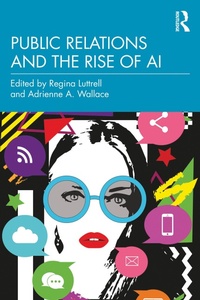
Public Relations and the Rise of AI
Published on 19. February 2025
300 pages
978-1-040-31479-1 (ISBN)
Description

This book explores the potential of artificial intelligence (AI) to transform public relations (PR) and offers guidance on maintaining authenticity in this new era of communication.
One of the main challenges PR educators, researchers, and practitioners face in the AI era is the potential for miscommunication or unintended consequences of using AI tools. This volume provides insights on how to mitigate these risks and ensure that PR strategies are aligned, offering practical guidance on maintaining trust and authenticity in PR practices. Readers will learn to leverage AI for enhanced communication strategies and real-time audience engagement while navigating the ethical and legal implications of AI in PR. Featuring contributions from leading scholars, the book includes case studies and examples of AI-driven PR practices, showcasing innovative approaches and lessons from well-known brands. It offers a global perspective on AI's impact on PR, with insights for practitioners and scholars worldwide.
This book equips public relations educators, researchers, and professionals with the knowledge and tools they need in the changing landscape of communication in the age of AI.
One of the main challenges PR educators, researchers, and practitioners face in the AI era is the potential for miscommunication or unintended consequences of using AI tools. This volume provides insights on how to mitigate these risks and ensure that PR strategies are aligned, offering practical guidance on maintaining trust and authenticity in PR practices. Readers will learn to leverage AI for enhanced communication strategies and real-time audience engagement while navigating the ethical and legal implications of AI in PR. Featuring contributions from leading scholars, the book includes case studies and examples of AI-driven PR practices, showcasing innovative approaches and lessons from well-known brands. It offers a global perspective on AI's impact on PR, with insights for practitioners and scholars worldwide.
This book equips public relations educators, researchers, and professionals with the knowledge and tools they need in the changing landscape of communication in the age of AI.
More details
Language
English
Place of publication
London
United Kingdom
Publishing group
Taylor & Francis Ltd
Target group
College/higher education
Professional and scholarly
Illustrations
3 Tables, black and white; 4 Line drawings, black and white; 6 Halftones, black and white; 10 Illustrations, black and white
File size
3,01 MB
ISBN-13
978-1-040-31479-1 (9781040314791)
Copyright in bibliographic data and cover images is held by Nielsen Book Services Limited or by the publishers or by their respective licensors: all rights reserved.
Schweitzer Classification
Other editions
Additional editions

Book
03/2025
Taylor & Francis
Unfortunately, price unknown
Available (delivery time upon request)
Regina Luttrell | Adrienne A. Wallace
Public Relations and the Rise of AI
Book
02/2025
1st Edition
Routledge
€63.70
Shipment within 10-20 days
Regina Luttrell | Adrienne A. Wallace
Public Relations and the Rise of AI
Book
02/2025
1st Edition
Routledge
€206.80
Shipment within 10-20 days
Persons
Regina Luttrell is a senior associate dean and associate professor of public relations at S.I. Newhouse School of Public Communications at Syracuse University, USA.
Adrienne A. Wallace is an associate professor of advertising and public relations in the School of Communications at Grand Valley State University, USA.
Adrienne A. Wallace is an associate professor of advertising and public relations in the School of Communications at Grand Valley State University, USA.
Content
List of Contributors
Editors Introduction
Part I: Creative & Storytelling
Chapter 1: Examining Generative Artificial Intelligence's Role and Influence in DEI Creative Content
Rosalynn A. Vasquez, Baylor University
Chapter 2: Ethical Frontiers: Balancing Innovation and Integrity in AI-Enhanced Public Relations
Jamie Ward, University of Toledo
Part II: Personalization & Targeted Communication
Chapter 3: Unpacking AI Discrimination from a DEI-Conscious PR Perspective
Myungok Chris Yim, Loyola University Chicago
Chapter 4: Artificial Intelligence and Stakeholder Engagement in Public Relations: Industry Promises, Potential Pitfalls and a Proposed Framework for a Path Forward
Nathan Gilkerson, Marquette University and Rebecca Swenson, University of Minnesota
Chapter 5: AI Regulation and Ethical Considerations Surrounding the Use of Artificial Intelligence in PR: The Need for Transparency and Accountability
Marina Vujnovic, Monmouth University; Dean Kruckeberg, UNC Charlotte; Lukasz Swiatek, University of New South Wales; and Chris Galloway, Massey University
Part III: Media Monitoring, Influencer Relations, and Reputation Management
Chapter 6: AI-Powered Synthetic Personas: Impacting the Future of Public Relations Campaigns
Regina Luttrell, Syracuse University and Carrie Welch, Syracuse University
Chapter 7: AI-powered Enhancements in Media Relations: Exploring Potential and Ethical Considerations in Public Relations
Hollin Nies, Gannon University and Liang Zhao, Vansary
Chapter 8: Digital Dilemmas: AI's Influence on Ethical Crisis Communication
Erika J. Schneider, Syracuse University and Courtney D. Boman, University of Alabama
Part IV: Data Analytics
Chapter 9: A Dual Perspective: A Review of Recent Research on Artificial Intelligence in Public Relations
Christopher J. McCollough, Jacksonville State University
Chapter 10: Listening & AI
Travis Loof, Independent Researcher
Chapter 11: Leveraging Artificial Intelligence in SEO and SEM for Public Relations
Adrienne A. Wallace, Grand Valley State University
Part V: Mis/DisInformation & AI + PR
Chapter 12: Generating AI Pasts and Futures, Doing Public Relations in the Present
David Gurney, Texas A&M University-Corpus Christi and Michelle Maresh-Fuehrer, Texas A&M University-Corpus Christi
Chapter 13: Generative AI, Algorithms, and Ethics: A Case for Critical Digital Literacy in PR
Laurence Jose, Grand Valley State University
Chapter 14: Disinformation in the Era of Generative AI: Challenges, Detection Strategies, and Countermeasures
Jason Davis, Syracuse University
Glossary
Index
Editors Introduction
Part I: Creative & Storytelling
Chapter 1: Examining Generative Artificial Intelligence's Role and Influence in DEI Creative Content
Rosalynn A. Vasquez, Baylor University
Chapter 2: Ethical Frontiers: Balancing Innovation and Integrity in AI-Enhanced Public Relations
Jamie Ward, University of Toledo
Part II: Personalization & Targeted Communication
Chapter 3: Unpacking AI Discrimination from a DEI-Conscious PR Perspective
Myungok Chris Yim, Loyola University Chicago
Chapter 4: Artificial Intelligence and Stakeholder Engagement in Public Relations: Industry Promises, Potential Pitfalls and a Proposed Framework for a Path Forward
Nathan Gilkerson, Marquette University and Rebecca Swenson, University of Minnesota
Chapter 5: AI Regulation and Ethical Considerations Surrounding the Use of Artificial Intelligence in PR: The Need for Transparency and Accountability
Marina Vujnovic, Monmouth University; Dean Kruckeberg, UNC Charlotte; Lukasz Swiatek, University of New South Wales; and Chris Galloway, Massey University
Part III: Media Monitoring, Influencer Relations, and Reputation Management
Chapter 6: AI-Powered Synthetic Personas: Impacting the Future of Public Relations Campaigns
Regina Luttrell, Syracuse University and Carrie Welch, Syracuse University
Chapter 7: AI-powered Enhancements in Media Relations: Exploring Potential and Ethical Considerations in Public Relations
Hollin Nies, Gannon University and Liang Zhao, Vansary
Chapter 8: Digital Dilemmas: AI's Influence on Ethical Crisis Communication
Erika J. Schneider, Syracuse University and Courtney D. Boman, University of Alabama
Part IV: Data Analytics
Chapter 9: A Dual Perspective: A Review of Recent Research on Artificial Intelligence in Public Relations
Christopher J. McCollough, Jacksonville State University
Chapter 10: Listening & AI
Travis Loof, Independent Researcher
Chapter 11: Leveraging Artificial Intelligence in SEO and SEM for Public Relations
Adrienne A. Wallace, Grand Valley State University
Part V: Mis/DisInformation & AI + PR
Chapter 12: Generating AI Pasts and Futures, Doing Public Relations in the Present
David Gurney, Texas A&M University-Corpus Christi and Michelle Maresh-Fuehrer, Texas A&M University-Corpus Christi
Chapter 13: Generative AI, Algorithms, and Ethics: A Case for Critical Digital Literacy in PR
Laurence Jose, Grand Valley State University
Chapter 14: Disinformation in the Era of Generative AI: Challenges, Detection Strategies, and Countermeasures
Jason Davis, Syracuse University
Glossary
Index
