

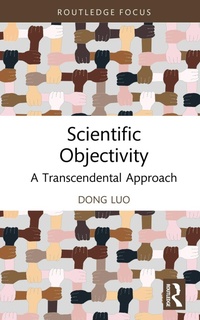
Scientific Objectivity
Description

Adopting a transcendental approach, the book addresses debates on "scientific objectivity" within the contemporary philosophy of science.
The author explores the multifaceted meanings and ongoing debates surrounding objectivity and introduces publicity as a necessary condition for scientific knowledge. In addition, he discusses the various ways in which scientific claims can be considered objective. The author highlights its role in ensuring the essential conditions for communication and mutual understanding that are central to scientific practice. Through an analysis of intersubjectivity in Hermann Weyl's spacetime theory, the book provides an application of this framework, illustrating how objectivity emerges through shared rational engagement. By integrating these arguments, the book offers a profound reexamination of scientific knowledge, objectivity, and the social dimensions of rational inquiry.
This book will appeal to students and scholars of the philosophy, ethics, and sociology of science.
More details
Other editions
Additional editions
Person
Dong Luo is an associate professor at the Institute for Advanced Studies in Philosophy, Science, and Technology at the South China University of Technology. He has research interests in the history and philosophy of mathematics and physics, philosophy of science, and comparative philosophy.
Content
1 Tangled Understanding of Scientific Objectivity 2 Publicity as a Necessary Condition for Scientific Objectivity 3 The Problem of Publicity 4 Constitution of Publicity 5 Publicity Condition in Spacetime Dimension
