

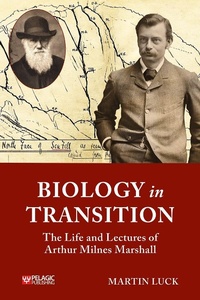
Biology in Transition
The Life and Lectures of Arthur Milnes Marshall
Published on 21. May 2018
432 pages
978-1-78427-167-1 (ISBN)
Description

Arthur Milnes Marshall was a 19th-century scientist who gave lectures addressing the biological debates of his time. They covered topics including evolution, embryology, development and inheritance, with Charles Darwin's name and those of other important biologists distributed liberally throughout.
Marshall was a zoologist, embryologist, anatomist and Darwin enthusiast, as well as an accomplished mountaineer and sportsman. He was a humanist, an admired academic teacher and brilliant public educator. The lectures reveal his passion for communicating his subject, to his students and to the working men and women of Manchester, and they provide a remarkable snapshot of the state of biological science at the close of the 19th century.
His death in 1893 aged only 41, on a climbing expedition in the Lake District, left a fascinating time capsule in the form of lectures from a critical transitional period in the history of biology. Evolution by natural selection was the established doctrine but genes were undefined, with Mendel's work yet to be recognised. Embryology was suggesting recapitulation but ancestry, genetics and missing links awaited liberation from theoreticians and the stones of palaeontology. Microscopy was flourishing and cell science was finding its feet, but DNA and molecular science were far in the future.
Had Marshall lived and worked into the 20th century, these lectures would undoubtedly have been superseded and forgotten. Instead, they reveal biology's transformation from a descriptive exercise to an experimental science, its rejection of purpose and design in evolution, and the shift of its axis from continental Europe to Britain and the United States.
Professor Martin Luck discovered these lectures (published by CF Marshall in two volumes shortly after his brother's death) languishing in a university corridor. His careful curation, introductions to each lecture and copious annotations on the organisms, theories and scientists discussed, illuminate their significance as prequels to modern biology. Marshall's own story brings the lectures and their social context into sharp relief.
Biology in Transition will interest anyone curious about the history of science, especially biology, evolution, genetics and its 19th-century pioneers.
Marshall was a zoologist, embryologist, anatomist and Darwin enthusiast, as well as an accomplished mountaineer and sportsman. He was a humanist, an admired academic teacher and brilliant public educator. The lectures reveal his passion for communicating his subject, to his students and to the working men and women of Manchester, and they provide a remarkable snapshot of the state of biological science at the close of the 19th century.
His death in 1893 aged only 41, on a climbing expedition in the Lake District, left a fascinating time capsule in the form of lectures from a critical transitional period in the history of biology. Evolution by natural selection was the established doctrine but genes were undefined, with Mendel's work yet to be recognised. Embryology was suggesting recapitulation but ancestry, genetics and missing links awaited liberation from theoreticians and the stones of palaeontology. Microscopy was flourishing and cell science was finding its feet, but DNA and molecular science were far in the future.
Had Marshall lived and worked into the 20th century, these lectures would undoubtedly have been superseded and forgotten. Instead, they reveal biology's transformation from a descriptive exercise to an experimental science, its rejection of purpose and design in evolution, and the shift of its axis from continental Europe to Britain and the United States.
Professor Martin Luck discovered these lectures (published by CF Marshall in two volumes shortly after his brother's death) languishing in a university corridor. His careful curation, introductions to each lecture and copious annotations on the organisms, theories and scientists discussed, illuminate their significance as prequels to modern biology. Marshall's own story brings the lectures and their social context into sharp relief.
Biology in Transition will interest anyone curious about the history of science, especially biology, evolution, genetics and its 19th-century pioneers.
Reviews / Votes
... a valuable resource for historians of biology interested in gaining perspective on this transitional period. Marshall's lectures are also a wonderful exemplar of public science outreach at the end of the 19th century. -- Derek Turner * Quarterly Review of Biology *More details
Series
Language
English
Place of publication
Exeter
United Kingdom
Target group
Professional and scholarly
Illustrations
Schaubilder
Figures
ISBN-13
978-1-78427-167-1 (9781784271671)
Copyright in bibliographic data and cover images is held by Nielsen Book Services Limited or by the publishers or by their respective licensors: all rights reserved.
Schweitzer Classification
Other editions
Additional editions
Book
05/2018
Pelagic Publishing
€110.60
Shipment within 10-15 days
Person
Martin Luck is Emeritus Professor of Physiological Education at the University of Nottingham, UK. He holds degrees from the Universities of Nottingham, Leeds and the Open University and is a National Teaching Fellow and Principal Fellow of the Higher Education Academy. His early research career in reproductive biology and endocrinology took him to Germany and Australia, before returning to a faculty position at Nottingham in 1990. He has a longstanding interest in the links between teaching and research and helped to found a leading journal devoted to publishing research by undergraduate students. He has written books on student research and endocrinology and is currently co-authoring a major textbook for biology students.
Content
Apology: History by Serendipity
Dedication
Acknowledgements
Volume 1: Biological Lectures and Addresses
Preface
Contents
Lecture 1: The Modern Study of Zoology
Lecture 2: The Influence of Environment on The Structure and Habits Of Animals
Lecture 3: On Embryology as An Aid to Anatomy
Lecture 4: The Theory of Change of Function
Lecture 5: Butterflies
Lecture 6: Fresh-Water Animals
Lecture 7: Inheritance
Lecture 8: The Shapes and Sizes of Animal
Lecture 9: Some Recent Developments of The Cell Theory
Lecture 10: Animal Pedigrees
Lecture 11: Some Recent Embryological Investigations
Lecture 12: Death
Lecture 13: The Recapitulation Theory
Interlude: A Revealing Book Review
Volume 2: Lectures on The Darwinian Theory
Preface
Contents
Lecture 14: History of The Theory of Evolution
Lecture 15: Artificial Selection And Natural Selection
Lecture 16: The Argument from Palaeontology
Lecture 17: The Argument from Embryology
Lecture 18: The Colours of Animals and Plants
Lecture 19: Objections to The Darwinian Theory
Lecture 20: The Origin of Vertebrated Animals
Lecture 21: The Life and Work of Darwin List of Authorities
Biography: Arthur Milnes Marshal and His Family
Dedication
Acknowledgements
Volume 1: Biological Lectures and Addresses
Preface
Contents
Lecture 1: The Modern Study of Zoology
Lecture 2: The Influence of Environment on The Structure and Habits Of Animals
Lecture 3: On Embryology as An Aid to Anatomy
Lecture 4: The Theory of Change of Function
Lecture 5: Butterflies
Lecture 6: Fresh-Water Animals
Lecture 7: Inheritance
Lecture 8: The Shapes and Sizes of Animal
Lecture 9: Some Recent Developments of The Cell Theory
Lecture 10: Animal Pedigrees
Lecture 11: Some Recent Embryological Investigations
Lecture 12: Death
Lecture 13: The Recapitulation Theory
Interlude: A Revealing Book Review
Volume 2: Lectures on The Darwinian Theory
Preface
Contents
Lecture 14: History of The Theory of Evolution
Lecture 15: Artificial Selection And Natural Selection
Lecture 16: The Argument from Palaeontology
Lecture 17: The Argument from Embryology
Lecture 18: The Colours of Animals and Plants
Lecture 19: Objections to The Darwinian Theory
Lecture 20: The Origin of Vertebrated Animals
Lecture 21: The Life and Work of Darwin List of Authorities
Biography: Arthur Milnes Marshal and His Family
